Essequibo River
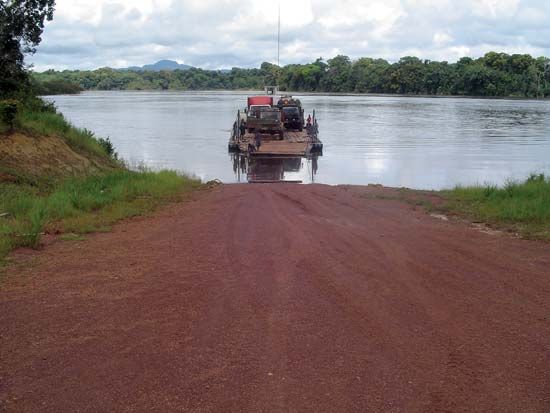
The Essequibo River flows northward for approximately 630 miles (1,010 km) from its source in the Acarai Mountains to the Atlantic Ocean.
What is the length and drainage basin area of the Essequibo River?
The Essequibo River flows northward for approximately 630 miles (1,010 km) from its source in the Acarai Mountains to the Atlantic Ocean.12
Regarding the drainage basin, the provided information does not specify an exact numerical area in square miles or kilometers. However, it is noted that the river system, which includes major tributaries such as the Mazaruni and Cuyuni rivers, drains more than half of Guyana, drains more than half of Guyana.2
Where is the Essequibo River located, and what countries does it flow through?
The Essequibo River is located in east-central Guyana and is the largest river between the Amazon and the Orinoco rivers.21
Contrary to the implication that it flows through multiple countries, the Essequibo River is located entirely within Guyana. It rises in the Acarai Mountains along the border with Brazil and flows northward through the country’s savannas and forests before emptying into the Atlantic Ocean near Georgetown. The river system, which includes major tributaries such as the Mazaruni and Cuyuni rivers, drains more than half of the nation’s territory.21
What are the major tributaries of the Essequibo River?
The Essequibo River system is fed by several significant tributaries that drain more than half of Guyana. The major tributaries include:
- Mazaruni River: A major waterway that flows through dense tropical rain forests and is a primary source of alluvial diamonds.23
- Cuyuni River: This river joins the Mazaruni just upstream from its confluence with the Essequibo at Bartica.23
- Rupununi River: This tributary drains the southern savanna region of the country.24
- Potaro River: This river also contributes to the drainage of the northwestern region of the Essequibo basin.4
Together, these rivers form a complex network that characterizes the drainage patterns of the region.24
How does the Essequibo River contribute to the ecosystem and biodiversity of the region?
The Essequibo River plays a vital role in supporting the ecological health and biological richness of Guyana. As the largest river between the Amazon and the Orinoco, it serves as a critical freshwater habitat that sustains a diverse array of wildlife.12
The river’s ecosystem is particularly notable for its high level of endemism, providing a home to 58 species of fish found nowhere else. The river basin encompasses a wide variety of terrains, including dense hinterland forests, savannas, and highlands, which collectively create a highly biodiverse ecoregion. By draining more than half of the nation’s territory, the river system acts as a central artery for the surrounding environment, connecting various habitats from its source in the Acarai Mountains to its wide estuary at the Atlantic Ocean.12
We could dive deeper into the specific environmental challenges facing this river basin or explore the unique flora and fauna found in the surrounding Guyanese forests.
Sources
- Essequibo - Geography — Encyclopædia Britannica
- Essequibo River — Encyclopædia Britannica
- Guyana - Drainage — Encyclopædia Britannica
- Mazaruni River — Encyclopædia Britannica
Published on · 2 min read
