Amazon River
The Amazon River ecosystem is one of the world’s most biodiverse regions, hosting millions of species, many of which remain unidentified by science.
What are some of the unique plant and animal species found in the Amazon River ecosystem?
The Amazon River ecosystem is one of the world’s most biodiverse regions, hosting millions of species, many of which remain unidentified by science.1
Animal Life
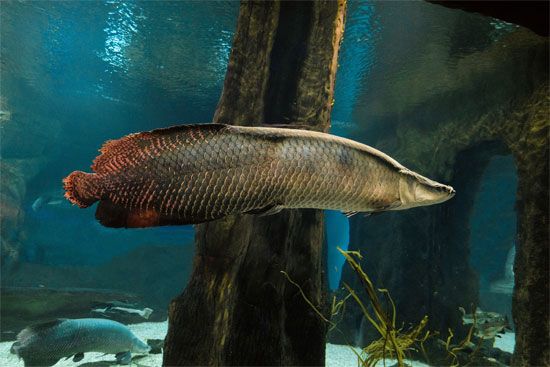
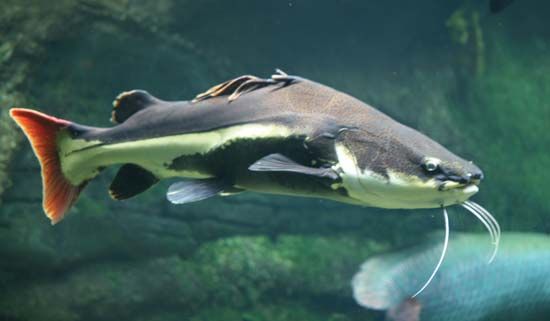
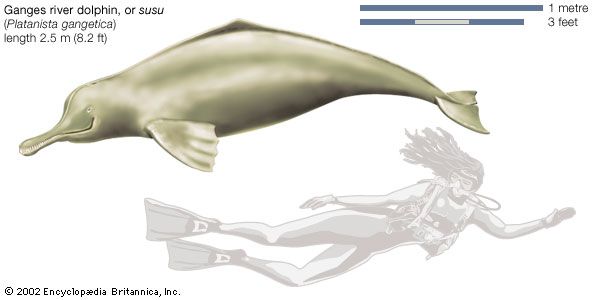
The river system supports approximately 2,500 species of fish, including the pirarucu—one of the largest freshwater fish—and various giant catfish1. Other notable aquatic animals include river dolphins, manatees, caiman, and river turtles. On land and in the water, the capybara stands out as the world’s largest rodent. The forest canopy is home to diverse monkeys, such as howler monkeys and spider monkeys, while the forest floor shelters predators like the jaguar.231
Plant Life
The basin is dominated by tropical rainforest featuring a complex, layered structure. Prominent canopy trees include the rubber tree, Brazil nut tree, and silk-cotton tree. The forest also supports a vast array of epiphytes, such as orchids and bromeliads, and is interconnected by woody vines known as lianas.41
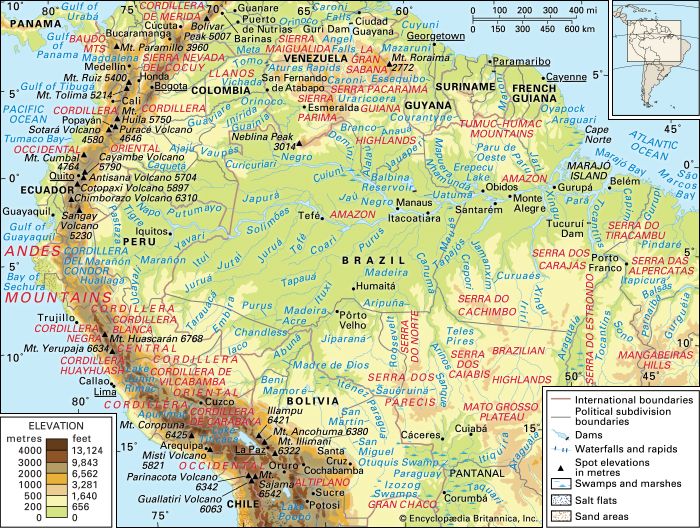
What is the Amazon River’s length and where is it located in South America?
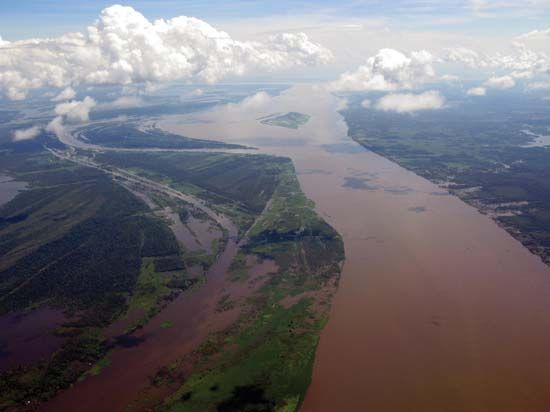
The Amazon River is the greatest river in South America and the largest drainage system in the world by volume. Its westernmost source is located high in the Andes Mountains in southern Peru, and it flows eastward across the continent to its mouth in the Atlantic Ocean on the northeastern coast of Brazil.15
Determining the river’s precise length has been a subject of scientific debate for decades due to the complexity of its headstreams and the difficulty of defining its exact source and mouth. While it is generally accepted to be at least 4,000 miles (6,400 km) long, some researchers have proposed measurements as high as 4,345 miles (6,992 km) depending on the methodology used to identify the source and the specific channel chosen at the river’s mouth. Consequently, while the Nile River is traditionally considered the world’s longest, some studies suggest the Amazon may actually hold that title.6715
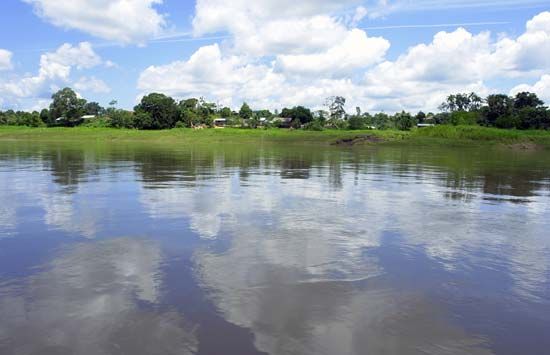
What are some of the most significant expeditions and explorations of the Amazon River?
The exploration of the Amazon River has been a centuries-long endeavor, transitioning from early colonial discovery to modern scientific study.
Early European Exploration
- Francisco de Orellana (1541–1542): The first European to descend the entire length of the Amazon, Orellana traveled from the Andes to the Atlantic. His accounts of encounters with tribes led by women inspired the river’s name, derived from the Amazons of Greek mythology.910
- Pedro Teixeira (17th Century): Nearly a century after Orellana, Teixeira navigated from Belém to Quito, further establishing Portuguese knowledge of the region.10
- Charles-Marie de La Condamine (1743): This French naturalist conducted a raft expedition, providing early, systematic geographic and ethnographic observations of the basin.10
19th and 20th Century Expeditions
- Alexander von Humboldt: At the start of the 19th century, he confirmed the connection between the Amazon and Orinoco river systems.10
- H.W. Bates (1848–1859): His extensive natural history collections resulted in the classic work The Naturalist on the River Amazons.10
- Herndon and Gibbon (1850s): These U.S. Navy lieutenants conducted an official expedition for the U.S. government, publishing Exploration of the Valley of the Amazon.10
- Roosevelt-Rondon Expedition (1913–1914): U.S. President Theodore Roosevelt and Brazilian Colonel Cândido Rondon explored a major tributary, contributing significant natural history observations.5
How does the Amazon River’s discharge compare to other major rivers around the world?
The Amazon River is the world’s largest drainage system in terms of the volume of its flow. Its discharge is unparalleled globally, carrying approximately one-fifth of all the water that runs off the Earth’s surface.12
To understand the scale of its flow, consider these comparisons:
- Volume: The flood-stage discharge at the river’s mouth is four times that of the Congo River and more than 10 times the amount carried by the Mississippi River.12
- Discharge per unit area: The Amazon averages 0.026 cubic metres per second per square kilometre. This is comparable to the Ganges-Brahmaputra (above 0.024) and the Magdalena River (0.026), but lower than the Huang He (0.046) and the Irrawaddy (0.032).13
- Impact: The immense volume of fresh water discharged by the Amazon is so significant that it dilutes the saltiness of the Atlantic Ocean for more than 100 miles (160 km) from the shore.12
Sources
- Amazon River: Top Questions — Encyclopædia Britannica
- Amazon River - Animal life — Encyclopædia Britannica
- Amazon River - Plant life — Encyclopædia Britannica
- Amazon Rainforest — Encyclopædia Britannica
- How Long Is the Amazon River? — Encyclopædia Britannica
- Amazon River - The length of the Amazon — Encyclopædia Britannica
- Amazon River - Physiography of the river course — Encyclopædia Britannica
- Amazon River — Encyclopædia Britannica
- Francisco de Orellana — Encyclopædia Britannica
- Amazon River - Early European exploration — Encyclopædia Britannica
- Amazon River - Exploration since 1900 — Encyclopædia Britannica
- river - World’s largest rivers — Encyclopædia Britannica
- Amazon River - Hydrology of the Amazon River — Encyclopædia Britannica
- Amazon River - Climate — Encyclopædia Britannica
Published on · 3 min read