Ethiopian Plateau
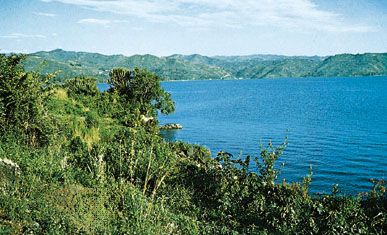
The Ethiopian Plateau is a vast highland region in eastern Africa that covers much of Ethiopia and central Eritrea. Often called the “Roof of Africa,” it…
What is Ethiopian Plateau?
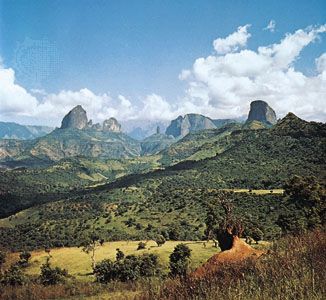
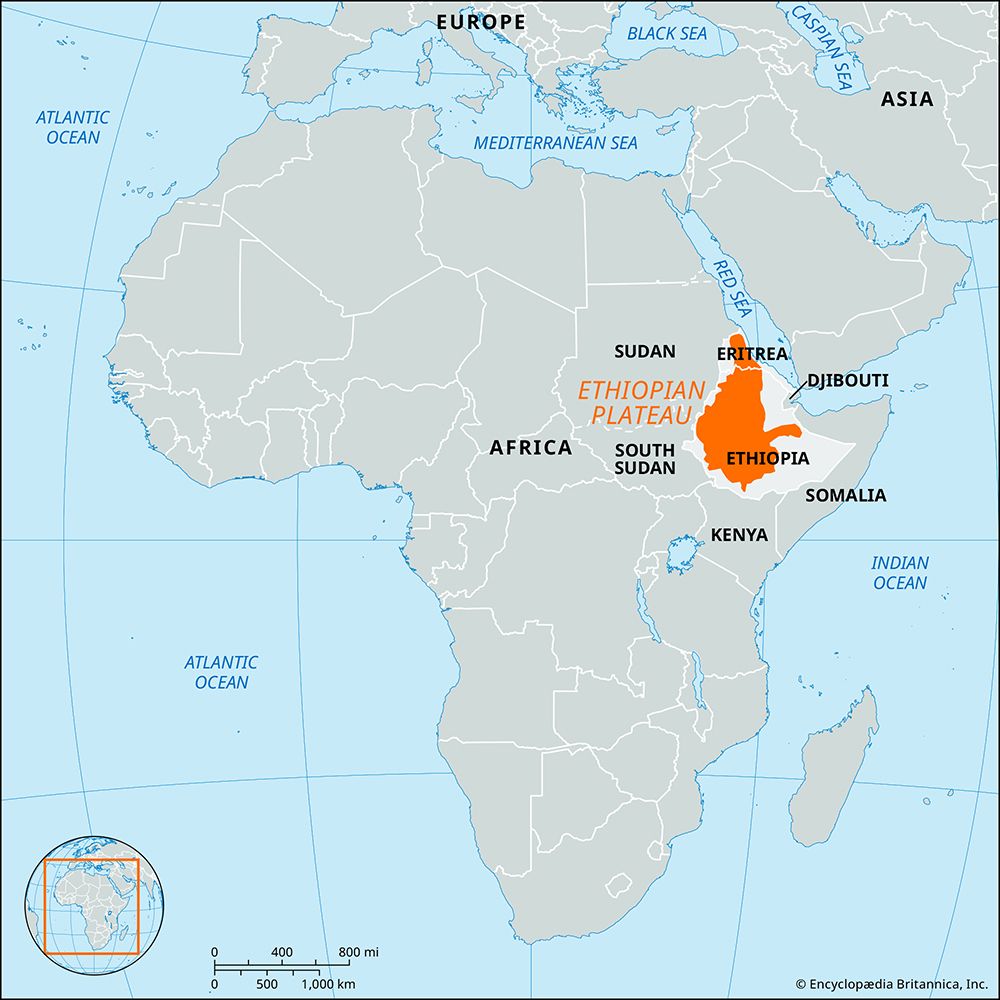
The Ethiopian Plateau is a vast highland region in eastern Africa that covers much of Ethiopia and central Eritrea. Often called the “Roof of Africa,” it comprises roughly half of the continent’s total highlands and stands in sharp contrast to the surrounding lowlands.12
The region is divided into the rugged Western Highlands and the more limited Eastern Highlands, separated by the Eastern Rift Valley. Geologically, the plateau was formed primarily through the thermal expansion of the lithosphere, though volcanism has also played a significant role in shaping its surface.123
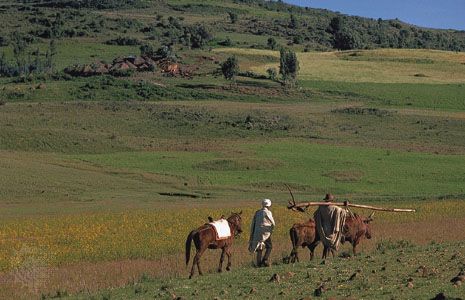
Economically and demographically, the plateau serves as the core of both Ethiopia and Eritrea. Its moderate climate and fertile soils support dense populations and productive agriculture. Historically, the region has been a center for political and cultural development, including the ancient kingdom of Aksum and the establishment of the Ethiopian Orthodox Tewahedo Church.21
How does the Eastern Rift Valley shape the landscape of the Ethiopian Plateau?
The Eastern Rift Valley acts as a massive tectonic trough that bisects the Ethiopian Plateau, fundamentally shaping its topography by separating the region into the Western Highlands and the Eastern Highlands.6
This rift valley functions as a graben, a sunken block of the Earth’s crust created by diverging lithospheric plates. Its influence on the landscape includes:76
- Structural Division: The valley floor sits significantly lower than the surrounding plateaus, often hemmed in by steep escarpments that define the rugged edges of the highlands.76
- Volcanic Activity: The rifting process, driven by the upwelling of hot material from the asthenosphere, has led to extensive volcanism. This has resulted in the formation of volcanic cones and basaltic layers that cover much of the plateau’s surface.764
- Diverse Topography: The rift’s character changes along its length. In the northeast, it widens into a flat, arid depression—including the Denakil Plain—while the southwestern section forms a high-elevation, productive Lakes Region characterized by internal drainage basins.6
What makes the rock-hewn churches of Lalibela historically significant?
The rock-hewn churches of Lalibela are historically significant as masterpieces of medieval Ethiopian architecture and symbols of the Zagwe dynasty’s ambition. Built during the late 12th and early 13th centuries, these 11 monolithic churches were carved entirely from solid granite blocks, demonstrating a highly sophisticated architectural tradition that evolved from earlier structures like Debre Damo.8
Emperor Lalibela commissioned these structures in his capital, Roha, to establish the city as a new center of religious and political preeminence, effectively aiming to replace the ancient capital of Aksum. Beyond their religious function, 20th-century restoration efforts suggest that some of these sites may have originally served as royal residences or fortifications.8
Today, the churches remain a vital pilgrimage site for the Ethiopian Orthodox Tewahedo Church and are recognized as a World Heritage site for their unique craftsmanship and cultural legacy.8
How do the Simien Mountains contribute to the biodiversity of the region?
The Simien Mountains are a critical center of biodiversity, serving as a sanctuary for several rare and endangered species that are found nowhere else on Earth. The region’s unique high-altitude ecosystem is protected within the Simien Mountains National Park, which was designated a UNESCO World Heritage site for its ecological significance.910
Key species that rely on this mountain habitat include:
- Walia Ibex: A rare mountain goat species endemic to the Simien range.9105
- Simien Jackal: Also known as the Abyssinian wolf, this endangered predator is uniquely adapted to the Ethiopian highlands.105
- Gelada Monkey: A primate species that inhabits the high-altitude grasslands of the region.105
The vegetation of the highlands further contributes to this biodiversity, featuring specialized flora such as the giant lobelia, which can reach heights of 20 feet, and the endemic Rosa abyssinica. These diverse plant and animal communities highlight the importance of the range as a vital refuge for Ethiopia’s unique natural heritage.510
Sources
- Ethiopian Plateau: Top Questions — Encyclopædia Britannica
- Amhara Plateau — Encyclopædia Britannica
- Ethiopian Plateau — Encyclopædia Britannica
- plateau - Formative processes — Encyclopædia Britannica
- Exploring 7 of Earth’s Great Mountain Ranges - Ethiopian Highlands — Encyclopædia Britannica
- tectonic basins and rift valleys - Rift valleys — Encyclopædia Britannica
- Ethiopia - Relief of Ethiopia — Encyclopædia Britannica
- Lalībela — Encyclopædia Britannica
- Simien Mountains — Encyclopædia Britannica
- Ethiopia - Plant and animal life — Encyclopædia Britannica
Published on · 3 min read