Ethiopian Mountains
The term "Ethiopian Mountains" refers to several distinct mountain groups located on the central and western plateaus of Ethiopia, which are primarily of…
What is Ethiopian Mountains?
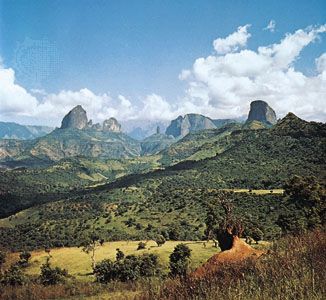
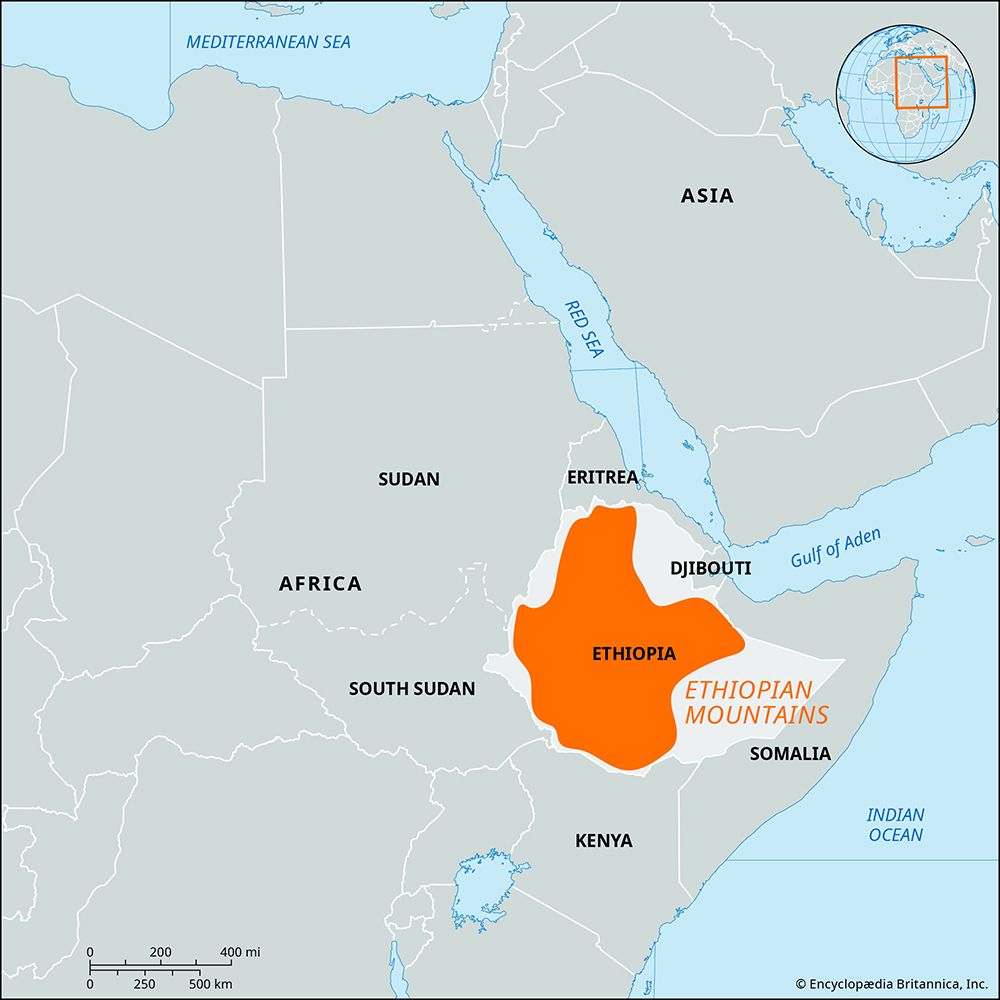
The term “Ethiopian Mountains” refers to several distinct mountain groups located on the central and western plateaus of Ethiopia, which are primarily of volcanic origin. These ranges are part of the broader Ethiopian Highlands, a rugged region often called the “Roof of Africa” that forms a sharp contrast with the surrounding lowlands.123
Key mountain groups include:
- Simien Mountains: The most notable range, home to Mount Ras Dejen, which is the highest peak in Ethiopia at 14,872 feet (4,533 meters).41
- Other Massifs: These include the Ch’ok’ē Mountains, the Lasta and Amhara-Saint massifs, and the Gemu Massif.1
- Eastern Highlands: While smaller than the Western Highlands, this region features significant peaks such as Mount Batu and Tullu Deemtu.35
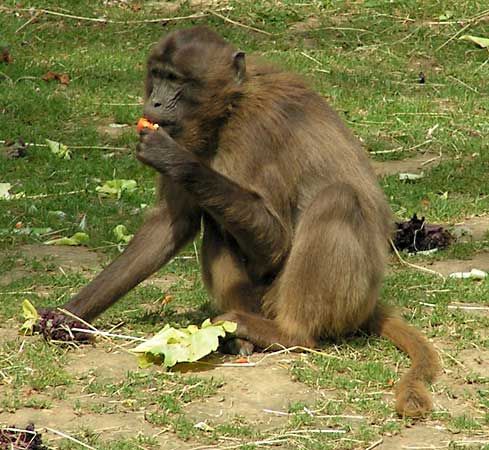
These highlands are ecologically diverse, supporting unique, endangered species like the walia ibex, mountain nyala, and gelada monkey. Due to their moderate climate and fertile soil, they serve as the demographic and economic core of the country.263
What unique animals live in the Ethiopian Highlands?
The Ethiopian Highlands are home to several unique and highly endangered species that have adapted to the region’s high-altitude moorlands and rugged terrain. While many familiar African mammals inhabit the country, they rarely venture into these mountain ecosystems, leaving the highlands to a specialized group of endemic wildlife.18
The most notable mountain-dwelling species include:
- Walia Ibex: A sturdy, sure-footed wild goat found in the Simien Mountains. Its population has been reduced to a few hundred individuals.184
- Ethiopian Wolf: Also known as the Simien jackal, this canine resembles a coyote and lives in isolated high-elevation grasslands. It is considered one of the most endangered canids, with fewer than 200 adults remaining.189
- Mountain Nyala: A unique species of antelope that inhabits the high-altitude regions of the highlands.18
- Gelada: A large, baboon-like primate that lives in groups among steep cliffs and high plateaus. They are terrestrial, diurnal, and feed primarily on grasses and roots.1108
These species are critical to the biodiversity of the region, and conservation efforts, such as the establishment of the Simien Mountains National Park, are essential to their survival.8
How did volcanic activity shape the Ethiopian landscape?
Volcanic activity has played a fundamental role in shaping the topography of Ethiopia, primarily through the deposition of massive basaltic layers during the Cenozoic Era.7
- Basaltic Coverage: Lava flows from the past 65 million years have created thick layers of basalt that cover approximately two-thirds of the country’s land surface. These layers range in thickness from about 1,000 feet (300 meters) to nearly 10,000 feet (3,000 meters), effectively burying much of the older, underlying sedimentary rock and Precambrian basement complexes.7
- Plateau Formation: While the high elevation of the Ethiopian Plateau is largely attributed to the thermal expansion of the lithosphere, volcanic activity has significantly contributed to its structure. These volcanic rocks are particularly prevalent in the flattest areas of the plateau.11
- Rift Valley Features: The East African Rift System, which bisects the country, features a floor characterized by volcanic cones and active volcanoes, such as Erta-Ale.7
This volcanic history, combined with tectonic forces, has created the rugged, high-altitude landscape that defines Ethiopia’s unique geography.711
Why is the Simien Mountains National Park a UNESCO World Heritage site?
Simien Mountains National Park was designated a UNESCO World Heritage site in 1978 primarily due to its status as a critical habitat for rare and endangered species that are found nowhere else in the world.24
The park serves as a vital refuge for unique wildlife, including:
- Walia Ibex: A rare species of wild goat endemic to the Simien Mountains.24
- Simien Jackal: Also known as the Ethiopian wolf, this highly endangered canid relies on the park’s high-altitude environment.4
- Gelada: A unique primate species that faces significant threats in the wild.4
Beyond its biological importance, the park encompasses the dramatic, rugged landscape of the Simien range, which includes Ras Dejen—the highest peak in Ethiopia at 14,872 feet (4,533 meters). The designation reflects the global recognition of the area’s exceptional natural value and the ongoing necessity of wildlife conservation efforts to protect its fragile ecosystem.234
Sources
- Exploring 7 of Earth’s Great Mountain Ranges - Ethiopian Highlands — Encyclopædia Britannica
- Simien Mountains — Encyclopædia Britannica
- Ethiopian Mountains — Encyclopædia Britannica
- Ethiopia - Plant and animal life — Encyclopædia Britannica
- Ethiopia - Climate — Encyclopædia Britannica
- Ethiopian Plateau — Encyclopædia Britannica
- Ethiopia - Relief of Ethiopia — Encyclopædia Britannica
- gelada — Encyclopædia Britannica
- ibex — Encyclopædia Britannica
- wolf - Other wolves — Encyclopædia Britannica
- plateau - Formative processes — Encyclopædia Britannica
Published on · 3 min read