Denakil Plain
The Denakil Plain is a critical site for understanding plate tectonics and continental drift because it sits at the northern extreme of the Great Rift…
How does the Denakil Plain contribute to our understanding of plate tectonics and continental drift?
The Denakil Plain is a critical site for understanding plate tectonics and continental drift because it sits at the northern extreme of the Great Rift Valley, a major active rift system.12
This region serves as a visible laboratory for the ongoing separation of the African and Arabian Peninsula tectonic plates, a process that has been occurring for approximately 30 million years. The plain is characterized by significant geological activity, including live volcanoes known as the Denakil Alps, which separate the lowland from the Red Sea. The presence of the Kobar Sink, which lies well below sea level, further illustrates the dramatic crustal thinning and subsidence associated with the development of this rift valley. By studying this area, geologists gain direct insight into the mechanisms that drive the formation of new oceanic basins and the fragmentation of continents.21
What is the significance of the Denakil Plain in terms of human habitation and economic activities?
The Denakil Plain is an arid, challenging environment that supports limited human habitation and specific economic activities.
Human Habitation
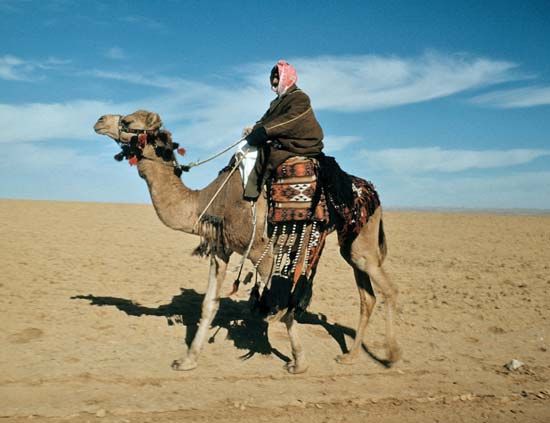
The plain is inhabited almost exclusively by nomadic pastoralists belonging to the Afar people, who also reside in Ethiopia, Eritrea, and Djibouti. The Afar have adapted to this harsh, stony desert environment by developing a subsistence economy primarily based on livestock, including goats, camels, and occasionally cattle. While most are nomadic, some exceptions exist, such as agriculturalists in the Assau oasis and fishermen along the coastal regions.13
Economic Activities
The economy of the region is defined by its unique geological history:
- Salt Mining: The plain contains vast salt reserves, estimated at over 1,000,000 tons, formed by the evaporation of an ancient inland sea. The Afar mine this salt, cutting it into bars for transport by mule to other parts of Ethiopia and Eritrea.13
- Pastoralism: Livestock rearing remains the primary means of subsistence for the nomadic population.3
What unique flora and fauna can be found in the Denakil Plain, despite its harsh conditions?
The Denakil Plain is an extremely arid environment, and the provided search results do not contain specific information regarding the unique flora and fauna that inhabit this particular region.
While the southern portion of the plain in Ethiopia contains the Mille-Sardo Wildlife Reserve, the available data does not detail the specific species found within its boundaries. More broadly, the Ethiopian region is known for a high concentration of antelopes, giraffes, and other African fauna, but these general characteristics do not necessarily apply to the harsh, salt-covered landscape of the Denakil Plain itself.145
Where exactly is the Denakil Plain located, and what are its geographical boundaries?
The Denakil Plain is an arid lowland situated at the northern extreme of the Great Rift Valley in northeastern Africa. It spans across northern Ethiopia and southeastern Eritrea, while also bordering Djibouti.1
Geographically, the plain is defined by several distinct boundaries and features:
- Eastern Boundary: It is separated from the Red Sea by a chain of active volcanoes often referred to as the Denakil Alps.1
- Internal Features: The region is a closed drainage basin where all incoming water evaporates; no streams flow out of the area. It includes the Kobar Sink, a massive basin that reaches depths of 381 feet (116 meters) below sea level1.16
- Context: The plain represents the northeastern section of the Rift Valley, where the valley floor widens into a funnel shape as it approaches the Red Sea and the Gulf of Aden.6
Sources
- Denakil Plain — Encyclopædia Britannica
- East African Rift System — Encyclopædia Britannica
- Afar — Encyclopædia Britannica
- Ethiopian region — Encyclopædia Britannica
- Africa - Origin and adaption of African fauna — Encyclopædia Britannica
- Ethiopia - Relief of Ethiopia — Encyclopædia Britannica
Published on · 3 min read