East African Rift System
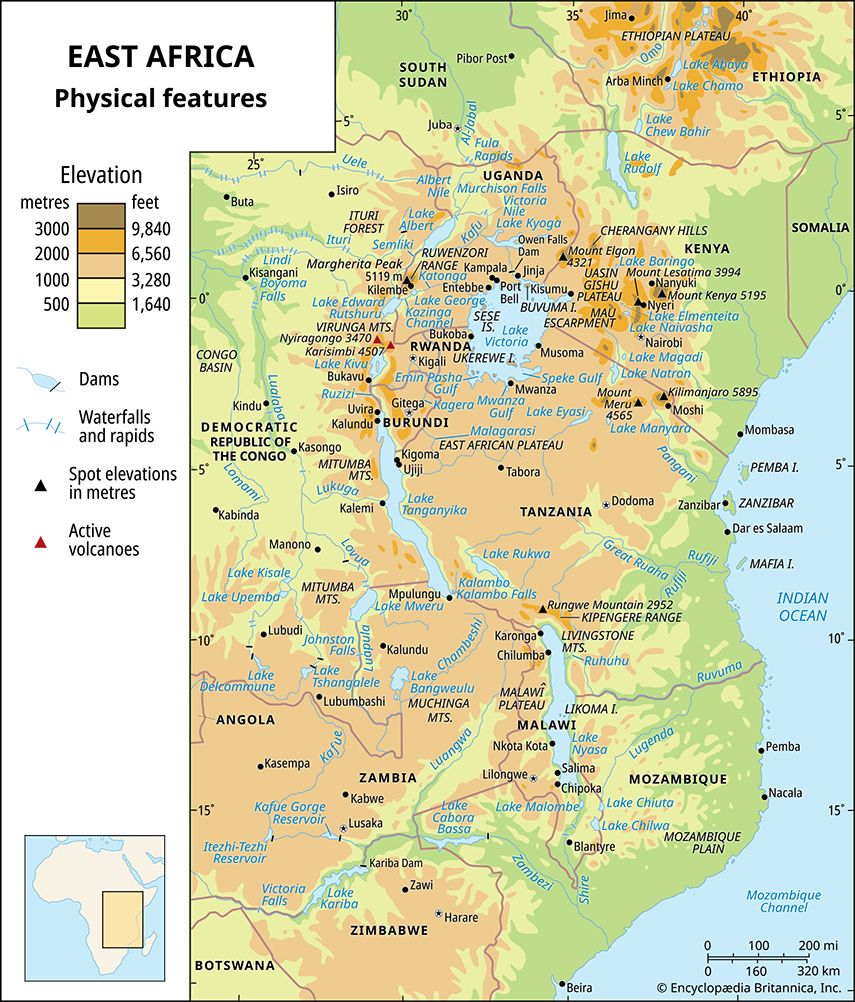
The East African Rift System has been actively forming for approximately 30 million years. This extensive geological feature, which stretches about 4,000…
What is the age of the East African Rift System and how has it evolved over time?
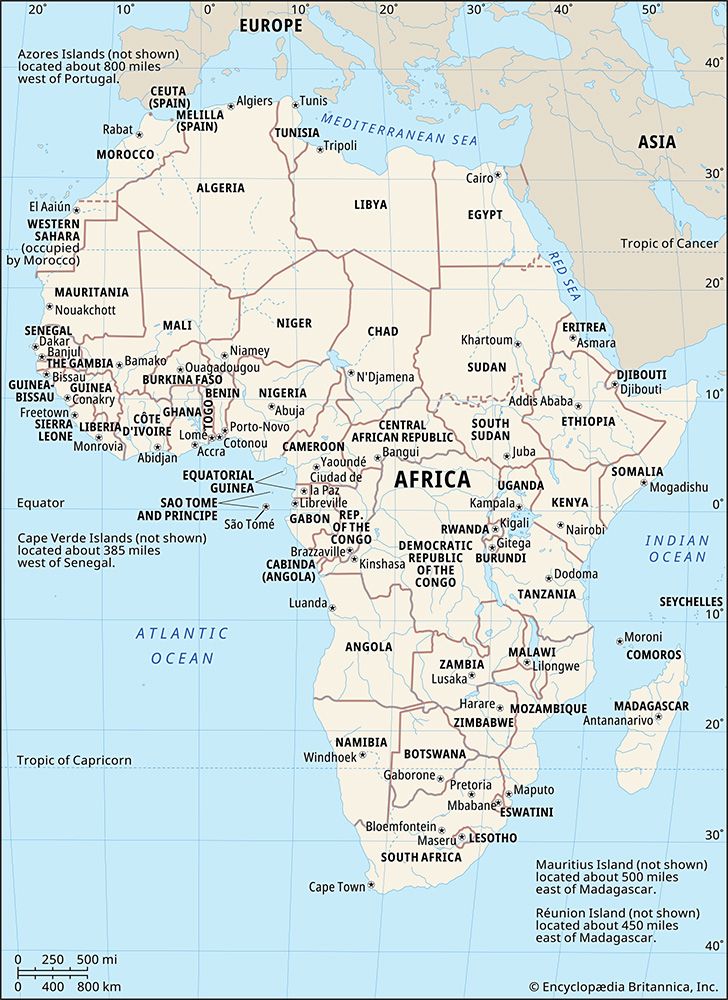
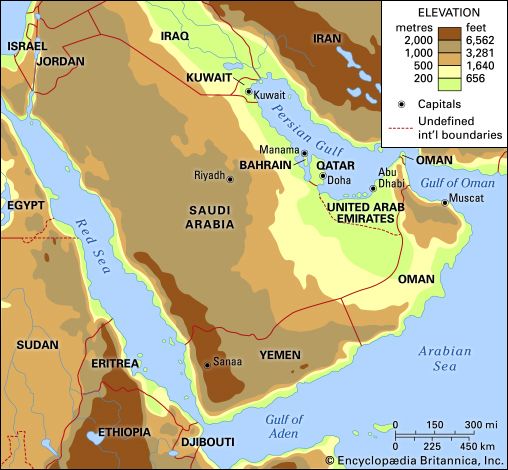
The East African Rift System has been actively forming for approximately 30 million years. This extensive geological feature, which stretches about 4,000 miles (6,400 km), originated as the African Plate and the Arabian Peninsula began to separate.12
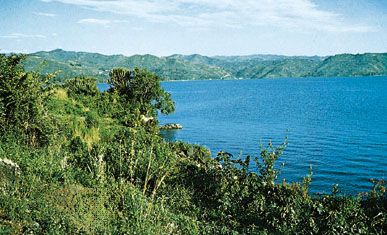
The system has evolved through continuous tectonic extension, characterized by the development of normal faults. This process causes blocks of the Earth’s crust to slide downward, creating deep, fjordlike valleys and basins that are often filled by lakes, such as Lake Tanganyika.12
Throughout its development, the rift has been marked by significant volcanism. This volcanic activity has produced prominent massifs and peaks along the rift’s length, including Mount Kilimanjaro and Mount Kenya. Today, the system continues to serve as a primary example of a divergent plate boundary, specifically between the African and Somalian plates.12
How does the East African Rift System compare to other rift valleys around the world?
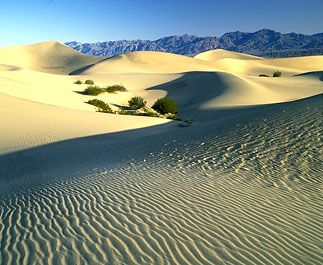
The East African Rift System is one of the most extensive rift features on Earth, spanning approximately 4,000 miles (6,400 km). While it shares fundamental mechanical processes with other rift valleys, its scale and geological context distinguish it from systems like the Baikal Rift or Death Valley.13
Comparison of Rift Characteristics
- Formation and Domes: The East African Rift is notable for forming over large, hot asthenosphere upwellings that push up and heat the lithosphere, causing it to expand and stretch. This process is strongly linked to extensive volcanism, such as the peaks of Mount Kilimanjaro and Mount Kenya. In contrast, some rifts, like the Baikal Rift, are driven by distant tectonic forces—such as the collision of India into Eurasia—and lack the broad volcanic domes associated with the East African system.13
- Symmetry: Many parts of the East African Rift exhibit a relatively symmetrical cross-section, where the valley floor drops significantly between two diverging plates. Conversely, many other rift valleys are asymmetrical, featuring one steep, fault-bounded wall and one gentler, tilted side, as seen in Death Valley and the Baikal Rift.3
- Structural Features: While all rift valleys involve crustal blocks dropping down (grabens), the East African system contains prominent horsts—blocks of crust that remain elevated relative to the valley floor. The Ruwenzori Range is a rare example of a horst that dominates the landscape, standing higher than the surrounding terrain, whereas most horsts in other global rift systems rarely exceed the height of the original, unbroken crust.3
How was the East African Rift System formed and what geological processes are involved?
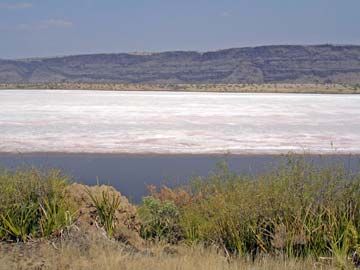
The East African Rift System has been forming for approximately 30 million years, initiated as the African Plate and the Arabian Peninsula began to separate. This process is driven by several key geological mechanisms:1
- Crustal Stretching and Divergence: The system forms as lithospheric plates diverge, causing blocks of the Earth’s crust to drop downward between them. This creates a rift valley, where the valley floor sinks relative to the surrounding plateaus.45
- Asthenospheric Upwelling: The rift is associated with large-scale upwelling of hot material from the asthenosphere. This heat causes the overlying lithosphere to bulge upward and expand, which facilitates the stretching and fracturing of the crust.45
- Volcanism: As the crust thins, magma from the mantle can rise to the surface. This has resulted in extensive volcanism along parts of the rift, creating prominent massifs such as Mount Kilimanjaro and Mount Kenya.14
- Faulting: The process involves significant normal faulting, where crustal blocks slide along faults to form deep, fjordlike basins.14
How has the East African Rift System influenced human evolution and migration patterns in Africa?
The East African Rift System has played a foundational role in human evolution, serving as a primary setting for the development of early hominins. The geological activity of the rift—characterized by tectonic upheaval, volcanic eruptions, and the formation of diverse basins—created a mosaic of environments that stimulated evolutionary adaptation.14
Influence on Human Evolution
- Habitat Diversity: As the rift formed, it created a variety of landscapes, including riverine forests, savannas, woodlands, and lake margins. This environmental heterogeneity forced early hominins, such as Australopithecus afarensis and species of the genus Homo, to adapt to shifting conditions.64
- Evolutionary Milestones: The rift is home to critical fossil sites like Hadar and Olduvai Gorge, which have provided evidence that bipedalism preceded significant brain expansion. The challenging, changing habitats of the rift are believed to have honed the energy-efficient bipedal stride, a key development that eventually enabled Homo species to migrate out of Africa.746
- Preservation: The rift’s unique geology—specifically the layering of volcanic ash and subsequent erosion—has acted as a natural archive, exposing a rich fossil record that allows scientists to study these evolutionary transitions in detail.4
Migration and Settlement
The rift valley also influenced later human patterns. During the Stone Age, the valley provided resources that supported early tool-making industries. Later, the highland and rift regions became centers for the agricultural revolution in East Africa, where adequate rainfall supported the growth of sizable populations and the development of early food production and cattle keeping.7
Sources
- East African Rift System — Encyclopædia Britannica
- normal fault — Encyclopædia Britannica
- Africa - Relief — Encyclopædia Britannica
- tectonic basins and rift valleys - Rift valleys — Encyclopædia Britannica
- plate tectonics - Continental rifting — Encyclopædia Britannica
- human evolution - Hominin habitats — Encyclopædia Britannica
- Eastern Africa - The interior before the colonial era — Encyclopædia Britannica
- Hadar — Encyclopædia Britannica
Published on · 4 min read