Ethiopian Region
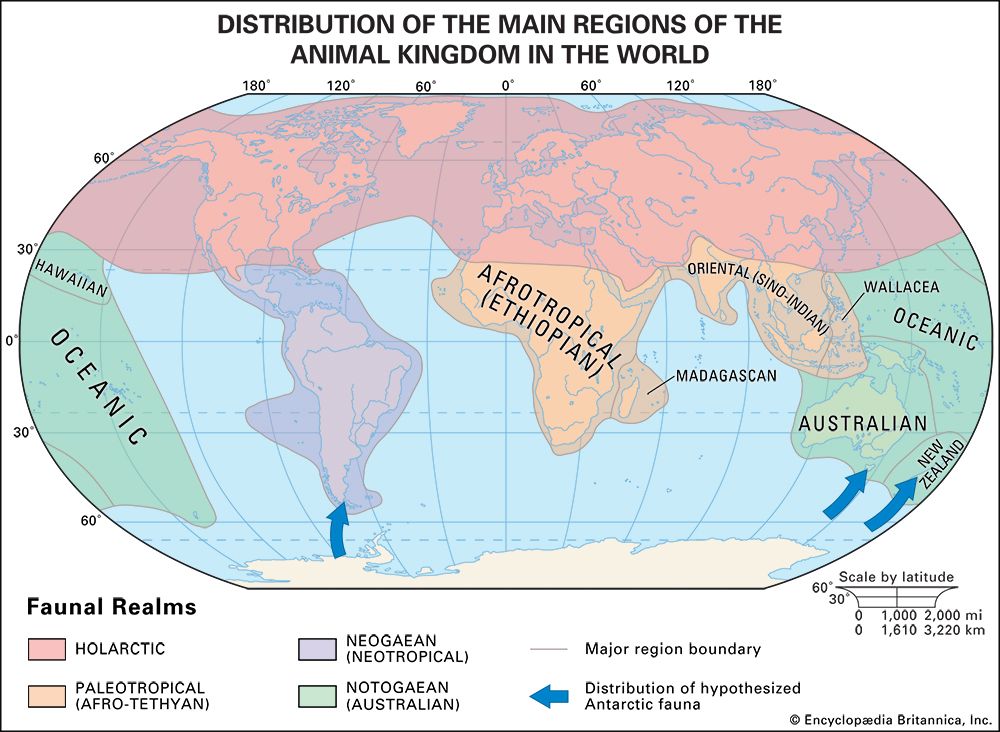
The Ethiopian region—also known as the Afrotropical region—is a major faunal region defined by its distinct animal life. It is a primary component of the…
What is Ethiopian region?
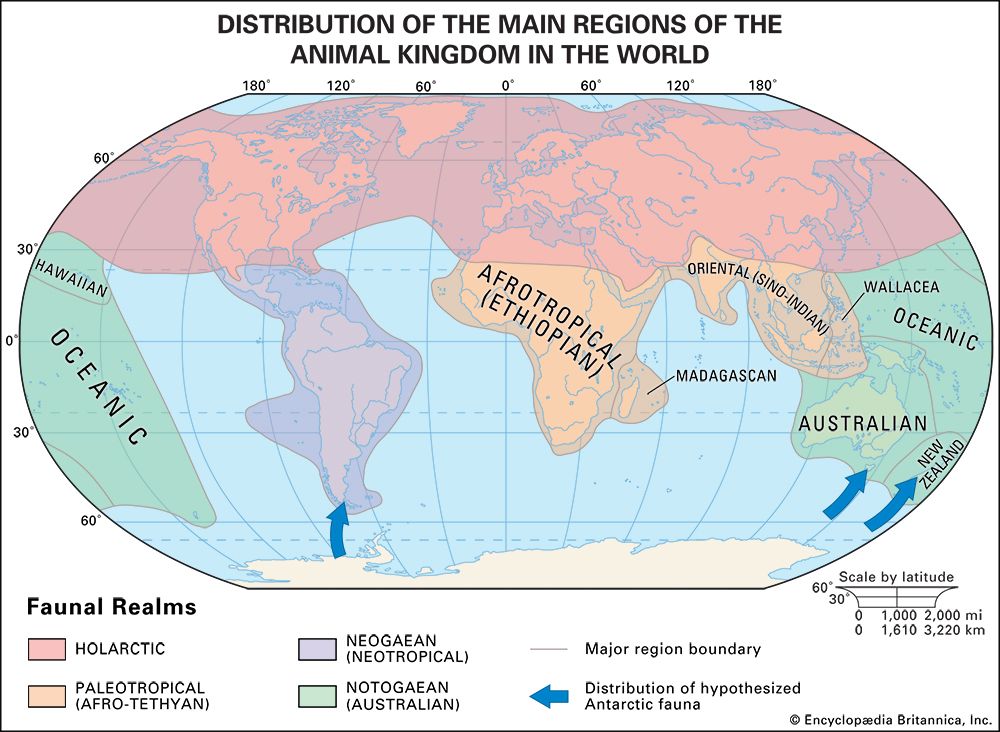
The Ethiopian region—also known as the Afrotropical region—is a major faunal region defined by its distinct animal life. It is a primary component of the Paleotropical (or Afro-Tethyan) realm and encompasses continental Africa south of the Sahara, as well as the southwestern tip of Arabia.1234
This region is characterized by a high concentration of unique wildlife, including the world’s largest populations of antelopes, giraffes, gorillas, and rhinoceroses. It is home to various endemic taxa, such as the mammalian orders Hyracoidea (hyraxes), Tubulidentata (aardvarks), and Macroscelidea (elephant shrews), as well as bird families like the Struthionidae (ostriches). While the region is often associated with the country of Ethiopia, the “Ethiopian region” is a broad biogeographic classification that extends far beyond those national borders. Notably, the island of Madagascar is typically excluded from this region and categorized separately.1423
Why is Madagascar considered a separate biogeographic region?
Madagascar is considered a separate biogeographic region because its flora and fauna are profoundly distinct from those of the nearby African mainland, warranting equal status as an independent entity.67
The island’s biological isolation has allowed for the evolution of unique species that are absent from the rest of the Paleotropical realm. Key factors include:
- Endemism: Madagascar is home to numerous endemic groups, most notably several families of lemurs, as well as unique insectivores like tenrecs and various specialized birds.68
- Absence of Mainland Fauna: Familiar African animals such as monkeys, antelopes, elephants, rhinoceroses, and big cats are entirely absent from the island.6
- Anomalous Affinities: The island shares certain groups with the Neotropical realm, such as specific boas and iguanas, which are not found in mainland Africa.6
- Unique Vegetation: About three-fourths of the plant species in the eastern center of the island are endemic, including distinct dwarf palms and bamboos, while the arid south features unique xerophytes like the Didiereaceae family.78
What are the main differences between the Afrotropical and Oriental realms?
The Afrotropical and Oriental realms are the two primary divisions of the Paleotropical (or Afro-Tethyan) realm, distinguished largely by their unique endemic fauna and geographic separation.10
Key Differences
- Geographic Scope: The Afrotropical region encompasses continental Africa south of the Sahara and southwestern Arabia. The Oriental region covers tropical southern and southeastern Asia, including associated continental islands.103
- Endemic Fauna: Each realm hosts distinct groups that have evolved in isolation.4
- Afrotropical Endemics: Includes mammalian orders such as Hyracoidea (hyraxes), Tubulidentata (aardvarks), and Macroscelidea (elephant shrews), as well as families like Giraffidae (giraffes and okapi) and bird families such as Struthionidae (ostriches).3
- Oriental Endemics: Features mammalian families like Tupaiidae (tree shrews), Tarsiidae (tarsiers), and Hylobatidae (gibbons), alongside reptiles such as Lanthanotidae (earless monitor lizards) and Gavialidae (gharials).11
- Evolutionary Divergence: While both realms share some broader Paleotropical families—such as Cercopithecidae (Old World monkeys) and Rhinocerotidae (rhinoceroses)—they often exhibit significant divergence at the genus level, as seen in the distinction between African elephants (Loxodonta) and Asian elephants (Elephas).104
The boundary between these regions is transitional, particularly across Southwest Asia, where faunal affinities shift between the two realms and the Holarctic realm.11
How do biomes like the savanna and steppe support different animal species?
Biomes like the savanna and steppe support distinct animal communities by offering specific structural habitats and food sources shaped by climate and vegetation.
Savanna Fauna
Savannas are tropical or subtropical regions characterized by a continuous grass cover with scattered trees. This structure supports a diverse array of species:12
- Large Herbivores: Many animals, such as buffalo, zebra, and antelope, depend directly on the grass component for food. Others, like elephants and giraffes, utilize the foliage and fruit of the scattered trees.13
- Adaptations: Because of the alternating wet and dry seasons, many savanna mammals and birds are seasonal migrants, moving to find lush vegetation.14
- Invertebrates: A significant portion of savanna biomass is found underground, where termites and other arthropods play a crucial role in nutrient cycling and decomposition.1412
Steppe Fauna
Steppes are vast, semiarid temperate grasslands devoid of trees, featuring sharply contrasting seasons. The open, low-vegetation landscape has driven the evolution of specific survival strategies:15
- Running Herbivores: The lack of hiding places and the need to migrate to new pastures favored the evolution of large herbivores with sharp senses that are adept at running, such as the horse, gazelle, and saiga antelope.15
- Small Mammals and Birds: Steppes host numerous rodents, such as marmots, prairie dogs, and jerboas, which often thrive in the absence of large predators or as part of the grassland ecosystem. Birds like bustards and larks often possess protective coloration to blend into the dried-up grass.1516
Sources
- Ethiopian region — Encyclopædia Britannica
- Ethiopia - Plant and animal life — Encyclopædia Britannica
- biogeographic region - Paleotropical realm — Encyclopædia Britannica
- biogeographic region - Afrotropical region — Encyclopædia Britannica
- faunal region — Encyclopædia Britannica
- Madagascar — Encyclopædia Britannica
- biogeographic region - Madagascan region — Encyclopædia Britannica
- Africa - Madagascar — Encyclopædia Britannica
- Madagascar - Plant and animal life — Encyclopædia Britannica
- biogeographic region - Oriental region — Encyclopædia Britannica
- biogeographic region - Biotic distributions — Encyclopædia Britannica
- Savanna - Biota — Encyclopædia Britannica
- Savanna - Fauna — Encyclopædia Britannica
- Steppe — Encyclopædia Britannica
- Savanna - Population and community development and structure — Encyclopædia Britannica
- Savanna - Environment — Encyclopædia Britannica
- Europe - Wild animals — Encyclopædia Britannica
Published on · 4 min read