Holarctic Region
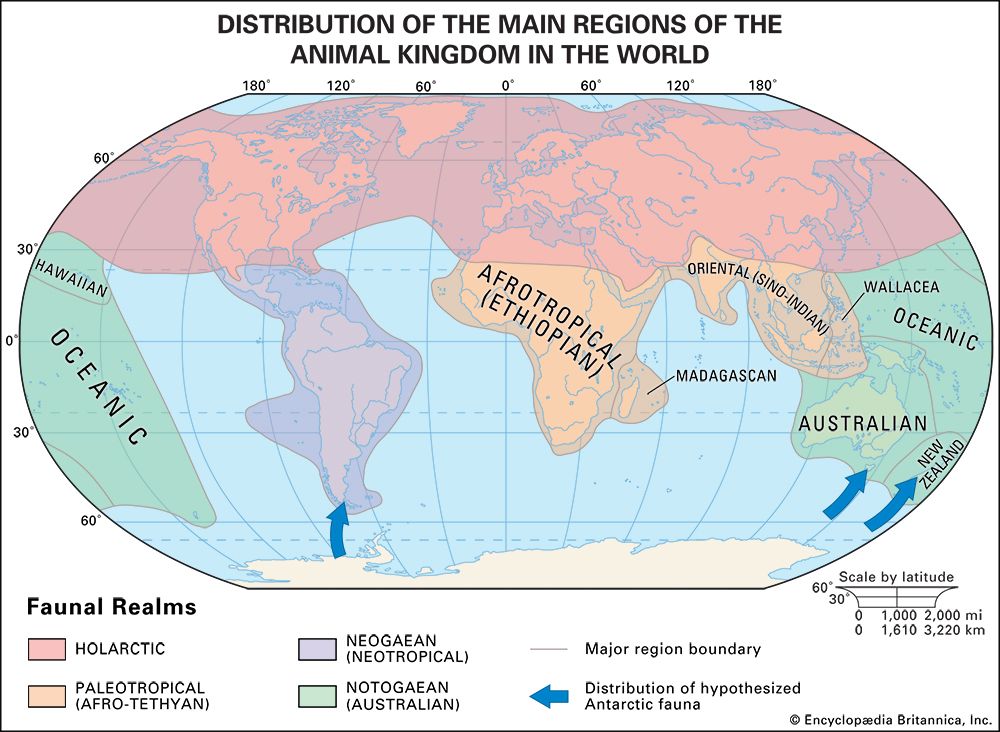
The Holarctic region is one of the world's six major biogeographic areas, defined primarily by its characteristic animal life. It encompasses the nontropical…
What is Holarctic region?
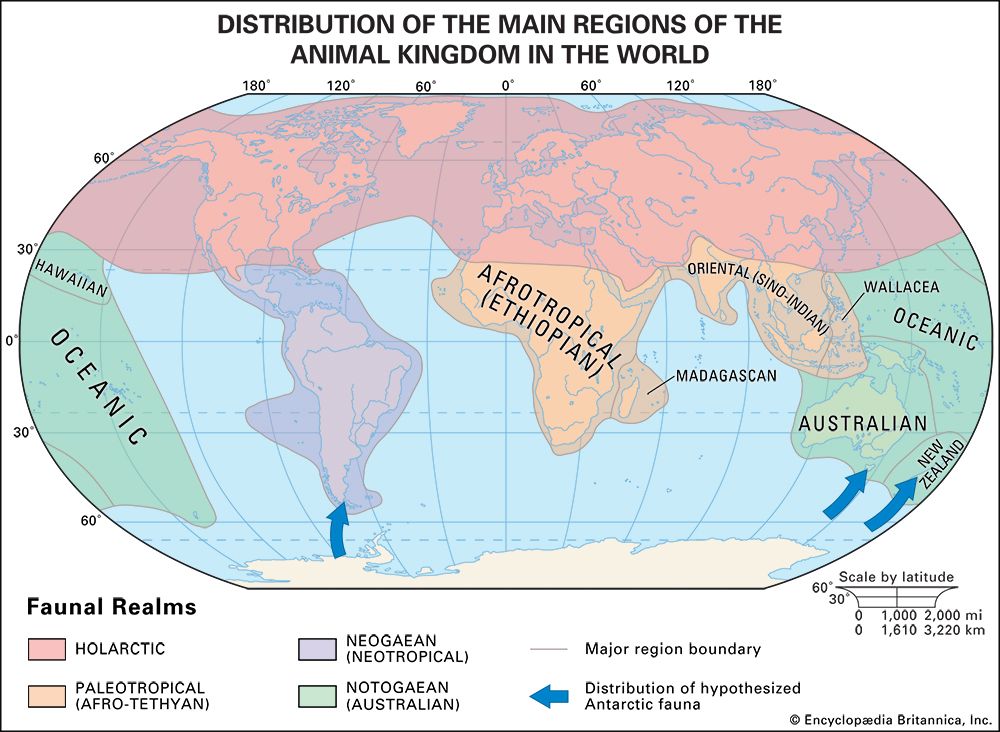
The Holarctic region is one of the world’s six major biogeographic areas, defined primarily by its characteristic animal life. It encompasses the nontropical portions of the Northern Hemisphere, including Europe, Asia, North Africa, and North America (extending south to the Mexican desert).12
The region is typically divided into two primary subregions based on terrestrial organisms:13
- Palaearctic: The Old World component, covering Eurasia and North Africa.13
- Nearctic: The New World component, covering North America.13
The Holarctic is home to a diverse array of flora and fauna, including mammals like beavers and moles, as well as various amphibians and freshwater invertebrates. Its vegetation is largely associated with the Boreal kingdom, which includes distinct zones such as the Mediterranean region. Scientists often note intriguing disjunct distributions of species across these continents, which are likely the result of historical shifts in climatic zones.134
What is the difference between the Nearctic and Palearctic regions?
The Nearctic and Palearctic regions are the two primary subregions of the Holarctic region, a vast biogeographic area defined by its characteristic animal life. While they are often grouped together due to historical faunal interchange, they are distinguished by their geographic coverage and specific boundaries.
Geographic Differences
- Nearctic: This subregion encompasses the “New World,” specifically North America and Greenland. Its boundaries extend south to include all of Florida, Baja California, and the Mexican desert region.156
- Palearctic: This subregion covers the “Old World,” including Europe, Asia north of the Himalayas, and Africa north of the Sahara.17
Historical Connection
The two regions share many similarities in flora and fauna because they were historically linked by Beringia, a land bridge that periodically connected Siberia and Alaska during periods of lower sea levels. This connection allowed for the migration of animals and plants between the two continents, which is why they are frequently studied together as a single Holarctic realm.829
How do climatic zones influence animal distribution in the Holarctic?
Climatic zones are fundamental in shaping the distribution of animal life within the Holarctic region. Because the region spans vast nontropical areas of the Northern Hemisphere, its species are highly sensitive to temperature and environmental shifts.1
Historically, the movement of climatic zones has been a primary driver of species distribution. During the Pleistocene Epoch, the expansion and retreat of ice sheets caused drastic southward and northward displacements of vegetation and animal communities. As glaciers advanced, species were pushed into lower latitudes, often leading to the coexistence of temperate and Arctic forms in “disharmonious” faunas that suggest past climates lacked the extreme seasonal variations seen today.102
These shifts explain many of the “disjunct distributions” observed in the Holarctic, where related taxa are found in widely separated areas, such as between Europe and eastern North America or between western North America and eastern Asia. As climates warmed and glaciers retreated, species migrated to track their preferred environmental conditions, a process that continues to influence the modern biogeography of the region.11102
What are some examples of animals unique to the Holarctic realm?
The Holarctic realm, which encompasses the nontropical regions of the Northern Hemisphere, is home to a variety of unique and characteristic animal families. Because the Nearctic (North America) and Palearctic (Eurasia and North Africa) subregions were historically connected by the Bering Land Bridge, many species exhibit circumpolar distributions or have closely related counterparts across these continents.21314
Characteristic Mammals
Several mammal families are considered representative of the Holarctic realm, including:
- Talpidae: Moles2
- Castoridae: Beavers2
- Ochotonidae: Pikas2
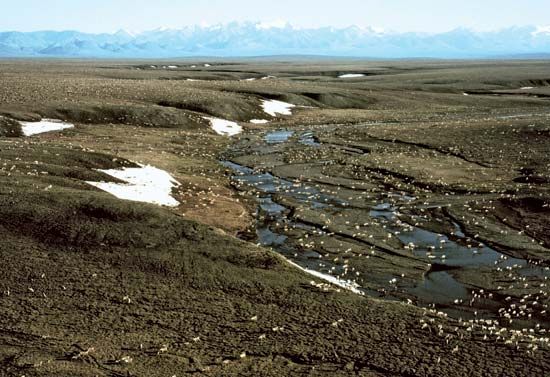
- Arctic Specialists: Animals such as the reindeer (known as caribou in North America) and the musk ox are iconic herbivores adapted to the severe environments of the Arctic tundra.1514
Amphibians and Invertebrates
The Holarctic is particularly notable for its diversity of salamanders. The Appalachian region of North America serves as a global headquarters for this group, hosting seven of the eight known families, including:
- Salamandridae2
- Cryptobranchidae2
- Proteidae2
- Plethodontidae: The lungless salamanders, which exhibit remarkable variety.9
Additionally, the family Astacidae (freshwater crayfish) is a characteristic group of invertebrates found within this realm.2
Sources
- Holarctic region — Encyclopædia Britannica
- biogeographic region - Holarctic realm — Encyclopædia Britannica
- Holarctic — Merriam-Webster
- biogeographic region - Mediterranean region — Encyclopædia Britannica
- Nearctic — Merriam-Webster
- Palearctic — Merriam-Webster
- Beringia — Encyclopædia Britannica
- Bering Strait — Encyclopædia Britannica
- faunal region — Encyclopædia Britannica
- Pleistocene Epoch - Migration of plants and animals — Encyclopædia Britannica
- biome — Encyclopædia Britannica
- Taiga - Origin — Encyclopædia Britannica
- Tundra - Arctic mammals — Encyclopædia Britannica
- Asia - The steppes — Encyclopædia Britannica
- United States - Animal life — Encyclopædia Britannica
- Polar ecosystem - Biota of the Arctic — Encyclopædia Britannica
Published on · 3 min read