Eucommiaceae
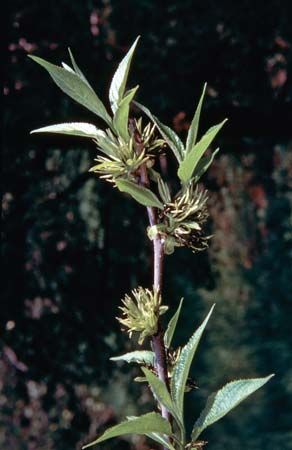
The family Eucommiaceae is unique primarily because it is a monotypic family, consisting of only a single species, the hardy rubber tree (Eucommia ulmoides).…
What are some unique adaptations or features of Eucommiaceae plants that set them apart from other plant families?
The family Eucommiaceae is unique primarily because it is a monotypic family, consisting of only a single species, the hardy rubber tree (Eucommia ulmoides). This isolated evolutionary position sets it apart from other plant families.12
Key adaptations and features include:
- Latex Production: The tree contains specialized latex cells. A distinctive diagnostic feature is that when its leaves are torn, strands of rubbery gum (gutta) hold the leaf fragments together. This material has historically been used for electrical insulation and dental fillings.2
- Floral Structure: Unlike many other flowering plants, the flowers are unisexual and lack both petals and sepals.1
- Fruit Morphology: The tree produces a samara, a dry, winged fruit containing a single seed, which gives it a superficial resemblance to the elm tree (Ulmus), though they are not closely related.12
- Medicinal Value: The bark is highly valued in traditional Chinese medicine as a tonic and for treating conditions like arthritis.12
Where are Eucommiaceae plants primarily found in the world?
The family Eucommiaceae is native to the temperate regions of central and eastern China.1
While the hardy rubber tree (Eucommia ulmoides) is the only species within this family, it is also cultivated as an ornamental plant in various mild climates around the world. In its native habitat, the species is currently considered rare and is listed as near-threatened due to the pressures of overharvesting for its medicinal bark.1
It is important to distinguish this plant from the common rubber tree (Hevea brasiliensis), which is a tropical species native to South America and is the primary source of commercial natural rubber.45
What is the evolutionary history of the Eucommiaceae family?
The evolutionary history of the Eucommiaceae family is defined by its status as a monotypic family, meaning it consists of only one extant species, the hardy rubber tree (Eucommia ulmoides). This isolation makes the family a subject of significant interest in botanical studies regarding plant evolution.12
Within modern botanical classification systems, such as the Angiosperm Phylogeny Group (APG III), the family is placed within the order [Garryales]. This order belongs to the asterid clade, a large group of flowering plants that share a single common ancestor. While Eucommia exhibits a superficial resemblance to the elm tree (Ulmus) due to its winged fruits and leaf structure, this is a result of convergent evolution rather than a close genetic relationship.21
Historically, the classification of the genus has shifted; while it is now firmly placed in the order Garryales, older or alternative systems have occasionally associated it with the order Rosales. Its unique combination of features—such as the production of latex and the absence of petals and sepals—highlights its distinct evolutionary path within the angiosperms.312
What are the main challenges in cultivating Eucommiaceae species outside their native range?
Cultivating the hardy rubber tree (Eucommia ulmoides) outside its native range in central and eastern China presents specific challenges, primarily related to its ecological requirements and its status as a rare, near-threatened species.1
While Eucommia is successfully grown as an ornamental in various mild climates, it is not a major commercial crop like the tropical rubber tree (Hevea brasiliensis). The primary challenges include:14
- Ecological Specialization: Unlike Hevea, which requires strictly tropical or subtropical conditions with heavy rainfall and no frost, Eucommia is adapted to temperate environments. Its cultivation is limited to regions that can replicate these specific temperate conditions, which may not be ideal for large-scale production.14
- Genetic and Population Constraints: Because the family consists of only a single species, there is limited genetic diversity compared to widely cultivated crops. This makes the species more vulnerable to environmental stressors and pests when introduced to new regions.1
- Conservation Status: As the species is near-threatened in its native habitat due to overharvesting for its medicinal bark, sourcing sustainable, high-quality planting material for international cultivation remains a significant hurdle.1
We could dive deeper into the specific soil and climate requirements needed to successfully establish Eucommia in temperate gardens.
Sources
- Eucommiaceae — Encyclopædia Britannica
- Garryales — Encyclopædia Britannica
- Eucommia — Merriam-Webster
- rubber - The rubber tree — Encyclopædia Britannica
- rubber tree — Encyclopædia Britannica
Published on · 3 min read