Eucryphia
Eucryphia is a genus of evergreen shrubs and trees that makes up the family Eucryphiaceae. Native to Australia and Chile, these plants are often cultivated…
What is Eucryphia?
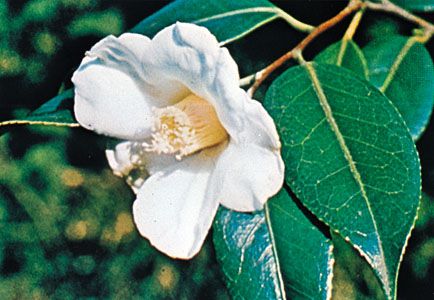
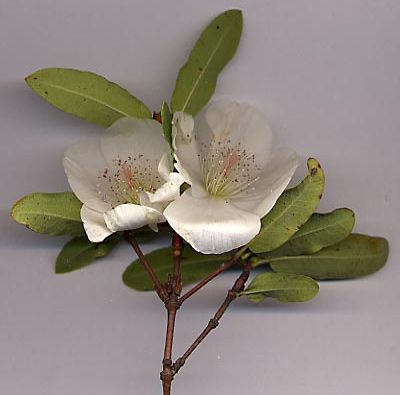
Eucryphia is a genus of evergreen shrubs and trees that makes up the family Eucryphiaceae. Native to Australia and Chile, these plants are often cultivated in warm regions for their attractive foliage and showy, cream-white flowers that resemble camellias and bloom in late summer and autumn.1
Botanically, the genus is characterized by dark, shining opposite leaves and woody or leathery capsular fruits. The name is derived from the Greek word kryphios, meaning “concealed,” reflecting its etymological roots. Notable species include E. cordifolia and E. glutinosa, which have been crossed to create the hybrid E. ×nymansensis; this hybrid is particularly valued for being hardier than E. cordifolia and capable of tolerating alkaline soils.21
Why are Eucryphia flowers compared to camellias?
Eucryphia flowers are frequently described as “camellia-like” due to their physical appearance, specifically their showy, cream-white petals that share a structural resemblance to those of the camellia genus. While the provided search results confirm this common horticultural comparison, they do not detail specific shared botanical traits beyond this visual similarity in their flowers.12
What makes Eucryphia plants well-suited for warm climates?
Eucryphia plants are primarily valued in warm climates for their evergreen foliage and their showy, cream-white flowers that bloom in late summer and autumn, providing aesthetic appeal during seasons when many other plants have finished flowering.1
While the provided search results note that these plants are cultivated in warm regions, they do not explicitly detail the specific physiological or environmental mechanisms that make them well-suited for these climates beyond their classification as evergreen trees and shrubs native to regions like Australia and Chile. It is worth noting that some varieties, such as the hybrid E. ×nymansensis, have been developed to be hardier and more tolerant of specific soil conditions, such as alkaline soils, than their parent species.12
How do evergreen trees differ from deciduous trees?
The primary difference between evergreen and deciduous trees lies in their leaf-retention strategies, which have evolved as adaptations to environmental stress and resource management.
Deciduous Trees
Deciduous trees shed their leaves annually, typically in autumn or during a dry season. This is a protective mechanism against harsh conditions:
- Cold Protection: In temperate regions, deciduous leaves are generally thin and delicate. If retained during winter, the water within their cells could freeze and expand, causing the cells to rupture and rendering the leaves useless for photosynthesis.
- Structural Integrity: Dropping leaves prevents the accumulation of heavy snow and reduces wind resistance, which protects the tree from breakage during winter storms.
- Resource Efficiency: Because these leaves are “cheap” to produce—requiring little chemical energy—the tree can afford to shed them and grow a fresh set in the spring, effectively discarding insect-eaten or damaged foliage.45
Evergreen Trees
Evergreen trees retain their leaves throughout the year and into the following growing season. Their strategy focuses on durability:
- Protective Adaptations: Evergreens often possess thicker, leathery, or needlelike leaves coated in waxes and resins that protect them from freezing and water loss.6
- Resource Conservation: Because these leaves are costly to produce, the trees retain them for two or more years. This allows the plant to perform photosynthesis whenever conditions are favorable, which is particularly advantageous in environments where moisture or nutrients are limited.65
- Environmental Versatility: While many evergreens are conifers in cold climates, broad-leaved evergreens are common in tropical and warm temperate regions where year-round photosynthesis is possible without the need for extreme frost protection.65
Sources
- Eucryphia — Encyclopædia Britannica
- Eucryphia — Merriam-Webster
- Myrtales - Economic and ecological importance — Encyclopædia Britannica
- Why Do Leaves Fall in Autumn? — Encyclopædia Britannica
- evergreen — Encyclopædia Britannica
- Temperate forest - Flora — Encyclopædia Britannica
- Temperate forest - Environment — Encyclopædia Britannica
Published on · 3 min read