Celastrales
Within the order Celastrales, the family Celastraceae contains several species of significant economic and horticultural importance:
What are some economically important species within the Celastrales order?
Within the order Celastrales, the family Celastraceae contains several species of significant economic and horticultural importance:
- Khat (Catha edulis): Native to Africa and Arabia, this tree is economically notable because its fresh leaves are chewed as a stimulant, a practice particularly popular in the Middle East.12
- Ornamental Species: Many species within the genera Euonymus and Celastrus (bittersweet) are widely cultivated as ornamental shrubs and ground covers for landscaping. For example, the winter creeper euonymus (E. fortunei) and the winged spindle tree (E. alatus) are valued for their foliage and aesthetic appeal.123
- Industrial Uses: The wood of the European spindle tree (E. europaeus) has historically been used for making pegs and spindles. Additionally, gutta-percha resin can be extracted from this species.3

What are the main characteristics of plants in the Celastrales order?
The order Celastrales is a small group of flowering plants comprising three families, approximately 100 genera, and about 1,350 species. Within the Angiosperm Phylogeny Group II system, this order is classified within the Rosid I clade.4
Key Characteristics by Family
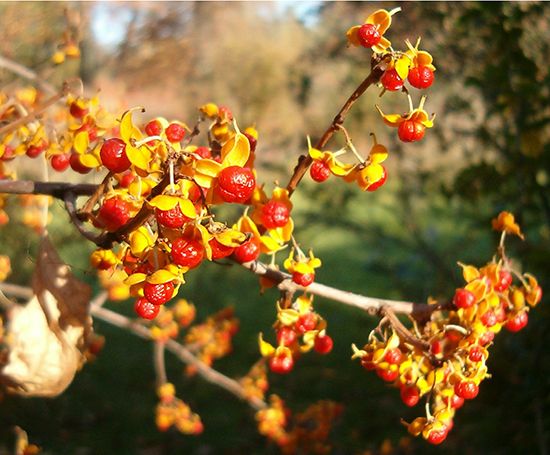
- Celastraceae: This is the largest family in the order, containing about 90 genera and 1,300 species of trees, lianas, and herbs found in tropical and temperate regions. Many species secrete latex, often visible as thin strands when a leaf is pulled apart. Leaves may be spiral, opposite, or two-ranked, frequently featuring toothed margins and fringed stipules. Flowers are typically small with three to five stamens and a prominent nectary disc. Fruits vary from fleshy to dry, and seeds often possess a fleshy appendage known as an aril.4
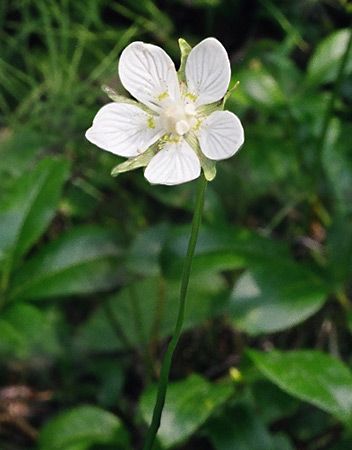
- Parnassiaceae: This family consists of annual to perennial herbs, such as the genus Parnassia. These plants lack stipules and feature five stamens alongside five nonfunctional staminodes that may mimic nectaries. The fruit is a capsule containing numerous small seeds.4
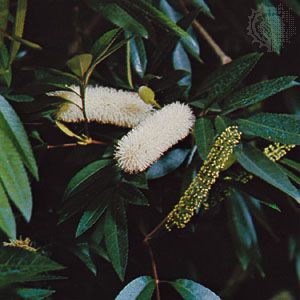
- Lepidobotryaceae: A small family of trees characterized by simple, two-ranked leaves that are jointed at the base. They possess both stipules and stipels. These plants are dioecious, meaning male and female flowers are borne on separate individuals.4
How are Celastrales plants distributed geographically around the world?
Plants in the order Celastrales exhibit diverse geographical distributions depending on the family:
- Celastraceae: This is the largest family in the order, with its approximately 1,300 species found throughout temperate and especially tropical regions worldwide. Several major genera, such as Maytenus, Salacia, and Hippocratea, are pantropical. Other genera show more specific preferences, with Euonymus favoring temperate climates and Celastrus occupying intermediate regions.5
- Parnassiaceae: The genus Parnassia is distributed across north temperate to Arctic regions. In contrast, the monotypic genus Lepuropetalon is restricted to the southeastern United States and Mexico.5
- Lepidobotryaceae: This small family has a disjunct distribution. Lepidobotrys staudtii is native to East Africa, while Ruptiliocarpon caracolito is found in Central and South America.5
What are some common names or well-known examples of Celastrales plants?
Several plants within the order Celastrales are well-known for their ornamental value or unique biological properties.
Notable Examples
- Euonymus: This genus includes many popular landscape shrubs and climbers.
- Winter creeper euonymus: An evergreen climber from East Asia often used as a ground cover.
- Winged spindle tree: Also known as burning bush, this shrub is recognized for its corky, winged stems and vibrant red autumn foliage.
- Wahoo: A North American species (E. atropurpureus) also referred to as burning bush, noted for its reddish fruits.
- European spindle tree: Known for its poisonous pink and orange fruits and historical use of its wood for spindles and pegs.
- Grass of Parnassus: A perennial herb found in the Northern Hemisphere, often planted in damp, shady areas near water.
- Khat: An East African tree whose leaves are chewed for their stimulant properties.
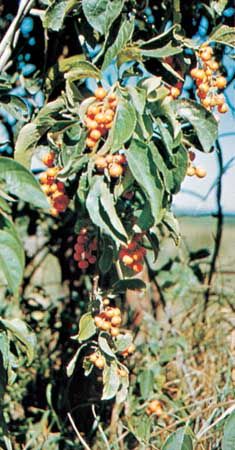
- Bittersweet: Plants belonging to the genus Celastrus, frequently cultivated for their ornamental qualities.
- Paxistima: A group of low-growing, often creeping North American shrubs.
Sources
- Celastraceae — Encyclopædia Britannica
- Celastrales — Encyclopædia Britannica
- Euonymus — Encyclopædia Britannica
- Celastraceae — Merriam-Webster
- Caryophyllales - Distribution and abundance — Encyclopædia Britannica
- grass of Parnassus — Encyclopædia Britannica
- burning bush — Merriam-Webster
Published on · 3 min read