Forlandet National Park
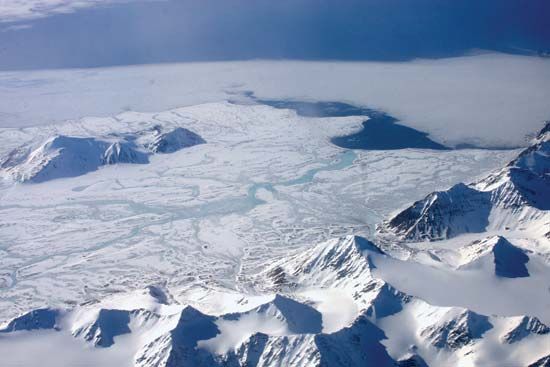
Forlandet National Park is a protected national park and bird sanctuary located in the Svalbard archipelago. Established in 1973 by Norway’s Environment…
What is Forlandet National Park?
Forlandet National Park is a protected national park and bird sanctuary located in the Svalbard archipelago. Established in 1973 by Norway’s Environment Ministry, the park is notable for hosting the highest concentration of bird sanctuaries in the region, totaling six distinct sites. These sanctuaries are situated across the southern and southeastern areas of the park and include Kapp Linné, Boheman, Gåsøyane, Plankenholmane, Forlandsøyane, and Hermansenøya.1
What kind of birds live in Svalbard?
Svalbard hosts a diverse array of avian life, primarily consisting of migratory species that arrive during the summer to breed and rear their young. Because the Arctic environment is harsh, only a few species are considered year-round residents, such as the ptarmigan, snowy owl, gyrfalcon, and raven.2
The bird populations in Svalbard are categorized by their habitats and behaviors:
- Marine Birds: Many species depend on the marine food base and nest colonially on coastal cliffs, particularly near upwelling currents where food is abundant. This group includes members of the auk family (such as murres, guillemots, and little auks), fulmars, and various gulls and terns.21
- Waterfowl and Shorebirds: These birds often nest in wet sedge meadows near lakes, estuaries, and seacoasts. Notable examples include eider ducks and barnacle geese, which are known to breed in protected areas like South Spitsbergen National Park.231
- Raptors: Birds of prey that nest in the region include the peregrine falcon, rough-legged hawk, and jaegers, which often prey on lemmings and the nests of other birds.2
What is the climate like in the Arctic archipelago?
The climate of the Arctic archipelago is generally classified as a polar maritime climate, characterized by moderate winter temperatures compared to continental regions and high levels of precipitation, often in the form of snow or rain.5
In the specific case of the Svalbard archipelago, the climate is influenced by a branch of the warm North Atlantic Drift, which helps moderate temperatures and keeps western coastal passages open for vessels during most of the year. Despite this influence, the region experiences true Arctic conditions, with temperatures ranging from approximately 59 °F (15 °C) in the summer to -40 °F (-40 °C) in the winter.6
Across the broader Arctic, summer temperatures are relatively uniform, though maritime areas like the northern islands are often cool, cloudy, and prone to fog when sea ice melts. Conversely, the Canadian Arctic Archipelago experiences a polar continental climate, where winters are intensely cold and snowfall is generally light due to the insulating effect of thick, unbroken sea ice.55
How does Norway protect its national parks?
Norway protects its national parks and natural areas through a combination of legislative action, royal decrees, and the establishment of dedicated environmental ministries.
- Legal Framework: National parks are often established through specific laws or royal decrees. For example, Rondane National Park was initially designated as a nature preserve by royal decree in 1962 before being formally established as a national park under a 1970 law.7
- Environmental Oversight: Norway’s Environment Ministry plays a direct role in conservation by designating protected areas and sanctuaries. In the Svalbard archipelago, the ministry has established parks like Forlandet National Park, which specifically functions as a bird sanctuary to protect critical habitats.6
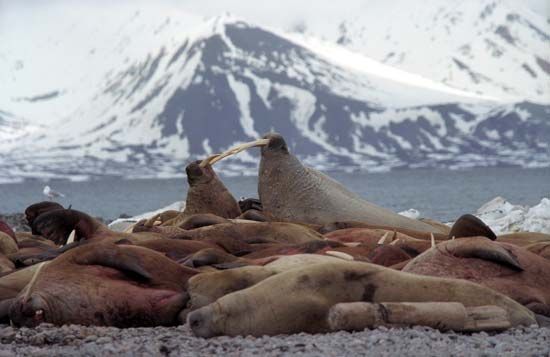
- Species Protection: Beyond land management, Norway enforces laws to protect specific wildlife. In Svalbard, animals such as seals, walruses, and whales are protected by law to ensure the preservation of the region’s biodiversity.8
Sources
- Forlandet National Park — Encyclopædia Britannica
- Polar ecosystem - Biota of the Arctic — Encyclopædia Britannica
- South Spitsbergen National Park — Encyclopædia Britannica
- Arctic - Marine fauna — Encyclopædia Britannica
- Arctic - Climate of the Arctic — Encyclopædia Britannica
- Svalbard — Encyclopædia Britannica
- Rondane National Park — Encyclopædia Britannica
- Øvre Divi Valley National Park — Encyclopædia Britannica
Published on · 3 min read