South Spitsbergen National Park
South Spitsbergen National Park is a protected area and bird sanctuary established by Norway in 1973. Located in the southern corner of the island of…
What is South Spitsbergen National Park?
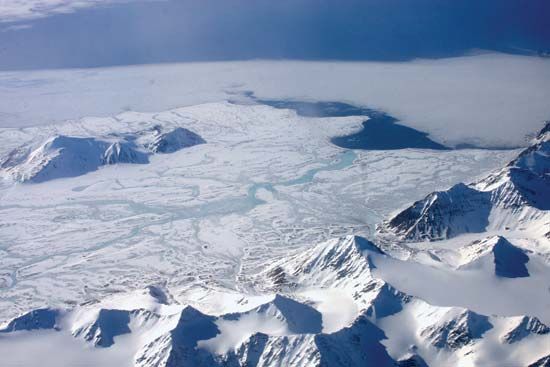
South Spitsbergen National Park is a protected area and bird sanctuary established by Norway in 1973. Located in the southern corner of the island of Spitsbergen—the largest island in the Svalbard archipelago—the park covers an area of 2,046 square miles (5,300 square km).12
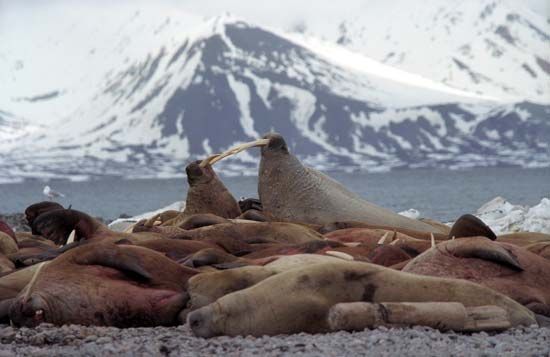
The park is characterized by its rugged, Arctic landscape, with large portions of its territory covered by permanent snow, ice, and glaciers. It also serves as a vital habitat for wildlife, hosting several seabird colonies and providing breeding grounds for eider ducks and barnacle geese. To further protect its avian populations, the park encompasses four distinct bird sanctuaries situated off its southern and western coasts: Sørkapp, Dunøyene, Isøyene, and Olsholmen.1
What are the main characteristics of an Arctic climate?
The Arctic climate is defined by extreme cold, limited solar energy, and significant seasonal variation. While climates across the region vary based on latitude, topography, and proximity to the sea, they generally share “polar” characteristics, including short, cool summers and long, harsh winters.4
Primary Climate Classifications
Polar climates are often categorized into two main types:
- Polar Maritime: Found along coastal areas and northern islands, these regions experience moderate winter temperatures, high winds, and heavy precipitation (snow or rain).4
- Polar Continental: Characterized by intensely cold winters with light snowfall, this climate type is typical of inland areas like northern Alaska, Canada, and Siberia.4
Key Environmental Features
- Temperature and Light: High latitudes limit solar energy to summer months. During winter, extreme radiative cooling often leads to temperature inversions, where air a few thousand feet above the surface is significantly warmer than at the ground.4
- Permafrost: Much of the Arctic is underlain by permafrost, or perennially frozen ground. This environment features an “active layer” that thaws in the summer and freezes in the winter.5
- Snow and Wind: Strong winds redistribute snow, which is critical for insulating plants and animals during the long winter.6
- Climate Change: The Arctic is experiencing rapid warming, with surface air temperatures rising significantly faster than the global average. This has led to the melting of sea ice and the potential thawing of permafrost, which risks releasing stored carbon into the atmosphere.7
How do animals like polar bears and reindeer survive in Svalbard?
Animals in the Svalbard archipelago survive the harsh Arctic environment through specialized physiological and behavioral adaptations.
Polar Bears
Polar bears are highly adapted to the marine-tundra interface, relying on sea ice as a platform to hunt their primary prey, seals primary prey, seals.9
- Insulation: They possess a dense undercoat, a thick layer of fat (up to 4 inches deep), and hollow, transparent hairs that trap air to retain heat. Their black skin absorbs sunlight to further assist in warmth.109
- Hunting: Their white appearance provides camouflage in the snow, allowing them to ambush seals at breathing holes. They are also excellent swimmers, using their front limbs for propulsion.109
Reindeer
Reindeer are well-equipped for the severe Arctic climate through unique foraging and metabolic strategies.1112
- Foraging: They use sharp hooves and antlers to dig through snow to reach reindeer moss, a high-carbohydrate lichen. Females retain their antlers through winter, allowing them to defend these feeding craters.111312
- Metabolism: To survive on a low-protein winter diet, they recycle urea within their digestive system to utilize nitrogen. Their hollow guard hairs provide superior insulation, and their deeply cloven hooves allow them to move across snow and soft ground.1312
What is the purpose of the Svalbard Global Seed Vault?
The Svalbard Global Seed Vault serves as a secure, long-term storage facility designed to safeguard the genetic diversity of the world’s food crops.16
Primary Purpose
- Genetic Insurance: The vault acts as a global “safety deposit box” for seeds, protecting the genetic resources of over 6,000 species of domesticated plants against catastrophic events.16
- Redundancy: It holds duplicates of seed samples stored in other national and international seed banks. If a local or regional bank loses its collection due to conflict, natural disaster, or technical failure, the vault provides a secure backup that can be withdrawn as needed.16
Strategic Design
Sources
- South Spitsbergen National Park — Encyclopædia Britannica
- Spitsbergen — Encyclopædia Britannica
- Svalbard — Encyclopædia Britannica
- Arctic - Climate of the Arctic — Encyclopædia Britannica
- permafrost — Encyclopædia Britannica
- Polar ecosystem - Development and structure of populations and communities — Encyclopædia Britannica
- Tundra - Effects of human activities and climate change — Encyclopædia Britannica
- Tundra - Use of sunlight and carbon dioxide — Encyclopædia Britannica
- Tundra - Arctic mammals — Encyclopædia Britannica
- Why are polar bears white? — Encyclopædia Britannica
- Dormancy - Heart rate and circulation — Encyclopædia Britannica
- reindeer: Top Questions — Encyclopædia Britannica
- polar bear: Top Questions — Encyclopædia Britannica
- polar bear — Encyclopædia Britannica
- reindeer — Encyclopædia Britannica
- The Arctic’s Seed-Filled Doomsday Fortress — Encyclopædia Britannica
Published on · 3 min read