Gaboon Viper
The Gaboon viper (Bitis gabonica) exhibits a distinct reproductive cycle characterized by a long interval between breeding events. Unlike many other snakes…
How does the Gaboon viper reproduce, and what is unique about its breeding habits?
The Gaboon viper (Bitis gabonica) exhibits a distinct reproductive cycle characterized by a long interval between breeding events. Unlike many other snakes that may reproduce annually, this species typically breeds only every two to three years.1
Regarding their reproductive method, Gaboon vipers are ovoviviparous, meaning they give birth to live young rather than laying eggs. A single litter typically consists of 15 to 40 offspring. This reproductive strategy, combined with their infrequent breeding schedule, is a notable aspect of their life history in the tropical forests of central and western Africa.1
Where is the Gaboon viper typically found in the wild?
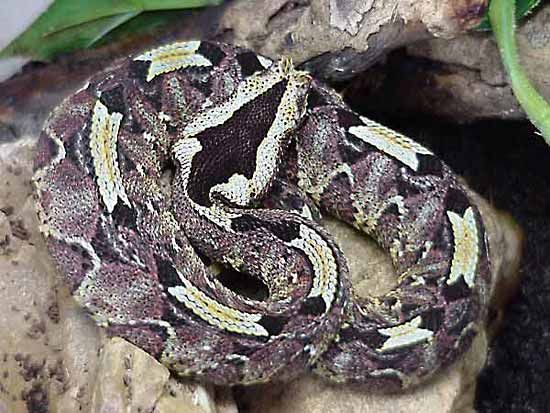
The Gaboon viper (Bitis gabonica) is a ground-dwelling snake native to the tropical forests of central and western Africa. As a member of the genus Bitis, it is specifically adapted to these forest environments, where its bold, patterned coloration provides effective camouflage among the leaves and roots of the forest floor.12
How does the Gaboon viper compare to other viper species in terms of size and venom potency?
The Gaboon viper (Bitis gabonica) is distinguished by its significant physical stature and specialized anatomy compared to other members of the Viperidae family.
Size and Physicality
- Mass and Length: The Gaboon viper is recognized as the heaviest venomous snake in Africa, reaching weights of up to 8 kg (18 pounds) and lengths of approximately 2 metres (7 feet). While it is large, other vipers, such as the bushmaster of the Americas, can exceed 3 metres (10 feet) in length.
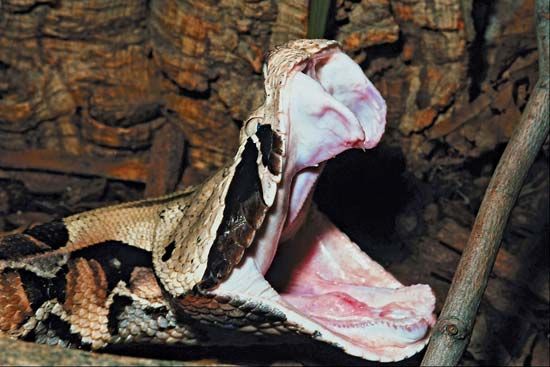
- Fangs: A unique anatomical feature of the Gaboon viper is its possession of the longest fangs of any snake, measuring up to 4 cm (1.6 inches) in length.
Venom Potency
While the Gaboon viper is described as extremely venomous, its temperament is generally considered docile. In contrast, other vipers are noted for different characteristics:
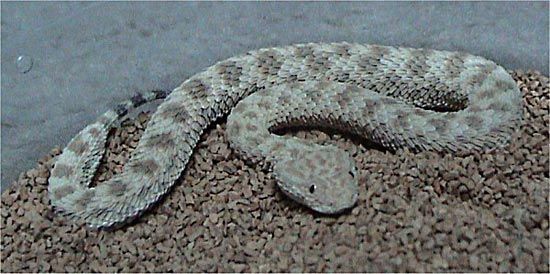
- The saw-scaled viper, for example, is considered the deadliest in terms of human mortality due to its aggressive nature and frequent bites, despite its venom being lethal in less than 10 percent of untreated cases.
- Other snakes, such as the inland taipan, possess significantly more complex and potent neurotoxic venom compared to the Gaboon viper.
What role does the Gaboon viper play in its ecosystem?
The Gaboon viper (Bitis gabonica) serves as a specialized predator within the tropical forest ecosystems of central and western Africa. Its primary ecological role is that of an ambush predator, helping to regulate populations of small ground-dwelling animals.
- Predatory Strategy: The snake relies on its cryptic, velvetlike coloration to remain nearly invisible among the leaves and roots of the forest floor. By remaining motionless, it effectively ambushes its primary prey, which consists of rodents and ground-dwelling birds.1
- Hunting Mechanism: Once prey is within range, the Gaboon viper utilizes its exceptionally long fangs to deliver a venomous bite. It holds the prey until the venom takes effect, ensuring a successful capture.1
By occupying this niche, the Gaboon viper functions as a key component of the forest food web, maintaining the balance of its local environment through its specialized hunting behavior.12
Sources
- Gaboon viper — Encyclopædia Britannica
- Gaboon viper — Merriam-Webster
- viper — Encyclopædia Britannica
- Bitis — Encyclopædia Britannica
- 9 of the World’s Deadliest Snakes — Encyclopædia Britannica
- rhinoceros viper — Encyclopædia Britannica
Published on · 2 min read