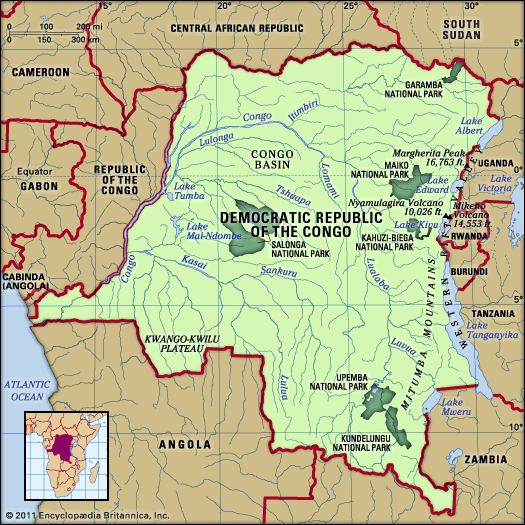
Garamba National Park
Established in 1938, Garamba National Park is a significant natural area in the northeastern Democratic Republic of the Congo that serves as a vital…
What is the historical significance of Garamba National Park in terms of wildlife conservation?
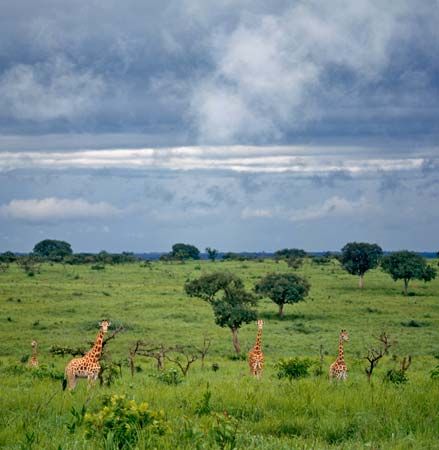
Established in 1938, Garamba National Park is a significant natural area in the northeastern Democratic Republic of the Congo that serves as a vital sanctuary for diverse wildlife. Designated as a UNESCO World Heritage site in 1980, the park protects expansive savannas and woodlands that provide essential habitats for species such as buffalo, hippopotamus, giraffe, and the critically endangered white rhinoceros.12
The park is also historically notable for the Gangala-Na-Bodio elephant station located in its southern region. This facility is one of the few of its kind globally, where elephants have been domesticated for use in forestry, representing a unique intersection of wildlife management and human utility. Despite ongoing challenges, including the threat of illegal poaching, the park remains a cornerstone of regional conservation efforts aimed at preserving biodiversity within the Congo basin’s complex ecosystems.12
Are there any cultural or archaeological sites within Garamba National Park, and how are they preserved?
The provided search results do not contain information regarding the presence of cultural or archaeological sites within Garamba National Park. The available documentation focuses primarily on the park’s natural geography, its status as a UNESCO World Heritage site, and the Gangala-Na-Bodio elephant station, which is a facility for animal management rather than an archaeological site.
What are some of the unique ecosystems and habitats found in Garamba National Park?
Garamba National Park features a diverse range of unique ecosystems and habitats that support its rich wildlife. Situated at an elevation between 2,300 and 3,500 feet (700 and 1,065 meters), the park is primarily characterized by the following landscapes:
- Savanna and Woodlands: As a continuation of the South Sudanese savanna, the park contains expansive grasslands and savanna woodlands that serve as vital habitats for species such as buffalo, giraffe, and the critically endangered white rhinoceros.12
- Plateaus and Marshlands: The park’s topography includes an extensive plateau interspersed with marshland depressions, which provide essential water sources and specialized environments for various fauna.1
- Riverine Systems: The landscape is fed by the Garamba and Dungu rivers, creating aquatic habitats that support species like hippopotamus.1
- Inselbergs: The terrain is dotted with prominent inselbergs, which are isolated hills or mountains, largely composed of granite, adding unique geological diversity to the park’s environment.1
These varied habitats are critical for maintaining the biodiversity of the region, which has been recognized through its designation as a UNESCO World Heritage site1.2
Where is Garamba National Park located and when was it established?
Garamba National Park is located in the northeastern region of the Democratic Republic of the Congo, directly bordering South Sudan.1
The park was established in 1938 and covers an area of 1,900 square miles (4,920 square km). It was later designated a UNESCO World Heritage site in 1980.13
Sources
- Garamba National Park — Encyclopædia Britannica
- Democratic Republic of the Congo - Plant and animal life — Encyclopædia Britannica
- list of World Heritage sites - Democratic Republic of the Congo — Encyclopædia Britannica
- Virunga National Park — Encyclopædia Britannica
Published on · 2 min read