Gasterosteiform
Gasterosteiforms, an order of fishes that includes sticklebacks, seahorses, and pipefishes, occupy diverse aquatic habitats ranging from fresh to salt water.…
What role do gasterosteiforms play in their respective ecosystems?
Gasterosteiforms, an order of fishes that includes sticklebacks, seahorses, and pipefishes, occupy diverse aquatic habitats ranging from fresh to salt water. Their role within these ecosystems is primarily defined by their specialized survival strategies and reproductive behaviors.123
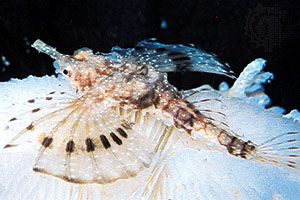
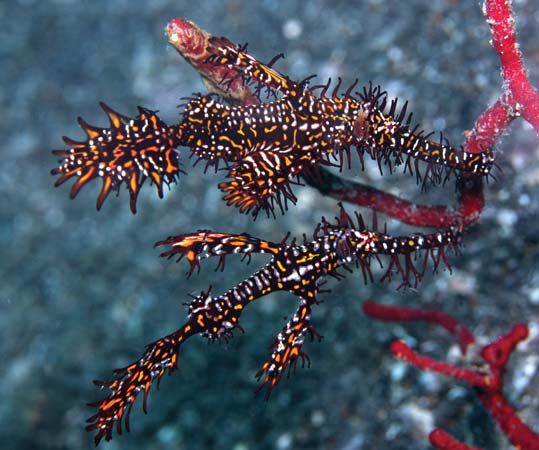
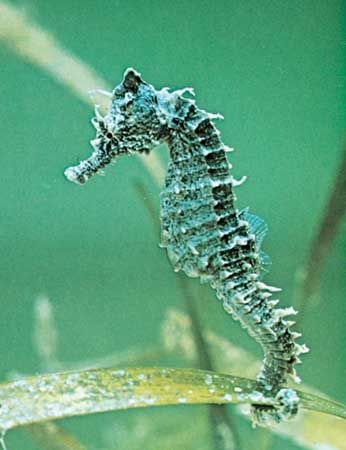
To avoid predation, many gasterosteiforms utilize camouflage by adopting a vertical posture among corals, plants, or other animals, which helps them blend into their surroundings and presents their protective body spines or shields to potential predators. Some species, such as seahorses, further enhance this camouflage through color changes and skin filaments that mimic grassy environments.3
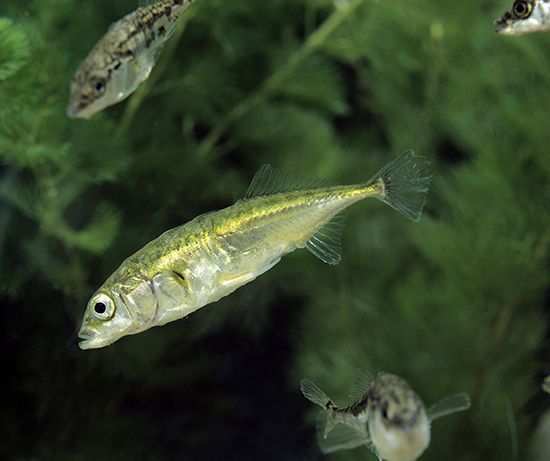
Regarding reproduction, these fishes often exhibit complex parental care. For instance, male sticklebacks construct nests from plant materials and mucous secretions, subsequently guarding and aerating the eggs until they hatch. While most gasterosteiforms rely on their caudal fins for locomotion, others like the seahorse use a prehensile tail to grip vegetation or coral, navigating their environment using dorsal and pectoral fins.23
Are there any gasterosteiform species that are considered endangered or threatened?
Sorry, the Britannica knowledge base does not contain information regarding which specific gasterosteiform species are currently classified as endangered or threatened.
The provided search results focus on the general characteristics, classification, and paleontological history of the order Gasterosteiformes, but they do not provide data on the current conservation status of these fishes.
What are the main characteristics of the gasterosteiform fish order?
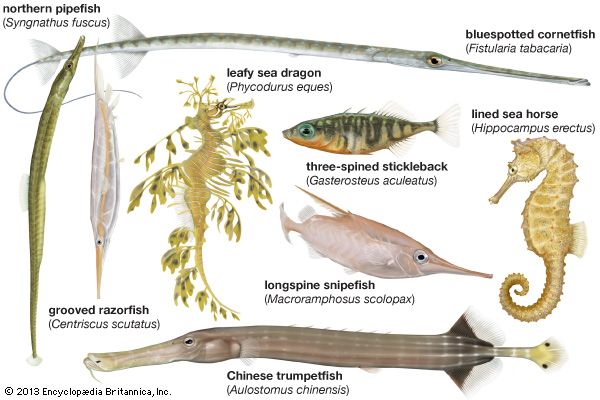
The order Gasterosteiformes consists of a diverse group of fishes defined by several distinct anatomical features. They are generally characterized by tubular mouths, soft fin rays, and pelvic fins positioned on the abdomen. Internally, they possess a primitive kidney and an air bladder that lacks a duct to the gut, while their gill structures are considered somewhat degenerate.1
Rather than typical scales, most species are covered in bony rings or thick, diamond-shaped ganoid plates. The order includes a wide variety of families, such as sticklebacks, seahorses, pipefishes, trumpetfishes, shrimpfishes, and dragonfish.1
Behaviorally, these fishes are noted for their specialized survival and reproductive strategies. Many species use camouflage—sometimes by adopting a vertical posture or changing color—to hide among marine growths. While reproductive habits vary, many members of the order are known for complex parental care, with males often guarding nests or brooding eggs in specialized pouches.53
What is the geographical distribution of gasterosteiform fishes?
Gasterosteiform fishes are found globally, inhabiting a wide range of aquatic environments including salt water, brackish water, and fresh water salt water, brackish water, and fresh water.4
These fishes occupy diverse habitats where they seek food, safety, and suitable conditions for reproduction. Many species, such as certain pipefishes, seahorses, and sticklebacks, are notable for their ability to tolerate varying levels of salinity, allowing them to thrive in different water types. While most members of the order utilize various marine growths like corals and plants for shelter and camouflage, snipefishes are a notable exception, as they do not typically seek cover among such growths.4
Sources
- gasterosteiform — Encyclopædia Britannica
- stickleback — Encyclopædia Britannica
- gasterosteiform - Ecology and behaviour — Encyclopædia Britannica
- gasterosteiform - General features — Encyclopædia Britannica
- gasterosteiform - Paleontology — Encyclopædia Britannica
- gasterosteiform - Reproduction and life cycle — Encyclopædia Britannica
Published on · 2 min read