Fish
Beyond the lateral line system, which detects water movement and pressure changes through neuromasts, fish possess several other specialized sensory organs:

What are some unique sensory organs that fish possess, like the lateral line?
Beyond the lateral line system, which detects water movement and pressure changes through neuromasts, fish possess several other specialized sensory organs:
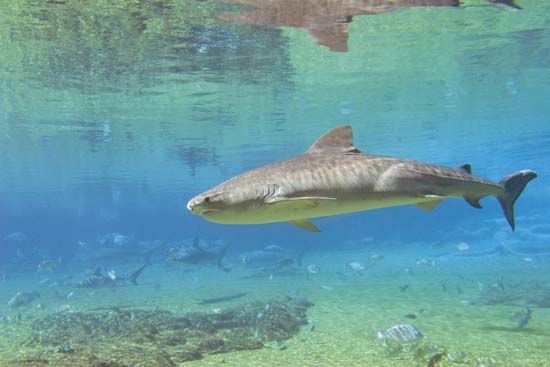
- Ampullae of Lorenzini: Found primarily in sharks, rays, and some bony fish, these electroreceptors consist of gel-filled canals that detect minute electrical fields, such as those generated by the muscle contractions of prey or the Earth’s magnetic field for navigation.123
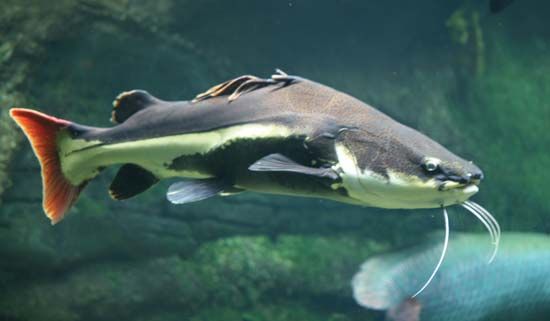
- Weberian apparatus: Characteristic of the superorder Ostariophysi (including catfish and minnows), this chain of small bones connects the swim bladder to the inner ear, significantly enhancing hearing by conducting pressure changes from sound waves.4
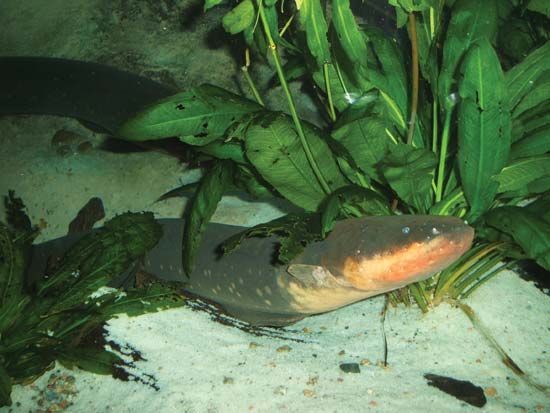
- Electric Organs: Certain fish, such as mormyrids and electric eels, possess specialized organs in their tails that emit weak electrical discharges to create a field, allowing them to “see” their surroundings in murky water through electroreception.15
- Distributed Taste Buds: Unlike terrestrial vertebrates, many fish have taste buds scattered across their lips, flanks, tail fins, and barbels, allowing them to “taste” their environment beyond the oral cavity.6
How do fish breathe underwater, and what structures enable this process?
Fish breathe underwater primarily by using gills, which are specialized organs designed to extract dissolved oxygen from water and release carbon dioxide.91011
The Structure of Gills
Gills consist of fleshy filaments supported by gill arches. These filaments are covered in secondary folds called lamellae, which are packed with tiny blood vessels known as capillaries. This feathery, branched design creates a massive surface area, allowing the fish’s circulatory system to come into close contact with the water for efficient gas exchange.111210
How Gas Exchange Works
Fish typically take water in through their mouths and force it backward over the gill filaments. To maximize efficiency, most fish utilize a process called countercurrent exchange. In this system, blood in the gill capillaries flows in the opposite direction to the water passing over the lamellae. Because the blood always encounters water with a higher oxygen concentration than its own, oxygen continuously diffuses into the bloodstream along the entire length of the filament.9111012
Adaptations and Alternatives
While gills are the primary respiratory organs, some fish have evolved additional methods:
- Ventilation: Many fish use a double-pumping mechanism to maintain water flow, while others, like tuna, rely on constant forward motion to push water over their gills.13
- Aerial Respiration: Some species, such as lungfish and the bowfin, possess specialized swim bladders or pharyngeal tissues that function like lungs, allowing them to gulp air in oxygen-poor environments.1113
- Cutaneous Respiration: Certain fish, including eels, can absorb oxygen directly through their skin, which serves as a supplemental or even primary respiratory surface.1213
How has human activity, such as overfishing and pollution, affected fish populations worldwide?
Human activity has profoundly altered fish populations worldwide, primarily through overfishing and various forms of ocean pollution.
Impact of Overfishing
Technological advancements in the fishing industry, such as the use of large-scale factory trawlers and synthetic nets, have enabled the extraction of fish at rates that often exceed natural reproductive capacities. By the early 21st century, it was estimated that nearly 90 percent of marine fish stocks were fully exploited or overfished. This pressure has led to:1415
- Population Collapses: Iconic fisheries, such as the North Atlantic cod, have suffered catastrophic declines, leading to commercial extinction in some regions.1415
- Trophic Cascades: Overfishing removes key predators or prey, disrupting the natural balance of food webs and causing ecosystem-wide instability.15
- Bycatch and Habitat Destruction: Methods like bottom trawling capture non-target species and destroy essential habitats, such as coral reefs.15
Environmental Degradation
Pollution and climate-related changes further threaten fish health:
- Ocean Acidification: The absorption of excess carbon dioxide has increased seawater acidity, which can cause acidosis in fish, impairing their growth, reproduction, and respiration.1416
- Ghost Fishing Gear: Abandoned or lost fishing implements continue to trap and kill marine life for years, posing a persistent threat to biodiversity.17
- Dead Zones: Nutrient runoff from sewage and fertilizers creates eutrophic “dead zones” where oxygen levels are too low to support fish life.18
We must recognize that the health of our oceans is a fundamental ethical responsibility, as these ecosystems are vital to global food security and environmental stability. Would you like to explore the specific management strategies, such as exclusive economic zones, that are being used to combat these issues?
What is the evolutionary history of fish, and how are they related to other vertebrates?
The evolutionary history of fish is a complex, multi-million-year process characterized by the successive emergence of better-adapted groups that replaced their predecessors.20
Early Origins and Jawless Fishes
The earliest vertebrate fossils, consisting of dermal armor fragments from jawless fishes (Agnatha), date back to the Upper Ordovician Period, approximately 450 million years ago. These early ancestors likely evolved from small, soft-bodied, filter-feeding organisms similar to modern Cephalochordata, with bodies stiffened by a notochord20. By the end of the Silurian, both jawless and early jawed vertebrates were well-established.21
The Rise of Jawed Fishes
The Devonian Period saw the rise of the Placodermi, a diverse group of armored, jawed fishes. During this time, the two major lineages of modern fish—bony fishes (Osteichthyes) and cartilaginous fishes (Chondrichthyes)—evolved independently. While cartilaginous fishes like sharks and rays retained a cartilaginous skeleton, bony fishes developed ossified skeletons, which became a key innovation for vertebrate evolution.222123
Relationship to Other Vertebrates
Fish share a fundamental body plan with all other vertebrates, including a central nervous system, heart, kidney, and digestive tract.2123
The Sarcopterygii (fleshy-finned fishes), particularly groups like the rhipidistians, are closely linked to the evolution of land vertebrates. Ancient fishes evolved structures such as lungs and partially divided hearts—seen today in lungfish—which foreshadowed the physiological adaptations necessary for life on land. Consequently, while lungfish are not direct ancestors of amphibians, they are closely related to the ancient fish groups from which land vertebrates emerged.2425
Sources
- Mechanoreception - Ampullary lateral-line organs ( electroreceptors ) — Encyclopædia Britannica
- Weberian apparatus — Encyclopædia Britannica
- Senses - Electric sense — Encyclopædia Britannica
- ampulla of Lorenzini — Encyclopædia Britannica
- Chemoreception - Fish — Encyclopædia Britannica
- lateral line system — Encyclopædia Britannica
- deep-sea fish — Encyclopædia Britannica
- fish - Other senses (touch, pain, and special senses) — Encyclopædia Britannica
- 14 Questions About Aquatic Animals Answered - How do fish breathe underwater? — Encyclopædia Britannica
- How do gills work? — Encyclopædia Britannica
- fish - The respiratory system — Encyclopædia Britannica
- Respiratory system - The gills — Encyclopædia Britannica
- Respiratory system - Fishes — Encyclopædia Britannica
- commercial fishing - History of commercial fishing — Encyclopædia Britannica
- ocean acidification — Encyclopædia Britannica
- overharvesting — Encyclopædia Britannica
- water pollution: Top Questions — Encyclopædia Britannica
- Talking Ocean Trash: Ghost Gear Keeps on Fishing — Encyclopædia Britannica
- commercial fishing - Fishes — Encyclopædia Britannica
- fish - Agnatha: early jawless fishes — Encyclopædia Britannica
- fish - Evolution and paleontology — Encyclopædia Britannica
- fish - Actinopterygii: ray-finned fishes — Encyclopædia Britannica
- chondrichthyan - Evolution — Encyclopædia Britannica
- Circulatory system - Fishes — Encyclopædia Britannica
- fish - Sarcopterygii: fleshy-finned fishes — Encyclopædia Britannica
- fish - Body plan — Encyclopædia Britannica
Published on · 5 min read