Gentianaceae
Members of the Gentianaceae family, commonly known as the gentian family, are primarily flowering plants that reproduce through sexual means involving showy…
How do plants in the Gentianaceae family reproduce and disperse their seeds?
Members of the Gentianaceae family, commonly known as the gentian family, are primarily flowering plants that reproduce through sexual means involving showy, tubular flowers. These flowers typically possess both stamens and a pistil, with the stamens joined to the corolla tube. In some species, nectar-secreting pits at the base of the petals and sepals help facilitate pollination.123
Regarding seed dispersal, the family is characterized by the production of capsular fruits, which are dry structures that split open to release their small seeds. While the provided information details general mechanisms of seed dispersal such as active ballistics, gravity, and geocarpy in various plant groups, it does not explicitly specify the particular dispersal strategies utilized by the Gentianaceae family beyond the general function of their capsules.2345
What are the main characteristics of plants in the Gentianaceae family?
The Gentianaceae family, or gentian family, comprises approximately 1,750 species of flowering plants primarily found in northern temperate regions, though they exhibit significant diversity in the tropics and subtropics.42
Physical Characteristics
- Growth Habit: Most members are annual or perennial herbs, though some are shrubs. A few tropical groups, such as Voyria, have lost their leaves and chlorophyll, relying instead on mycorrhizae or decaying matter.42
- Leaves: Typically opposite on the stem, often lacking leafstalks and stipules.42
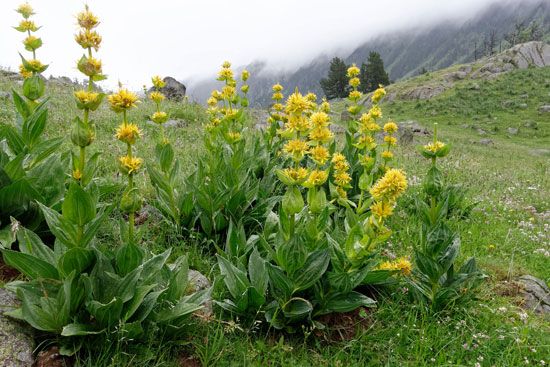
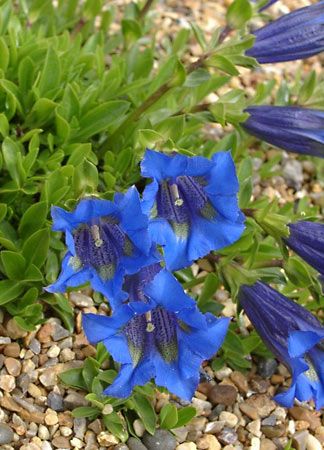
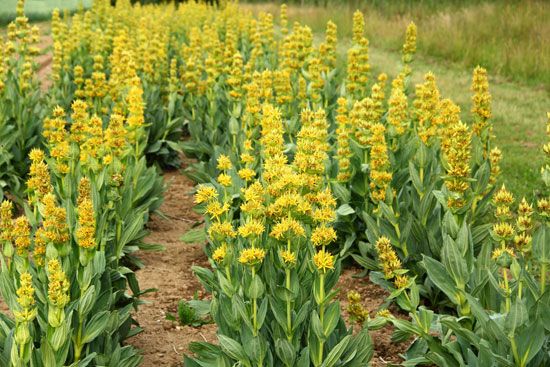
- Flowers: Known for showy, tubular corollas (trumpet, funnel, or bell-shaped) with four or five united petals. They are famous for displaying some of the purest blues in the plant kingdom, though other colors occur.42
- Reproductive Structures: Stamens are attached to the inside of the corolla tube. The ovary is superior, and the fruit is generally a capsule that splits to release small seeds.42
Biochemical and Ecological Traits
The family produces iridoid compounds and xanthones but lacks alkaloids. Many species are cultivated as ornamentals or used in herbal remedies and bitters.42
How many genera and species are included in the Gentianaceae family?
The Gentianaceae family, also known as the gentian family, is estimated to contain 102 genera and approximately 1,750 species. Some botanical sources provide slightly varying figures, such as 87 genera and nearly 1,700 species, reflecting ongoing taxonomic study within the group.423
These plants are primarily distributed across northern temperate regions, though they exhibit their greatest morphological and genetic diversity in tropical and subtropical environments.42
In which regions of the world are Gentianaceae plants commonly found?
Plants in the Gentianaceae family are found globally, with their distribution patterns varying by region:
- Northern Temperate Regions: This area holds the greatest number of species, particularly within the genera Gentiana and Gentianella. These plants are a notable feature of mountain regions, including the Alps, where they thrive in moist meadows and woods.473
- Tropical and Subtropical Regions: While temperate zones host many species, the greatest genus-level, genetic, and morphological diversity of the family occurs in the tropics and subtropics.43
- Specific Geographic Ranges: Members of the family are distributed across Europe, Asia, North and South America, and New Zealand. For example, the genus Eustoma is native to Central and South America, while specialized groups like Voyria are found in tropical rainforest understoriesria* are found in tropical rainforest understories. Additionally, unique species such as Saccifolium bandeirae are known from specific mountain peaks in the Guiana region of Venezuela and Brazil.743
Sources
- plant reproductive system - Physiology of plant reproduction — Encyclopædia Britannica
- Gentianales — Encyclopædia Britannica
- Gentianales - Gentianaceae — Encyclopædia Britannica
- Gentianaceae — Encyclopædia Britannica
- seed - Self-dispersal — Encyclopædia Britannica
- seed dispersal - Self-dispersal — Encyclopædia Britannica
- gentian — Encyclopædia Britannica
Published on · 3 min read