Geraniales
Geraniales is an order of dicotyledonous flowering plants belonging to the basal Rosid group of the core eudicots. This order comprises 5 families, 17…
What is Geraniales?
Geraniales is an order of dicotyledonous flowering plants belonging to the basal Rosid group of the core eudicots. This order comprises 5 families, 17 genera, and nearly 850 species, with the majority belonging to the Geraniaceae family.1
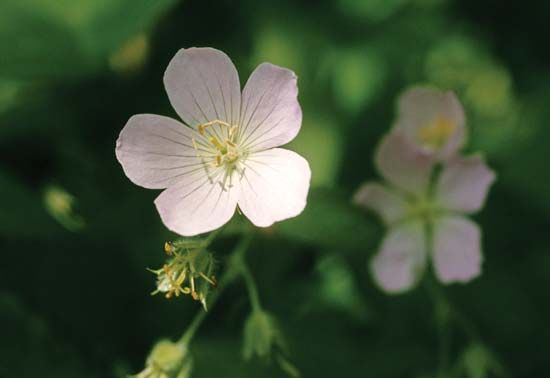
Members of this order are primarily herbs, though some are woody shrubs or small trees. They typically feature simple or compound leaves with gland-tipped margins and flowers arranged in cymose clusters. These flowers generally possess a five-parted perianth, 10 stamens, and 5 fused carpels. Their fruits are typically capsules or schizocarps that break into individual mericarps at maturity.1
While Geraniaceae is widespread in temperate and warm temperate regions, the other four families—Melianthaceae, Francoaceae, Vivianiaceae, and Ledocarpaceae—are generally restricted to Africa or South America. The order is well-known for its ornamental plants, such as the florist’s geranium (Pelargonium ×domesticum), and for the production of essential oils.1
What are the main differences between herbs and woody shrubs?
The primary distinction between herbs and woody shrubs lies in their internal structure and growth patterns.
Herbaceous Plants (Herbs)
- Tissue Composition: Herbs lack true woody tissues. They typically possess flexible, green stems that do not undergo significant secondary growth.34
- Life Cycle: Many herbs are annuals or biennials, completing their life cycles within one or two seasons. Perennial herbs often die back to the ground at the end of the growing season, surviving through underground storage organs like bulbs, rhizomes, or corms.34
- Growth: Because they lack a vascular cambium, they generally do not develop the rigid, persistent structures found in woody plants.34
Woody Shrubs
- Tissue Composition: Shrubs are defined as woody plants, meaning they are rich in secondary tissues that provide strength and rigidity.54
- Structure: Unlike trees, which typically have a single dominant trunk, shrubs are characterized by having several stems, none of which are dominant.5
- Size: They are usually less than 3 meters (10 feet) tall, though environmental conditions can sometimes cause them to grow to the size of small trees.5
While these categories are standard, some plants are considered “semiwoody” because they exhibit characteristics of both, making their classification occasionally ambiguous.3
How do plants use essential oils to survive in their environments?
Plants utilize essential oils as versatile tools for survival, though the exact functions of these substances remain a subject of ongoing scientific study. Their primary roles include:9
- Attracting Pollinators: The fragrances produced by flowers act as chemical signals that attract specific insects, such as bees, which aids in natural selection and ensures successful cross-pollination.91011
- Defense Against Threats: Essential oils found in leaves, roots, and wood may protect plants from parasites and animal depredation. Some oils, such as those found in mint, possess documented antibacterial, antifungal, antiviral, and insecticidal properties that help the plant resist pathogens and pests.912
- Physical Protection and Healing: When a tree trunk is injured, it may release oleoresinous exudations. These substances act as a protective seal, preventing the loss of vital sap and shielding the plant from disease organisms and parasites.9
While some researchers suggest these oils are simply metabolic waste products, their widespread presence in odoriferous plants suggests they play a significant, if complex, role in a plant’s ability to thrive in its environment.9
What is the difference between a simple leaf and a compound leaf?
The primary difference between a simple leaf and a compound leaf lies in the structure of the leaf blade (lamina).
Simple Leaves
A simple leaf consists of a single, undivided blade attached to the stem by a petiole. While the margins of a simple leaf may be smooth, serrated, or even deeply lobed, the blade remains a single unit.13
Compound Leaves
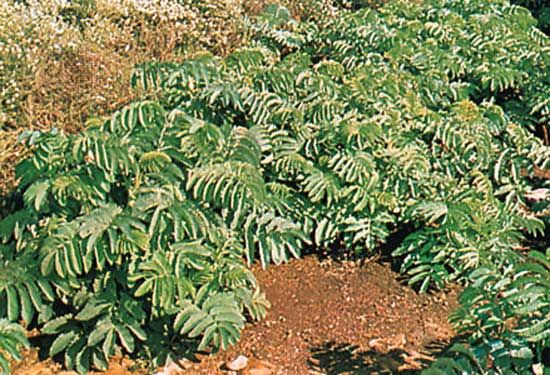
In a compound leaf, the blade is divided into two or more distinct subunits known as leaflets. These leaflets can be arranged in different patterns:1413
- Palmately compound: The leaflets radiate from a single point at the end of the petiole.13
- Pinnately compound: The leaflets are arranged in rows along an extension of the petiole called the rachis.13
A reliable way to distinguish a compound leaf from a simple leaf is to locate the axillary bud. These buds are found in the angle between the stem and the petiole of a leaf, but they are never present in the axils of individual leaflets.13
Sources
- Geraniales — Merriam-Webster
- Geraniales — Encyclopædia Britannica
- shrub — Encyclopædia Britannica
- herbaceous plant — Encyclopædia Britannica
- Asparagales - Order growth characteristics — Encyclopædia Britannica
- angiosperm - General features — Encyclopædia Britannica
- herb — Merriam-Webster
- herb — Merriam-Webster
- essential oil — Encyclopædia Britannica
- mint: Top Questions — Encyclopædia Britannica
- pollination - Bees — Encyclopædia Britannica
- major types of pollinators - Bees — Encyclopædia Britannica
- compound leaf — Merriam-Webster
- angiosperm - Leaves — Encyclopædia Britannica
Published on · 3 min read