Geoduck
The geoduck (Panopea generosa) is a large, edible burrowing bivalve native to the Pacific coast of North America. While the provided information confirms…
What culinary uses do geoducks have and in which cuisines are they popular?
The geoduck (Panopea generosa) is a large, edible burrowing bivalve native to the Pacific coast of North America. While the provided information confirms that the geoduck is highly prized as a food source due to its significant size and unique anatomy, the specific culinary preparations and the particular cuisines in which it is most popular are not detailed in the available search results.12
Where are geoducks primarily found and what type of habitat do they prefer?
The geoduck (Panopea generosa) is primarily found along the Pacific coast of North America, ranging from southern Alaska down to Baja California.1
Regarding their preferred habitat, these bivalves inhabit the sandy muds of intertidal and shallow sublittoral zones. They are known for living in deep burrows, a trait reflected in their name, which is believed to originate from a Nisqually Indian phrase meaning “dig deep”. While the Pacific geoduck is the most well-known, similar species such as Panopea bitruncata—often referred to as the Atlantic geoduck—inhabit regions stretching from the coast of North Carolina to the Gulf of Mexico.1
What cultural significance do geoducks have in the regions where they are found?
The cultural significance of the geoduck is deeply rooted in the linguistic and historical heritage of the Pacific Northwest. The name itself serves as a testament to the region’s Indigenous history; it is widely believed to be derived from a phrase in the Nisqually language meaning “dig deep,” highlighting the clam’s unique biological habit of residing in deep burrows within the sandy mud of intertidal zones.1
Furthermore, the term is etymologically linked to gʷídəq, a word from the Lushootseed language, which is a Salishan language spoken by Indigenous peoples of the Puget Sound region. This connection underscores the long-standing relationship between the local environment and the cultures that have inhabited these coastal areas for generations. Today, the geoduck remains a notable symbol of the Pacific coast’s marine biodiversity.21
What are the unique features of a geoduck’s anatomy, particularly its siphon?
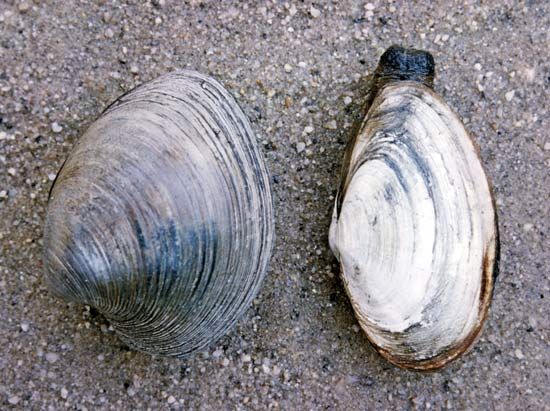
The geoduck (Panopea generosa) is recognized as the largest known burrowing bivalve, possessing several distinct anatomical features that allow it to thrive in its environment. While its gaping shell typically measures between 180 and 230 mm (7 to 9 inches) in length, the entire organism—shell included—can weigh as much as 3.6 kg (8 pounds).1
The most striking feature of the geoduck is its siphon. Unlike many other clams, the geoduck’s siphon is so large that it cannot be retracted into the shell. This specialized structure can extend up to 1.3 meters (about 4 feet) in length, allowing the animal to maintain contact with the surface while remaining safely buried deep within the sandy mud of intertidal and shallow sublittoral zones.1
Sources
- geoduck — Encyclopædia Britannica
- geoduck — Merriam-Webster
Published on · 2 min read