Gastropod
Gastropods exhibit a vast range in size, with adult members varying from less than one millimeter to over one meter in length.
What are some of the largest and smallest known gastropod species?
Gastropods exhibit a vast range in size, with adult members varying from less than one millimeter to over one meter in length.123
Largest Gastropod Species
- Parasitic Species: The longest known gastropod is the parasitic snail Parenteroxenos doglieli, which lives within the body cavity of sea cucumbers and can reach lengths of nearly 130 centimeters (50 inches). Other parasitic gastropods in the family Entoconchidae can also reach sizes of nearly 1.3 meters.12
- Marine Snails: The Australian trumpet or baler snail (Syrinx aruanus) is the largest marine snail, occasionally growing to more than 0.6 meters (two feet) in length.12
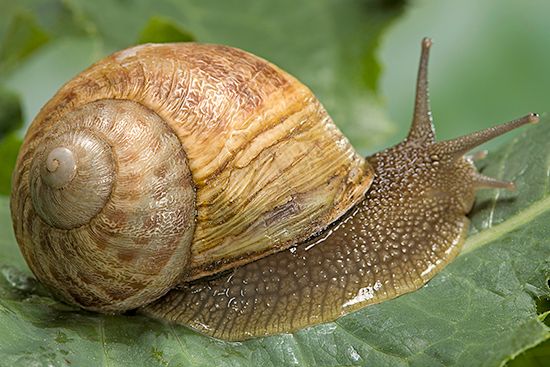
- Land Snails: The largest land snail is the African Achatina achatina, which forms a shell nearly 20 centimeters (eight inches) long.2
Smallest Gastropod Species
At the other end of the spectrum, many gastropods are minute, measuring less than one millimeter (0.04 inch) in diameter or length. Examples include certain adult marine snails such as Homalogyra and forest-litter snails like Stenopylis and Punctum.12
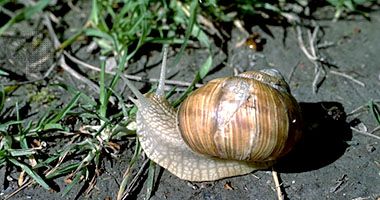
What is the purpose of a gastropod’s shell, and do all gastropods have shells?
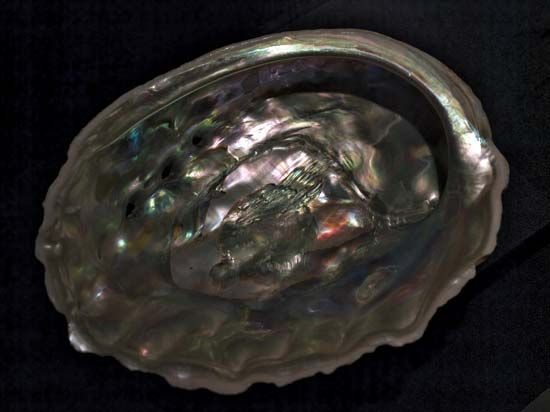
The primary purpose of a gastropod’s shell is to provide protection and support for the animal’s soft body. This hard exoskeleton, composed largely of calcium carbonate, serves as a physical barrier against predators. Many species can withdraw their bodies entirely into the shell for safety, often using a hardened plate called an operculum to seal the opening. Additionally, the shell’s shape and ornamentation—such as spines, knobs, or ribs—can assist in burrowing, provide structural strength, or help the animal stabilize itself in challenging environments like swift currents or pounding waves.456
Not all gastropods possess a shell. While the class Gastropoda includes snails, which typically feature a coiled shell, it also includes slugs. In these groups, the shell has been reduced to an internal fragment or completely lost through the course of evolution. For example, members of the order Nudibranchia characteristically lack a shell entirely, relying instead on other defensive mechanisms, such as chemical secretions or the use of stinging cells ingested from prey.78
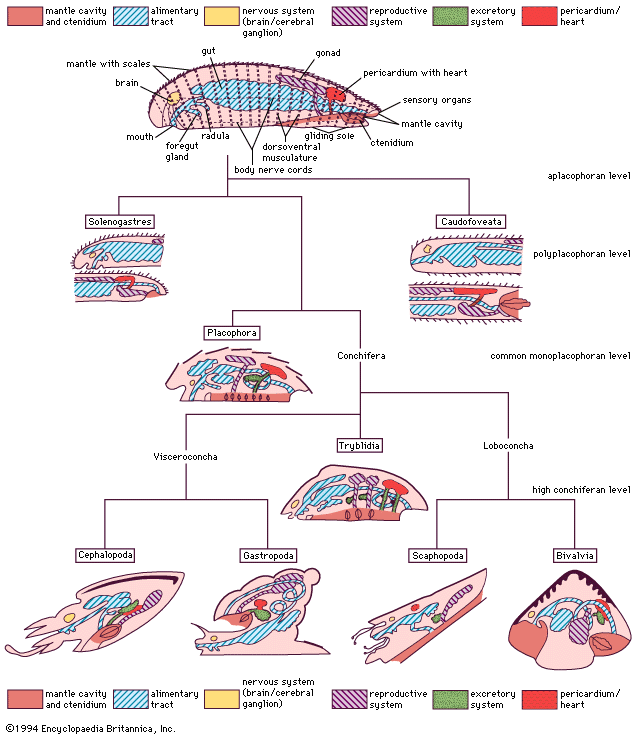
How do gastropods reproduce and what is their life cycle like?
Gastropod reproduction and life cycles are remarkably diverse, reflecting their evolutionary transition from marine environments to freshwater and land habitats.
Reproductive Strategies
While primitive prosobranchs (such as abalone) release gametes into the water for external fertilization, most gastropods have evolved mechanisms for internal fertilization. This often involves a male copulatory organ used to transfer sperm directly to the female or into a storage organ. Many species, particularly among opisthobranchs and pulmonates, are hermaphrodites, possessing both male and female reproductive organs. Some species even exhibit sex reversal, such as the slipper shell, which changes sex based on its position in a social stack.
Life Cycle and Development
The life cycle typically follows these stages:
- Larval Stage: In many marine species, fertilized eggs hatch into free-swimming trochophore larvae. These develop into veligers, which possess a small shell and ciliated lobes for swimming and feeding. During this phase, the animal undergoes “torsion,” a unique 180° twisting of the body.
- Metamorphosis: The veliger eventually settles and metamorphoses into a juvenile snail, transitioning to a crawling existence.
- Evolutionary Trends: Many species have bypassed the free-swimming larval stage by developing protective egg capsules or mucous masses, providing the young with a food supply until they hatch as miniature, crawling versions of the adults. Some species even practice ovoviviparity, where eggs are retained within the parent until they are ready to hatch.
How do gastropods move, and what is the function of their foot?
The foot is the primary organ of locomotion for most gastropods, serving as a versatile, muscular structure that has evolved to suit various environments and lifestyles.1415
How Gastropods Move
Most gastropods utilize a method called pedal locomotion, which relies on muscular action and the secretion of mucus.1416
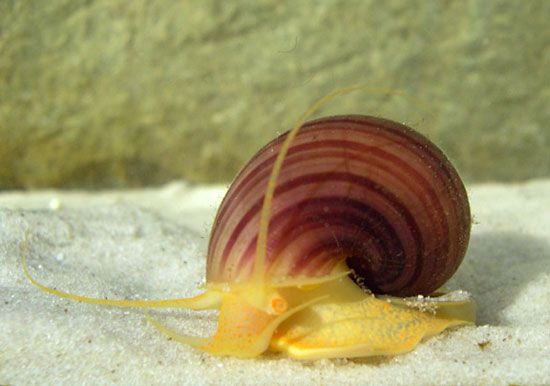
- Gliding: In typical snails, waves of muscular contraction move from the posterior to the anterior end of the foot, allowing the animal to glide over a self-produced mucous track. This mucus reduces friction and provides a stable surface for movement.1416
- Ciliary Action: Some small species move by the beating action of cilia on the foot against a sheet of mucus.14
- Alternative Methods: Certain species move in fits and starts by using a digging action of the foot, while others, such as pelagic gastropods, have modified their feet into flaps called parapodia for swimming.1415
Function of the Foot
Beyond basic movement, the foot is highly adaptable:
- Adhesion: In limpets and abalone, the foot is broadly expanded to act as an adhesive disk, allowing the animal to cling tightly to surfaces.15
- Defense: Some slugs and nudibranchs can self-amputate the posterior portion of the foot to distract predators while they escape.15
- Mating: In some land slugs, the foot is involved in secreting a slime rope that allows the mating pair to suspend themselves.14
Sources
- mollusk - Size range and diversity of structure — Encyclopædia Britannica
- gastropod - Size range and diversity of structure — Encyclopædia Britannica
- gastropod - Classification — Encyclopædia Britannica
- gastropod - The shell — Encyclopædia Britannica
- mollusk - Features of defense — Encyclopædia Britannica
- gastropod - Evolution and paleontology — Encyclopædia Britannica
- gastropod — Encyclopædia Britannica
- seashell — Encyclopædia Britannica
- nudibranch — Encyclopædia Britannica
- opisthobranch — Encyclopædia Britannica
- bivalve - External features — Encyclopædia Britannica
- gastropod - Reproduction and life cycles — Encyclopædia Britannica
- Animal reproductive system - Annelids and mollusks — Encyclopædia Britannica
- gastropod - Locomotion — Encyclopædia Britannica
- gastropod - The foot — Encyclopædia Britannica
- bivalve - Locomotion — Encyclopædia Britannica
- How fast are snails? — Encyclopædia Britannica
Published on · 4 min read