Geral Mountains
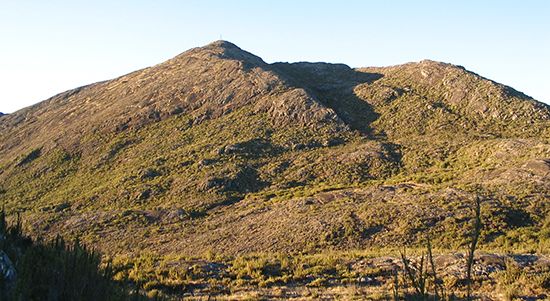
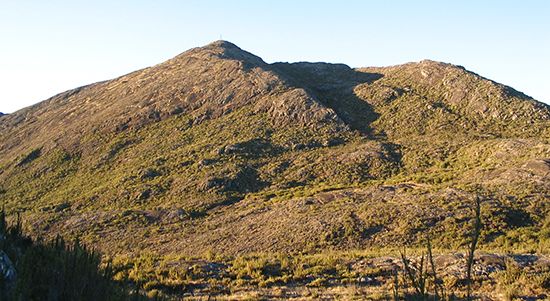
The Geral Mountains (Serra Geral) are a prominent mountain escarpment located along the southern and eastern edges of the Paraná Plateau. They serve as the…
What is Geral Mountains?
The Geral Mountains (Serra Geral) are a prominent mountain escarpment located along the southern and eastern edges of the Paraná Plateau. They serve as the primary mountain relief within the interior of southern Brazil.1
The range follows a distinct path: it stretches east-west across the northern part of Rio Grande do Sul state until it reaches the great escarpment in Santa Catarina. From there, the formation turns and continues in a north-northwest direction through central Paraná state. Upon reaching São Paulo state, the range is known as the Serra de Botucatu.1
What is the Paraná Plateau?
The Paraná Plateau is one of the world’s largest lava plateaus, located primarily in southern Brazil. It is a significant component of the Brazilian Highlands and spans across the states of Rio Grande do Sul, São Paulo, Santa Catarina, and Paraná, with geological formations extending into Uruguay, Argentina, and Paraguay.2
The plateau is characterized by solidified sheets of lava rock known as diabase. Where this rock is exposed at the surface, it weathers into a fertile, dark purple soil called terra roxa, which is highly valued for agriculture, particularly for growing coffee, cotton, corn, beans, rice, and potatoes. Topographically, the plateau is dissected by various rivers, leaving flat-topped surfaces between the watercourses.2
How do mountain escarpments form?
Mountain escarpments are steep slopes or cliffs that typically form through a combination of tectonic activity and erosional processes.
Tectonic processes, which involve the uplift or subsidence of the Earth’s crust, build the primary structures of these landforms. This can occur through the movement of crustal blocks, the folding of rock layers, or the intrusion of molten rock, which raises the surface elevation.6
Once these large-scale structures are established, erosional forces begin to sculpt their specific profiles. For example, a fault-line scarp specifically forms when erosion acts upon soft rock that has been brought into contact with harder rock through faulting. Over time, while tectonic forces build the elevation, erosion works to reduce it, creating the distinct, steep walls known as cliffs, bluffs, or precipices. Large-scale examples, such as the Serra do Mar, demonstrate how these abrupt descents can serve as significant geographical barriers.78169
What are the major states in southern Brazil?
The South (Sul) region of Brazil is the country’s smallest geographic region and consists of three major states:11
- Paraná: Known for its diversified economy, which includes strong manufacturing, agriculture, and service sectors.1112
- Santa Catarina: A coastal state recognized for its production of wood products, coal mining, and its status as a leading producer of pork and poultry.13
- Rio Grande do Sul: The southernmost state, which serves as a major agricultural and livestock region and is home to a significant footwear industry.1412
This region is characterized by a diversified economy and a population that includes many people of European ancestry, particularly from Germany and Italy.11
Sources
- Geral Mountains — Encyclopædia Britannica
- Paraná Plateau — Encyclopædia Britannica
- Brazil - Rivers of Brazil — Encyclopædia Britannica
- Paraná River — Encyclopædia Britannica
- Río de la Plata - Physiography of the lower Paraná basin — Encyclopædia Britannica
- escarpments — Merriam-Webster
- escarpment — Merriam-Webster
- Serra do Mar — Encyclopædia Britannica
- fault-line scarp — Merriam-Webster
- tectonic landform — Encyclopædia Britannica
- Rio Grande do Sul — Encyclopædia Britannica
- Brazil - Geographic regions — Encyclopædia Britannica
- history of Latin America - The south — Encyclopædia Britannica
- Brazil - Manufacturing of Brazil — Encyclopædia Britannica
- Brazil - Trade — Encyclopædia Britannica
- Santa Catarina — Encyclopædia Britannica
Published on · 2 min read