Paraná River
The Paraná River originates in southeast-central Brazil at the confluence of the Grande and Paranaíba rivers. It flows for 3,032 miles (4,880 km) before…
Where does the Paraná River begin and end, and which countries does it flow through?
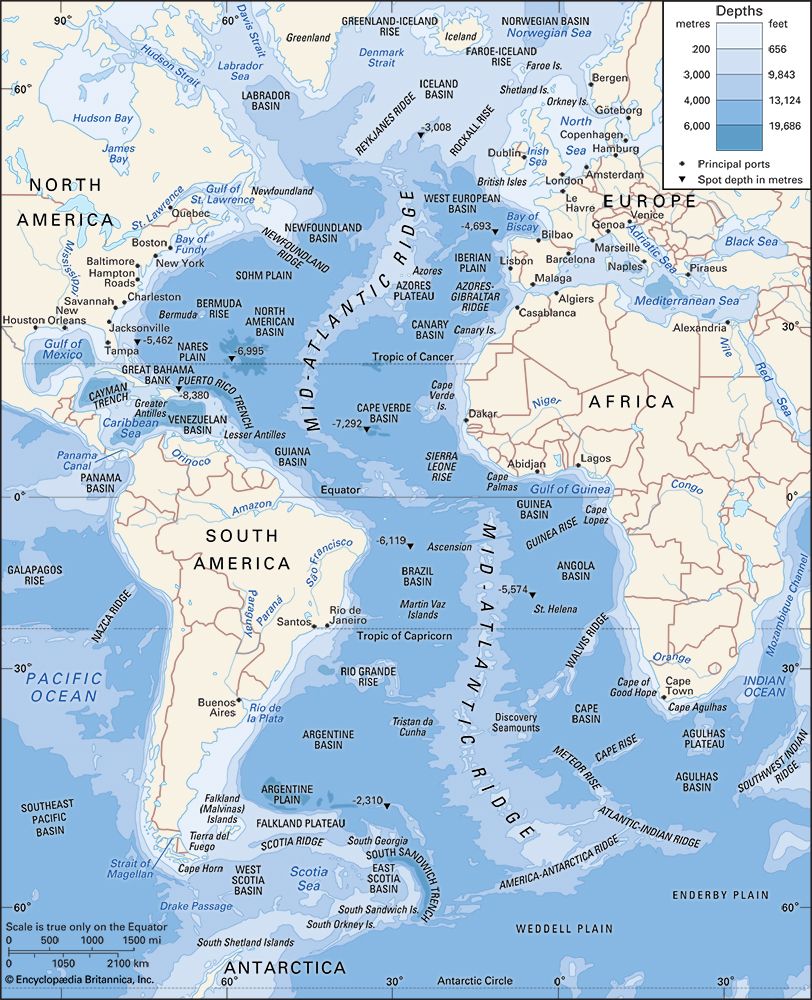
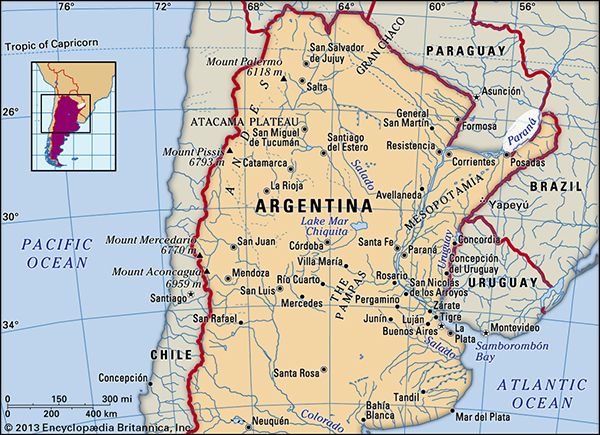
The Paraná River originates in southeast-central Brazil at the confluence of the Grande and Paranaíba rivers. It flows for 3,032 miles (4,880 km) before joining the Uruguay River to form the Río de la Plata estuary, which empties into the Atlantic Ocean.12
The river’s course and its extensive drainage basin span several countries:
- Brazil: The river rises here and its upper course forms part of the region’s geography.12
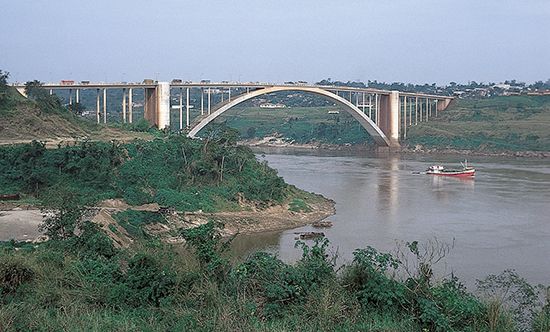
- Paraguay: The Alto (Upper) Paraná serves as a frontier between Paraguay and Argentina.2
- Argentina: The lower Paraná flows exclusively through Argentine territory, where it forms a significant delta before reaching the estuary.2
- Bolivia: While the river does not flow through Bolivia, the country is part of the Paraná’s broader drainage basin.2
How does the Paraná River contribute to the biodiversity of South America?
The Paraná River system is a vital artery for biodiversity in South America, supporting a rich and varied array of wildlife across its extensive drainage basin.2
Aquatic and Terrestrial Life
The river is home to numerous species of fish, many of which are edible and ecologically significant. Notable species include:
- Dorado: A gold-colored, salmon-like fish popular for sport fishing.3
- Surubí and Patí: Large river fish adapted to deep or muddy waters.3
- Pacu: A large, flat-bodied fish.3
- Piranha: A schooling, carnivorous fish found in the tropical sections of the river system.3
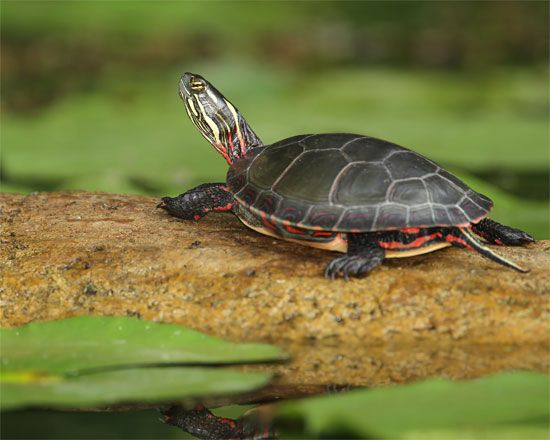
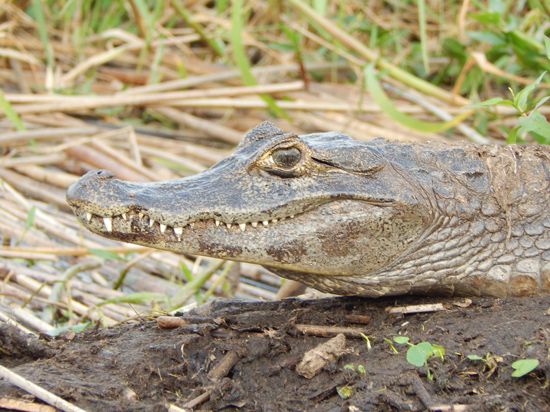
Beyond fish, the river environment supports a diverse range of reptiles, including caiman, iguana, water boas, and various vipers. The riverbanks and the expansive delta are also home to plentiful frogs, freshwater crabs, numerous insects, and diverse bird populations such as herons, cormorants, and storks.34
Habitats and Ecosystems
The biodiversity is further supported by varied vegetation zones, ranging from forests in the east to savanna grasslands in the west. The river’s floodplain and delta regions, which are subject to seasonal inundation, create unique “flooded forest” environments that provide essential habitats for terrestrial mammals and other wildlife.245
What role did the Paraná River play in the early exploration and colonization of South America?
The Paraná River served as a critical gateway for early European exploration and the subsequent colonization of southeastern South America. In the 16th century, explorers utilized the river system as a potential route to reach the mineral wealth of Peru.78
Early Exploration
- Initial Voyages: Following the discovery of the Río de la Plata estuary, explorers like Sebastian Cabot sailed up the Paraná in 1526, establishing the fort of Sancti Spíritus as the first Spanish settlement in the basin.78
- Search for Wealth: Expeditions were frequently driven by legends of “Eldorado” or an “enchanted City of the Caesars,” which motivated further penetration into the interior.8
Colonization and Settlement
- Asunción as a Hub: In 1537, explorers pushed up the Paraná and Paraguay rivers, leading to the founding of Asunción. This city became the primary center of Spanish power in the region for over two centuries.98
- Indigenous Relations: Colonization relied heavily on the Guaraní people, who provided labor, food, and soldiers. The Jesuit missions, or reducciones, established along the Paraná and Uruguay rivers, functioned as autonomous economic and religious centers that also served as strategic outposts against Portuguese expansion.9
How long is the Paraná River and how does it compare to other major rivers in South America?
The Paraná River has a total length of 3,032 miles (4,880 km), making it the second-longest river in South America, surpassed only by the Amazon River.114
Comparison to Other Major South American Rivers
The Paraná is a central component of the continent’s second-largest drainage system, which also includes the Paraguay and Uruguay rivers. When compared to other major systems, its scale and characteristics are distinct:215
- Amazon River: The Amazon is the largest system, stretching approximately 4,000 miles (6,400 km). It carries a significantly higher volume of water, accounting for one-fifth of the world’s total flowing fresh water, which is more than 10 times the outflow of the Mississippi River.215
- Orinoco River: With a length of about 1,700 miles (2,740 km), the Orinoco is the continent’s third-largest drainage system.2
- São Francisco River: This river, flowing entirely within Brazil, has a length of 1,811 miles (2,914 km), making it the fourth-largest drainage system in South America.2
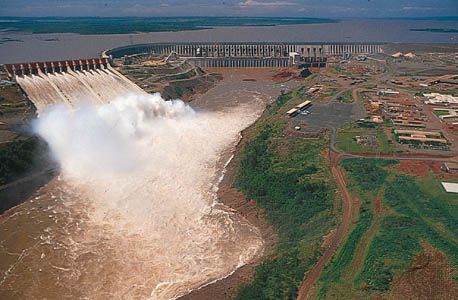
While the Paraná is shorter than the Amazon, it remains a vital economic and ecological artery for the region, serving as a major transport route and a source of hydroelectric power.1415
Sources
- Río de la Plata - Physical features — Encyclopædia Britannica
- Paraná River — Encyclopædia Britannica
- Río de la Plata - Physiography of the lower Paraná basin — Encyclopædia Britannica
- Paraguay River — Encyclopædia Britannica
- Río de la Plata - Animal life — Encyclopædia Britannica
- Paranapanema River — Encyclopædia Britannica
- history of Paraguay - Early history of Paraguay — Encyclopædia Britannica
- Paraguay - Colonial period — Encyclopædia Britannica
- Argentina - Discovery and settlement — Encyclopædia Britannica
- Río de la Plata - The region since 1800 — Encyclopædia Britannica
- Río de la Plata - Mapping of the basin — Encyclopædia Britannica
- Río de la Plata - Physiography of the Alto Paraná basin — Encyclopædia Britannica
- Río de la Plata - Transportation — Encyclopædia Britannica
- South America - Rivers of South America — Encyclopædia Britannica
- Brazil - Rivers of Brazil — Encyclopædia Britannica
Published on · 4 min read