Geranium
It is a common misconception to use the name "geranium" for the popular garden plants sold in nurseries; those are technically members of the genus…
What are the main characteristics of plants in the Geranium genus?
It is a common misconception to use the name “geranium” for the popular garden plants sold in nurseries; those are technically members of the genus Pelargonium.12
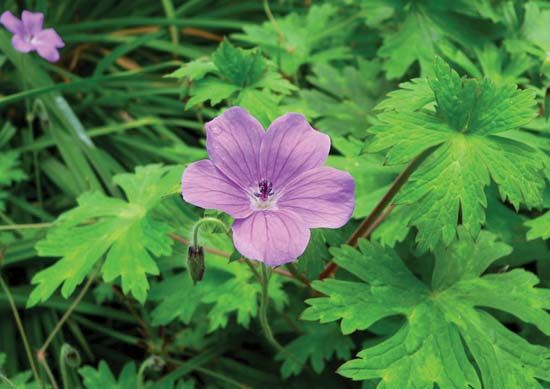
True plants in the genus Geranium, often called cranesbills, are a group of approximately 300 species of perennial herbs or shrubs belonging to the family Geraniaceae.13
Key characteristics of the Geranium genus include:
- Flowers: They produce regular, typically white, pink, or purple flowers.32
- Anatomy: A defining feature is the presence of elongated styles and glands that alternate with the petals.32
- Fruit: The name “cranesbill” is derived from the Greek word geranos (crane), as the shape of their fruit resembles a crane’s bill.32
- Family Traits: As members of the Geraniaceae family, they generally feature opposite or whorled leaves and flowers with one-seeded carpels that separate from a central column when ripe.4
How many species are there in the Geranium genus, and where are they primarily found?
The genus Geranium consists of approximately 300 species of perennial herbs or shrubs. While the family Geraniaceae as a whole is distributed across temperate and warm temperate regions, the genus Geranium is widely distributed.516
It is important to note that while some sources associate the family Geraniaceae with subtropical southern Africa, the genus Geranium itself is distinct from the genus Pelargonium—the latter being the group of plants commonly sold in nurseries as “geraniums” that originated from South African species.51
What are some of the most popular Geranium species cultivated for ornamental purposes?
It is important to clarify that the popular ornamental plants commonly referred to as “geraniums” are actually members of the genus Pelargonium, rather than the genus Geranium. These Pelargonium species are widely cultivated for their diverse forms and uses in gardens and greenhouses.1
The most popular cultivated types include:
- Zonal (Bedding) Geraniums (P. × hortorum): These are the most familiar forms found in garden beds and indoor pots, characterized by their complex hybrid heritage.1
- Show (Martha Washington) Geraniums (P. × domesticum): Known for their large, pansy-like flowers, these are highly valued for their aesthetic appeal.1
- Ivy (Hanging) Geraniums (P. peltatum): These are frequently used as basket plants or as ground covers in warmer climates.1
- Scented-leaved Geraniums: This group includes species such as P. graveolens and P. crispum, which are cultivated for the minty, fruity, or spicy fragrances released when their leaves are touched.1
How are Geraniums typically used in gardens and landscaping?
To clarify, while the term “geranium” is commonly used for many garden plants, the species most frequently used in landscaping and ornamental gardening belong to the genus Pelargonium, rather than the genus Geranium.18
These plants are highly versatile in garden and landscape design, utilized in the following ways:
- Bedding and Containers: Zonal geraniums (P. × hortorum) are the most familiar choice for garden beds and indoor pots, valued for their vibrant colors and hybrid vigor.1
- Hanging Displays: Ivy-leaved geraniums (P. peltatum) are specifically cultivated for use in hanging baskets, where their trailing habit is showcased.1
- Ground Cover: In warmer climates, ivy geraniums are effectively used as ground covers to fill landscape spaces.1
- Aromatic Gardens: Scented-leaved species are often planted for their sensory appeal, as they release minty, fruity, or spicy fragrances when their foliage is brushed against or bruised.1
- Greenhouse Cultivation: Due to their adaptability, many varieties are staples in greenhouse production for seasonal ornamental use.1
Sources
- geranium — Encyclopædia Britannica
- geranium — Merriam-Webster
- 10 Flower Names and Their Histories | Geranium — Merriam-Webster
- Geraniaceae — Merriam-Webster
- wild cranesbill — Merriam-Webster
- Geraniales — Encyclopædia Britannica
- wild geranium — Merriam-Webster
- pelargonium — Merriam-Webster
Published on · 3 min read