Leafhopper
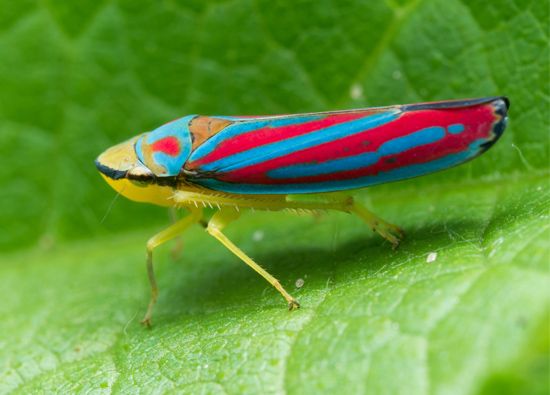
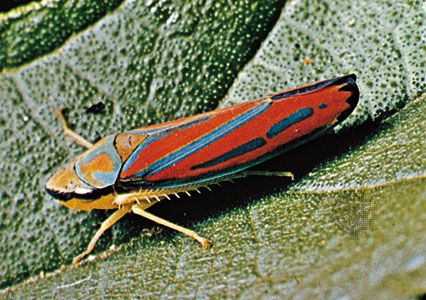
Leafhoppers are a large family of sap-sucking insects that can be found on almost all types of plants. While they are generally host-specific, they…
Which plants or crops are most commonly affected by leafhoppers?
Leafhoppers are a large family of sap-sucking insects that can be found on almost all types of plants. While they are generally host-specific, they collectively act as serious economic pests for a wide range of cultivated crops and ornamentals.12
Commonly affected plants and crops include:
- Fruit Trees and Vines: Apple trees, pear, quince, and grapevines are frequently targeted, often suffering from leaf damage or the transmission of diseases like Pierce’s disease and fire blight.12
- Vegetables: Potatoes are highly susceptible to “hopper burn,” while sugar beets, tomatoes, cucumbers, spinach, carrots, beans, and eggplant are often affected by feeding or viral diseases like curly top.13
- Forage Crops: Alfalfa is a notable host, where leafhopper feeding can cause yellowing and stunted growth.12
- Ornamentals: Plants such as roses, asters, geraniums, and petunias are also commonly impacted.13
How do leafhoppers feed, and what kind of damage can they cause to plants?
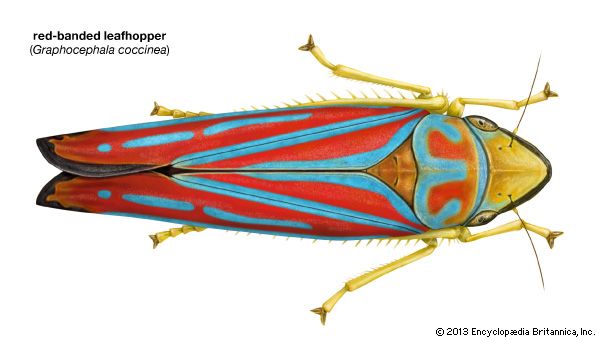
Leafhoppers are specialized sap-sucking insects that utilize a unique set of mouthparts to feed on plant tissues. Their feeding mechanism involves a beak, or proboscis, which contains four piercing stylets. The mandibles pierce the plant tissue, while the two inner maxillae fit together to form a sucking tube with two distinct channels: one for extracting plant sap and another for injecting saliva into the plant.1
Because they consume more sap than they require, they excrete a sweet, sticky byproduct known as honeydew. This substance can lead to the growth of sooty mold, which can blacken and ruin the marketability of crops like apples.3
Beyond simple sap removal, leafhoppers cause significant damage through several other mechanisms:
- Physiological Interference: Their salivary secretions can cause cell hypertrophy, which impairs the plant’s ability to transport sugars. This leads to “hopper burn,” where sugar accumulation destroys chlorophyll, causing leaves to turn brown and die.53
- Tissue Damage: Species that feed on mesophyll tissue destroy chlorophyll, resulting in yellow or brown spots on leaves. Additionally, egg-laying in green twigs can create punctures that reduce the flexibility of plant limbs.53
- Disease Transmission: More than 100 species act as vectors for plant diseases, including viruses like aster yellows, curly top, and various bacterial pathogens such as those causing fire blight.53
- Stunting: Puncturing the undersurfaces of leaves and veins can inhibit growth, causing severe leaf curling and plant stunting.53
What are some interesting facts about leafhopper behavior?
Leafhoppers exhibit a variety of fascinating behaviors and biological adaptations that help them survive and thrive in diverse environments. Here are some interesting facts about their behavior:
- Adaptive Migration: Some species, such as the sugarbeet leafhopper, engage in complex migratory patterns. They overwinter in desert areas and migrate to cultivated crops during the spring and summer as desert plants become less favorable for feeding. Once crops are harvested, they return to their desert hosts, demonstrating a sophisticated ability to track plant succulence and rainfall patterns.61
- Jumping Ability: Leafhoppers are named for their agility; their hairy hind legs are specifically modified for jumping, allowing them to escape quickly when threatened.1
- Sexual Dimorphism: Many species display striking differences between males and females in both color and size. For example, the male Arundanus nacreosus is orange while the female is milk-white, and in the marsh leafhopper (Hecalus lineatus), the male is only half the size of the female.13
- Egg-Laying Strategies: Females use a specialized structure called an ovipositor to insert their eggs directly into plant tissues, such as green twigs. This behavior can sometimes reduce the flexibility of plant limbs.13
- Honeydew Excretion: As sap-feeders, they consume large quantities of plant fluids and excrete a sweet, sticky byproduct called honeydew. This substance is not only a byproduct of digestion but can also facilitate the growth of sooty mold on the host plant.17
What role do leafhoppers play in the ecosystem?
Leafhoppers play a significant role in the ecosystem by occupying an intermediate position in the food chain. As primary consumers, they feed on a wide variety of plants, serving as a vital food source for various parasites and other predatory animals that help regulate their populations in nature.111
Beyond their role as a food source, leafhoppers interact with their environment in several ways:
- Plant Interaction: By feeding on sap, they influence the health and growth of their host plants. While individual leafhoppers may have a negligible impact, large populations can significantly affect plant physiology, sometimes leading to stunted growth or the transmission of plant diseases through their saliva.31
- Nutrient Cycling: Through the excretion of honeydew—a sugar-rich byproduct of their sap-feeding—they provide a food resource for other organisms, though this can also facilitate the growth of sooty mold on plant surfaces.31
- Migration and Distribution: Species like the sugarbeet leafhopper demonstrate complex migratory behaviors, moving between wild desert hosts and cultivated crops based on rainfall and plant succulence, which links different ecological habitats.36
Sources
- leafhopper — Encyclopædia Britannica
- Curly top — Encyclopædia Britannica
- homopteran - Importance — Encyclopædia Britannica
- Agricultural technology - Biological controls — Encyclopædia Britannica
- homopteran - Head — Encyclopædia Britannica
- homopteran - Leafhopper — Encyclopædia Britannica
- Eating the rainforest — Encyclopædia Britannica
- homopteran - Reproduction and growth — Encyclopædia Britannica
- Avoidance behaviour - Fleeing and escape — Encyclopædia Britannica
- Orthoptera - Movement — Encyclopædia Britannica
- heteropteran - Importance — Encyclopædia Britannica
Published on · 4 min read