Sulfur Butterfly
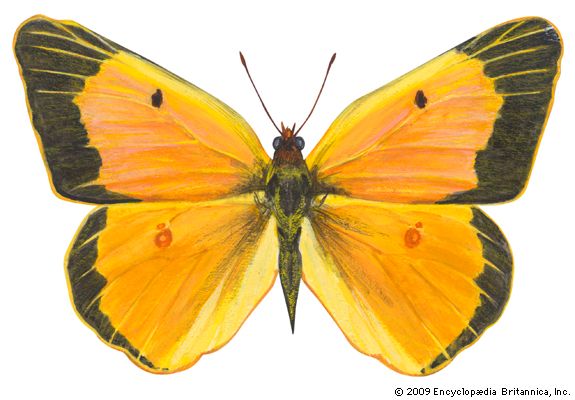
Sulfur butterflies (subfamily Coliadinae) are a group of approximately 300 species characterized by their vibrant coloration and specific physical dimensions.
What are the distinctive physical characteristics of sulfur butterflies?
Sulfur butterflies (subfamily Coliadinae) are a group of approximately 300 species characterized by their vibrant coloration and specific physical dimensions.1
Physical Characteristics
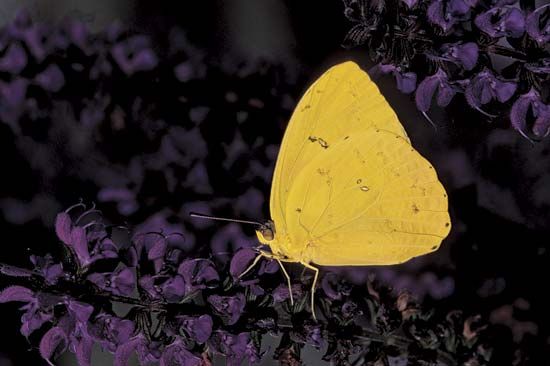
- Coloration: These butterflies are typically bright yellow or orange, often featuring black wing margins. Many species exhibit sexual dimorphism, where males and females differ in color or pattern; for instance, some female sulfur butterflies may appear white with black margins rather than yellow or orange.12
- Size: Their wingspan generally ranges from 35 to 60 mm (1.5 to 2.5 inches), though some species, such as the cloudless sulfur, can reach up to 8.0 cm (3.1 inches).1
- Developmental Stages: The pupae are distinctive for being attached to twigs by a posterior spine and a girdle of silk. The larvae are caterpillars that feed on various plants, including clover and alfalfa.1
Please note that “coly” refers to a type of African bird and is unrelated to the sulfur butterfly.3
Where are sulfur butterflies typically found, and what are their preferred habitats?
Sulfur butterflies (subfamily Coliadinae) are found globally, with specific species inhabiting diverse regions across the Americas, Asia, and Australia.1
Preferred Habitats and Distribution
- The Americas: The cloudless sulfur (Phoebis sennae) is widely distributed throughout the New World and is particularly common in the southwestern United States. These butterflies are frequently found in areas where their host plants, such as those in the genus Cassia, are abundant.14
- Asia and Australia: Species such as the lemon emigrant (Catopsilia pomona) are found in these regions, where they are known for their migratory behavior. During migration, they often navigate using visual landmarks like rivers and valleys, moving in accordance with monsoon winds.1
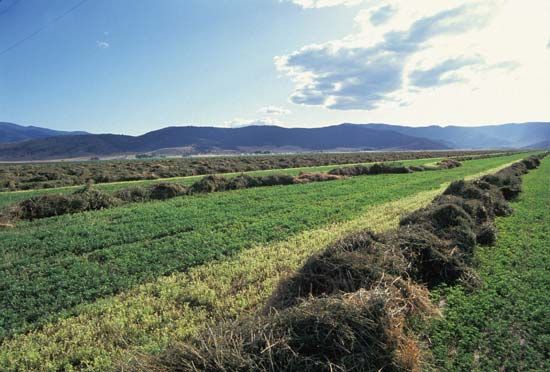
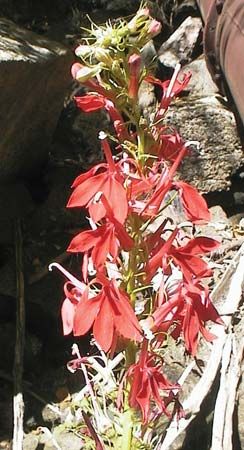
- Agricultural Environments: Many sulfur butterflies, such as the alfalfa butterfly, are commonly found in fields of clover, alfalfa, and soybeans, where their larvae feed. Adults are often observed in gardens and meadows, feeding on the nectar of flowers such as geraniums, cardinal flowers, and hibiscus.1
What is the life cycle of a sulfur butterfly, from egg to adult?
Sulfur butterflies, like other members of the order Lepidoptera, undergo holometabolous development, which consists of four distinct stages: egg, larva, pupa, and adult.
- Larva (Caterpillar): After hatching, the larva serves as the primary feeding stage. These caterpillars consume large quantities of plant matter, such as clover or alfalfa, to fuel their growth. During this phase, they undergo a series of molts, typically shedding their exoskeleton four or five times through a process called ecdysis. times through a process called ecdysis.65
- Pupa (Chrysalis): Once the larva reaches maturity, it enters the pupal stage. Unlike many moths that form cocoons, sulfur butterflies pupate “naked.” The chrysalis is typically attached to a twig by a posterior spine and supported in a head-up position by a threadlike silk girdle around the body. Inside, the caterpillar’s tissues undergo a major transformation, rebuilding into the structures of the adult butterfly.167
- Adult (Imago): Once the transformation is complete, the adult butterfly emerges from the pupal casing, fully winged and sexually mature, ready to feed on nectar and reproduce.87
What family do sulfur butterflies belong to, and how many species are in this group?
Sulfur butterflies belong to the family Pieridae. This large, cosmopolitan family—which also includes white butterflies and orange-tips—comprises approximately 1,100 species in total. Within this family, sulfur butterflies are classified under the subfamily Coliadinae, a group that itself contains about 300 distinct species.1910
Sources
- sulfur butterfly — Encyclopædia Britannica
- sulphur butterfly — Merriam-Webster
- Coly — Encyclopædia Britannica
- cloudless sulphur — Merriam-Webster
- Lepidoptera - Pupa , or chrysalis — Encyclopædia Britannica
- insect - Types of metamorphosis — Encyclopædia Britannica
- Animal development - Metamorphosis — Encyclopædia Britannica
- Lepidoptera - Larva, or caterpillar — Encyclopædia Britannica
- Pieridae — Merriam-Webster
- white butterfly — Encyclopædia Britannica
Published on · 3 min read