Moth Orchid
The moth orchid (genus Phalaenopsis) is a group of approximately 60 species of orchids native to southeastern Asia and parts of Australia. These plants are…
What is Moth orchid?
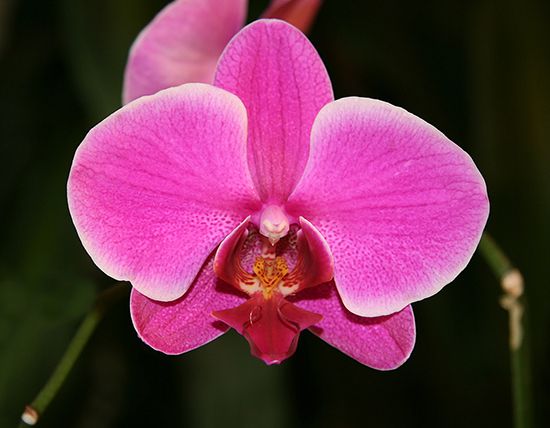
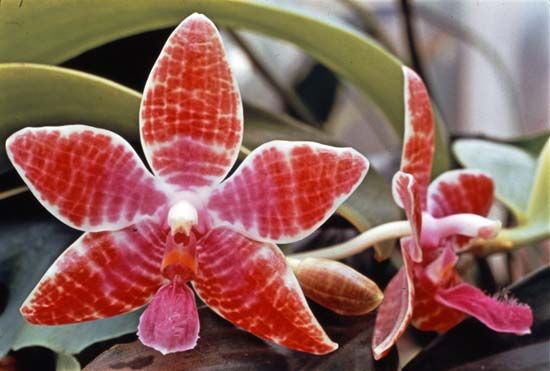
The moth orchid (genus Phalaenopsis) is a group of approximately 60 species of orchids native to southeastern Asia and parts of Australia. These plants are widely popular as houseplants due to their long-lasting, colorful flowers and relative ease of cultivation.1
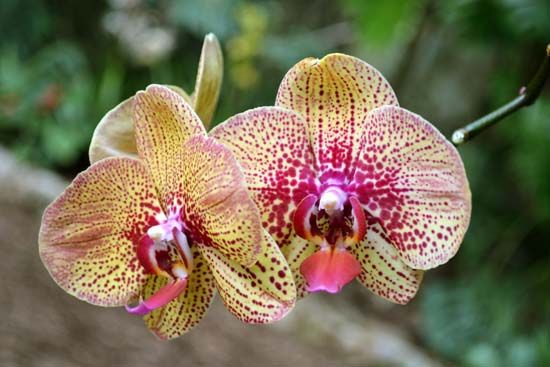
Moth orchids are typically epiphytic, meaning they grow on other plants rather than in soil, utilizing thick roots to anchor themselves. Physically, they feature a short stem with broad, leathery leaves and a flower spike that produces blooms consisting of three sepals, two lateral petals, and a central modified petal called a labellum. While many species are cultivated for the commercial flower trade, they are often cross-bred to create hybrids in shades of white, pink, and purple. In a home environment, these plants generally require regular moisture and fertilizer to bloom once annually.1
What does it mean for a plant to be epiphytic?
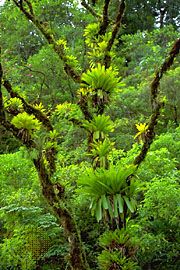
An epiphyte is a plant that grows upon another plant or object solely for physical support. Often referred to as “air plants,” these organisms do not derive nourishment from their host and are not parasitic. Instead, they use the host merely as a structure to reach higher elevations, which provides better access to sunlight in dense, shaded environments like tropical rain forests.34
Epiphytes obtain water and nutrients from their surroundings rather than from the host. They typically absorb moisture from rain, water vapor, and mist through their roots or specialized leaves. Nutrients are generally acquired from organic debris, such as decaying leaves, that collects on the supporting plant.4
Common examples of epiphytes include many species of orchids, ferns, mosses, and members of the pineapple family (Bromeliaceae). While most prevalent in moist tropical regions, some species can be found in temperate zones or even arid environments, where they have adapted to capture moisture from fog.34
How do orchids reproduce in the wild?
Orchids reproduce in the wild through a complex process of pollination and specialized seed development.
Pollination Strategies
Orchids often rely on intricate methods to ensure cross-pollination, frequently using deception to manipulate insects:
- Food Deception: Some orchids attract pollinators like euglossine bees with enticing odors, even though the flowers provide no nectar. In the genus Coryanthes, bees are lured into a water-filled bucket and forced to exit through a tunnel, where the pollinia are deposited on their bodies7.
- Sexual Deception: Genera such as Ophrys and Cryptostylis use pseudocopulation. These flowers mimic the appearance, scent, and tactile stimuli of female insects, tricking males into attempting to mate with the flower, which results in the transfer of pollinia.6
Seed Development and Germination
Once a flower is pollinated, it produces a capsule containing a vast number of tiny, dustlike seeds. Unlike most flowering plants, these seeds lack endosperm to nourish the embryo. Consequently, they require a symbiotic relationship with a mycorrhizal fungus to germinate and obtain the necessary nutrients for early growth.78
What are some other popular types of houseplants?
Houseplants are generally categorized by their primary appeal—foliage or flowers—or by their physiological adaptations, such as succulents. Many popular choices are native to tropical or subtropical regions and have been selected for their ability to thrive in indoor environments.1011
Foliage Plants
These are often prized for their decorative leaves and relative ease of care:
- Aroids: This family includes popular climbers like philodendrons and the Swiss cheese plant, as well as durable plants like pothos, peace lilies, and dumb canes.12
- Patterned Foliage: Plants such as prayer plants, the aluminum plant, and various Peperomia species are favored for their unique leaf textures and designs.12
- Bromeliads: These epiphytic or terrestrial plants form rosettes of leathery leaves and are often grown for their striking colors and long-lasting bracts.12
Succulents and Cacti
These plants are adapted to store water, making them well-suited for sunny locations with infrequent watering:13
- Cacti: Ranging from tiny pincushion varieties to larger, column-shaped species.13
- Leaf and Stem Succulents: Popular examples include the jade plant, Aloe, and the highly durable snake plant), and the highly durable snake plant.15
Flowering Plants
While often more demanding, some flowering plants adapt well to indoor conditions, such as the African violet and geraniums. Additionally, some houseplants, such as dracaena and various palms, are noted for their potential to help improve indoor air quality.1415
Sources
- moth orchid — Encyclopædia Britannica
- moth orchid — Merriam-Webster
- Did you know? — Merriam-Webster
- Epiphyte — Encyclopædia Britannica
- Parasitic plant — Encyclopædia Britannica
- orchid - Natural history — Encyclopædia Britannica
- orchid - Bee pollination — Encyclopædia Britannica
- orchid - Seeds — Encyclopædia Britannica
- orchid - Sexual deception — Encyclopædia Britannica
- houseplant - Foliage plants — Encyclopædia Britannica
- houseplant - Flowering plants — Encyclopædia Britannica
- houseplant — Encyclopædia Britannica
- houseplant - Types of houseplants — Encyclopædia Britannica
- 11 Questions About Useful Plants Answered - Can houseplants help the quality of air in my house? — Encyclopædia Britannica
- houseplant - Succulents — Encyclopædia Britannica
Published on · 3 min read