Ghaggar River
The Ghaggar River is a seasonal river located in northern India. It originates in the Siwalik Range of Himachal Pradesh and flows approximately 200 miles…
What is Ghaggar River?
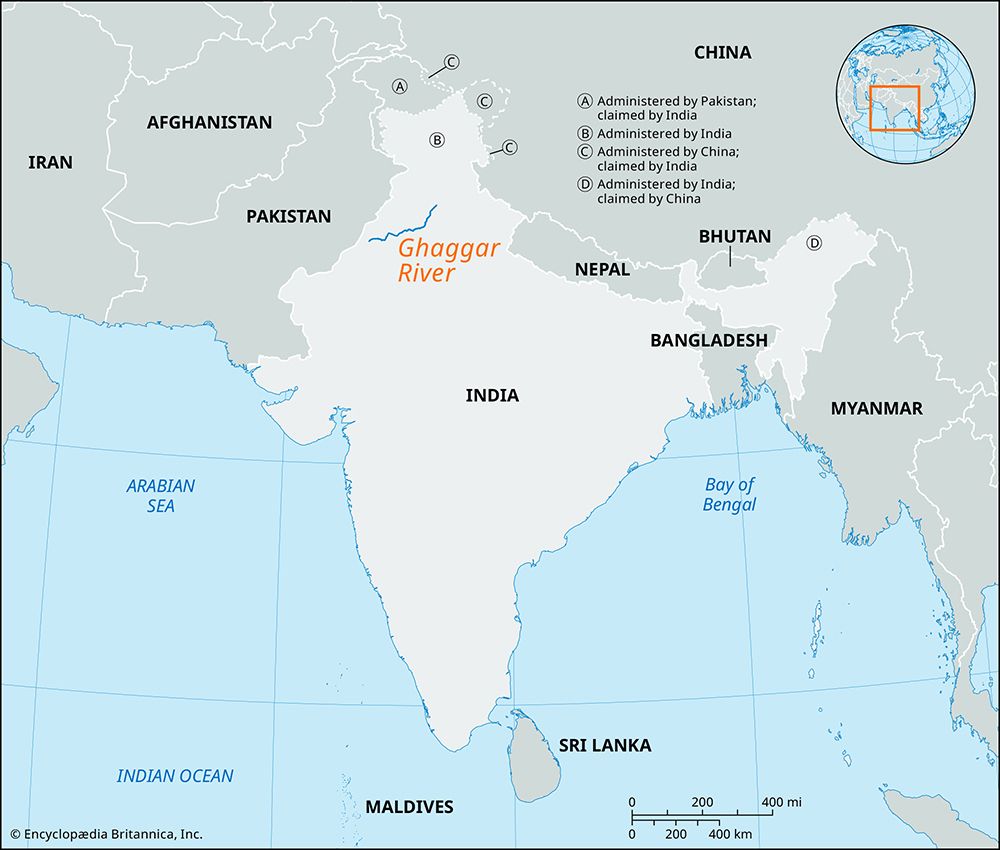
The Ghaggar River is a seasonal river located in northern India. It originates in the Siwalik Range of Himachal Pradesh and flows approximately 200 miles (320 km) southwest through Haryana state1.
The river’s flow is dependent on monsoonal rainfall. As it travels, it receives the waters of the Saraswati River before eventually drying up in the Great Indian (Thar) Desert. Near Sirsa, the river feeds two irrigation canals that extend into Rajasthan state. Historically, the Ghaggar is believed to have been an affluent of the Indus River1.1
What is the significance of the Siwalik Range in Indian geography?
The Siwalik Range, also known as the Outer Himalayas, is a significant sub-Himalayan mountain system that stretches over 1,000 miles (1,600 km) across the northern Indian subcontinent, from Sikkim in the east to northern Pakistan in the west.2
Its geographical significance includes:
- Physiographic Boundary: The range acts as the southern border of the Himalayan mountain system, rising abruptly from the plains of the Indus and Ganges rivers.32
- Structural Valleys: To the north, the range descends into flat-floored basins known as duns, such as the Dehra Dun, which separate the Siwaliks from the Lesser Himalayas.32
- Climate and Terrain: The region experiences hot summers and distinct monsoonal rains. Because the hills are prone to severe erosion, seasonal torrents frequently deposit large amounts of sand and silt into streambeds.42
- Cultural Significance: The name “Shivalik” is derived from Sanskrit, meaning “Belonging to [the God] Shiva,” reflecting its deep cultural roots in the region.2
How do monsoons affect rivers in northern India?
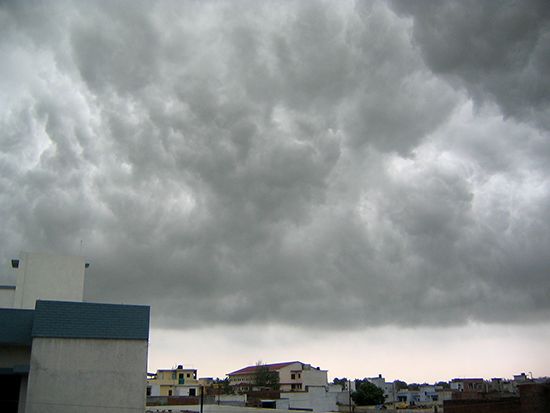
The monsoon system is the primary driver of the hydrology of rivers in northern India. During the southwest monsoon (June to September), these rivers experience a dramatic increase in volume due to heavy rainfall, which often leads to extensive seasonal flooding.718
The impact of these rains varies by region and river system:
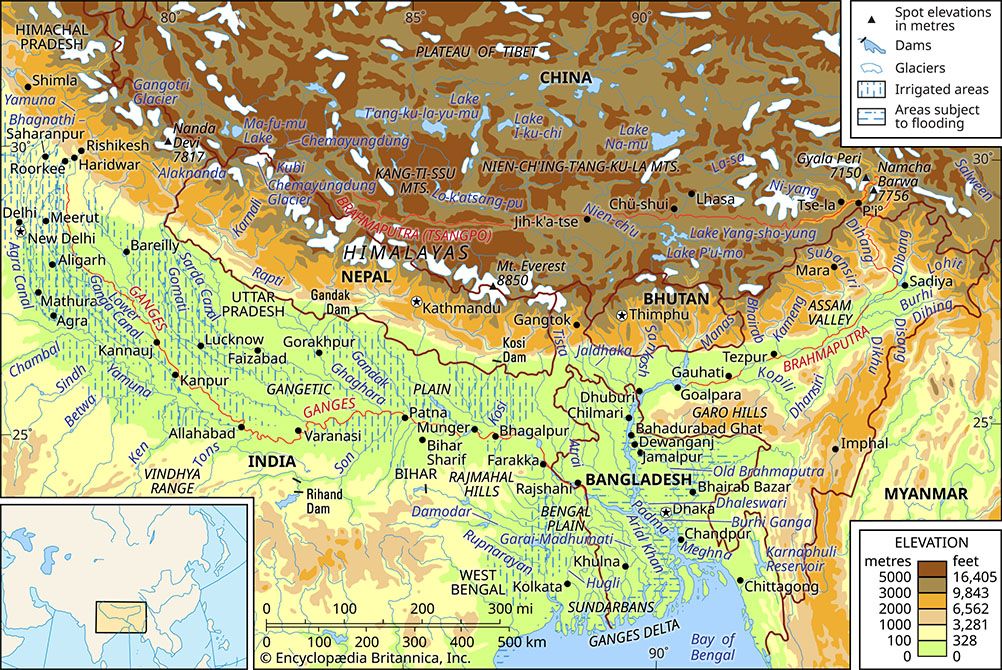
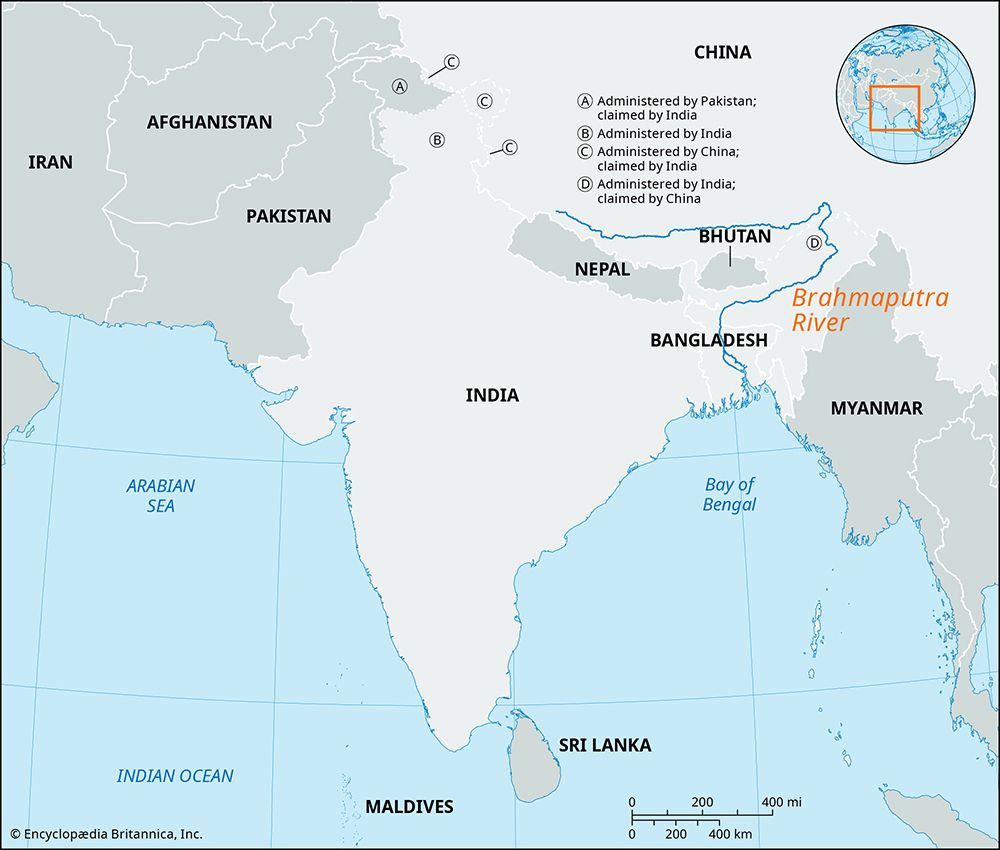
- Flow and Siltation: Rivers like the Brahmaputra carry enormous volumes of water and heavy silt loads during the wet season, causing constant erosion and the seasonal formation of new land deposits known as chars.8
- Seasonal Dependence: Smaller rivers, such as the Ghaggar River, have flows entirely dependent on monsoonal rainfall, often drying up completely outside of the wet season.9
- Combined Sources: For major systems like the Ganges River, the water supply is a combination of monsoonal rains and glacial melt from the Himalayas, which peaks during the hot season and the subsequent monsoon months.101
While the monsoon provides essential water for the region, the resulting floods can be destructive, particularly when reinforced by tropical cyclones originating in the Bay of Bengal.18
What is the connection between the Ghaggar and the Indus Valley Civilization?
Sorry, the Britannica knowledge base does not contain information regarding the connection between the Ghaggar River and the Indus civilization.
Sources
- Ghaggar River — Encyclopædia Britannica
- Himalayas - Physiography of the Himalayas — Encyclopædia Britannica
- Himachal Pradesh - Relief and drainage — Encyclopædia Britannica
- Himachal Pradesh - Climate — Encyclopædia Britannica
- Siwalik Range — Merriam-Webster
- Shivalik Range — Encyclopædia Britannica
- climate of India - The monsoons — Encyclopædia Britannica
- Indian monsoon — Encyclopædia Britannica
- climate of India - Rainfall during the retreating monsoon — Encyclopædia Britannica
- climate of India - The southwest monsoon — Encyclopædia Britannica
- Ghaghara River — Encyclopædia Britannica
- Ganges River - Climate and hydrology — Encyclopædia Britannica
- India - The southwest monsoon — Encyclopædia Britannica
- climate of India — Encyclopædia Britannica
- Brahmaputra River - Hydrology — Encyclopædia Britannica
- Indus River - Hydrology of the Indus River — Encyclopædia Britannica
Published on · 2 min read