Gladiolus
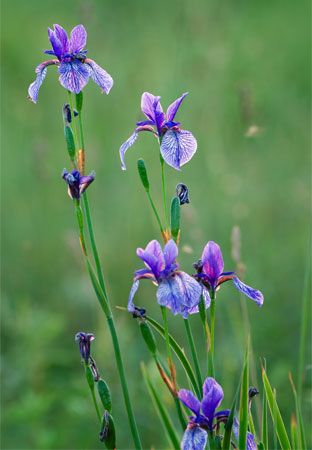
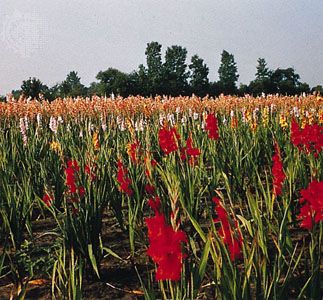
The gladiolus (genus Gladiolus) is a genus of approximately 300 species of flowering plants belonging to the iris family. Native to Europe, Africa, and the…
What is gladiolus?
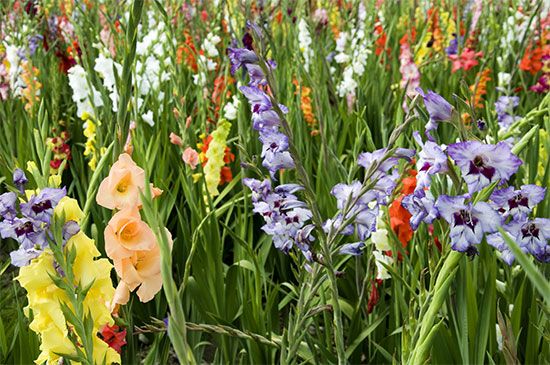
The gladiolus (genus Gladiolus) is a genus of approximately 300 species of flowering plants belonging to the iris family. Native to Europe, Africa, and the Mediterranean, these perennial plants are widely cultivated as garden ornamentals and for cut flowers.12
Physical Characteristics
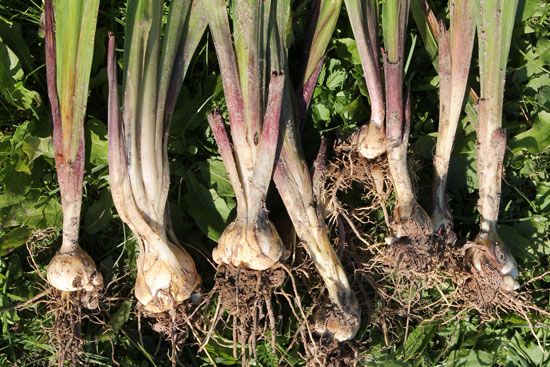
Gladioli grow from a bulblike structure known as a corm. They are characterized by:
- Leaves: Sparse and swordlike.12
- Flowers: Funnel-shaped blooms clustered on one side of a tall stem, which can reach 60–90 cm (2–3 feet) in height.1
- Variety: Cultivated hybrids, primarily developed from African species, appear in a wide array of colors.1
In addition to its botanical definition, the term “gladiolus” also refers to the large middle portion of the human sternum.2
What is a corm and how does it help the plant grow?
A corm is a vertical, fleshy, underground stem that functions as a vital food-storage organ for certain seed plants. Unlike bulbs, which appear as visible rings when sliced, a corm is a solid structure often protected by a fibrous covering called a tunic.3
Corms support plant growth and survival in several key ways:
- Energy Reserves: They store starches that provide the necessary fuel for the plant to grow and survive during unfavorable environmental conditions.3
- Rapid Development: The stored energy allows for quick growth, such as in the titan arum, where the corm provides the massive amount of energy required to produce an enormous inflorescence.3
- Reproduction: Many corms produce offshoots known as daughter corms or cormels, which facilitate vegetative reproduction.3
Common examples of plants that utilize corms include the crocus, gladiolus, and taro.3
Why are gladiolus leaves described as swordlike?
The term gladiolus is derived from the Latin word gladius, meaning “sword,” and is a diminutive form of that noun. This etymology directly reflects the plant’s physical appearance, as the leaves are characteristically long, narrow, and pointed, resembling the shape of a sword blade.21
Botanically, these leaves are often described as ensiform (sword-shaped). In many species within the iris family, the leaf blades are compressed in the same plane as the stem, a structural arrangement known as equitant. This orientation, combined with their elongated, strap-like form, contributes to the distinct, sharp profile that earned the genus its name.562
What other plants belong to the iris family?
The Iridaceae family, commonly known as the iris family, comprises approximately 66 genera and 2,200 species of flowering plants. Beyond the well-known Iris, Gladiolus, and Crocus, the family includes several other notable genera:
- Sisyrinchium: Commonly known as blue-eyed grasses, this genus contains about 200 species widely distributed throughout the Western Hemisphere.
- Freesia: These plants are widely cultivated on a commercial scale for their fragrant cut flowers.
- Iris domestica: Formerly classified as Belamcanda chinensis and known as the blackberry lily, this plant is native to East Asia and is prized for its red-spotted orange flowers.
These plants are primarily perennial herbs that share characteristic features such as long, narrow leaves and complex floral structures with an inferior ovary. Many members of this family are economically significant, serving as popular garden ornamentals or sources of products like saffron and orrisroot.7
Sources
- gladiolus — Encyclopædia Britannica
- gladiolus — Merriam-Webster
- corm — Encyclopædia Britannica
- cycadophyte - Gametophyte phase — Encyclopædia Britannica
- Asparagales - Leaves — Encyclopædia Britannica
- Iridaceae — Merriam-Webster
- Iridaceae — Encyclopædia Britannica
Published on · 2 min read