Iridaceae
The Iridaceae family, commonly known as the iris family, consists of approximately 2,200 species of flowering plants within the order Asparagales. These…
What are the main characteristics of plants in the Iridaceae family?
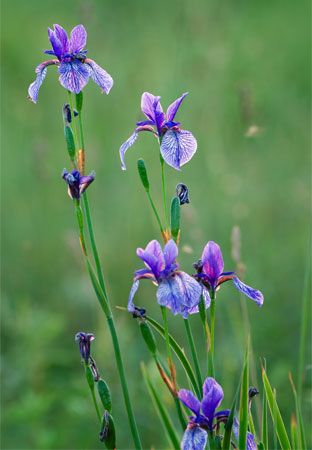
The Iridaceae family, commonly known as the iris family, consists of approximately 2,200 species of flowering plants within the order Asparagales. These plants are primarily perennial herbs characterized by long, narrow leaves with parallel venation.1
Key characteristics include:
- Underground Storage Organs: Most species utilize rhizomes, bulbs, or corms for energy storage and vegetative reproduction.12
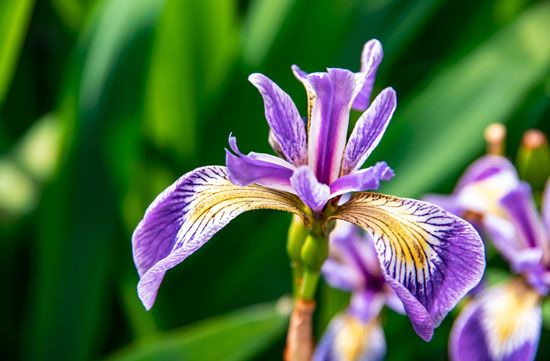
- Floral Structure: Flowers typically feature three sepals, three petals, and an inferior ovary composed of three unified carpels. They possess three broad, pollen-receptive stigma branches that often conceal the anthers.1
- Reproduction: While they reproduce via seeds developed in dry capsules, many species rely on pollinators—such as insects—attracted by their showy floral parts.1
- Distribution: While found nearly worldwide, the family is most diverse in Africa and thrives in temperate, subtropical, and tropical climates.1
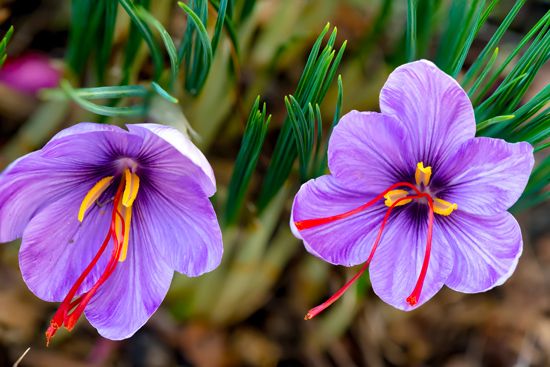
What are the typical flower structures and colors found in Iridaceae plants?
Plants in the Iridaceae family exhibit diverse and specialized floral structures designed to attract pollinators.1
Floral Structure
The typical flower of the Iridaceae family consists of the following components:
- Perianth: Flowers generally possess three sepals and three petals. In many species, these parts are petal-like and are collectively referred to as tepals.13
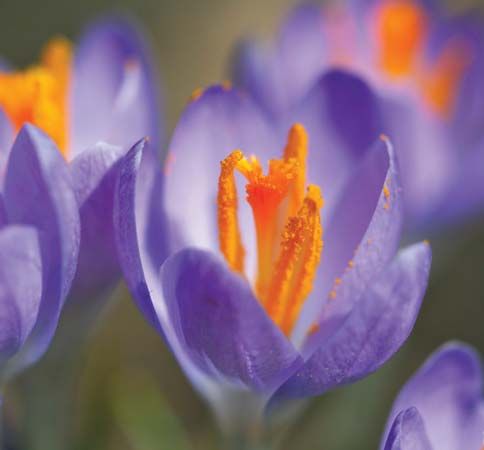
- Reproductive Organs: The flowers feature an inferior ovary composed of three unified carpels. A defining characteristic is the presence of three broad, pollen-receptive stigma branches, which often conceal the pollen-producing anthers beneath them.14
- Symmetry: While radial symmetry is common, many members of the subfamily Crocoideae exhibit bilateral (zygomorphic) symmetry.3
- Inflorescence: Flowers are often borne in clusters, such as a rhipidium—where flowers emerge sequentially from two leafy bracts—or in spikes. Some species, such as the crocus, have highly reduced stems that bear flowers at ground level.31
Colors
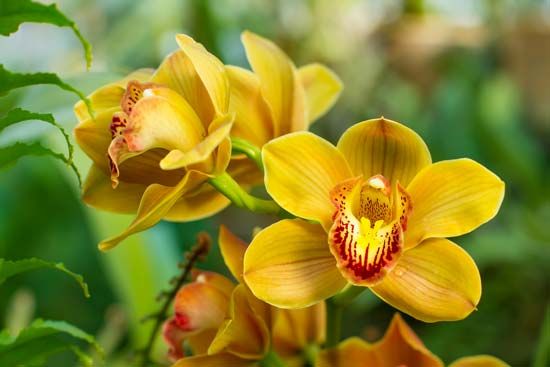
Iridaceae flowers are known for being showy and come in a wide range of colors depending on the species, including white, yellow, purple, lilac, and mauve. Some species, such as the blackberry lily, are noted for distinct patterns, such as red-spotted orange petals.14

Are there any endangered or threatened species within the Iridaceae family?
Sorry, the Britannica knowledge base does not contain information regarding specific endangered or threatened species within the Iridaceae family.
How have Iridaceae plants been used in traditional medicine or herbal remedies?
Plants within the Iridaceae family have been utilized in various ways for their medicinal properties. Notably, the feathery stigmas of Crocus sativus yield saffron, which is widely recognized for its use as a flavoring agent, a food coloring, and a medicinal ingredient.1
Additionally, members of the genus Iris are the source of orrisroot. While orrisroot is primarily known for its use in the manufacture of perfumes, soaps, powders, and dentifrices, it has historically been integrated into various traditional applications.16
Sources
- Iridaceae — Encyclopædia Britannica
- Asparagales - Storage organs — Encyclopædia Britannica
- Asparagales - Flowers — Encyclopædia Britannica
- crocus — Encyclopædia Britannica
- sepal — Encyclopædia Britannica
- Iridaceae — Merriam-Webster
- iris — Encyclopædia Britannica
Published on · 2 min read