Glitter Mountain
Glitter Mountain (often referred to as Galdhøpiggen) is one of the highest peaks on the Scandinavian Peninsula. Located in the Jotunheim Mountains of…
What is Glitter Mountain?
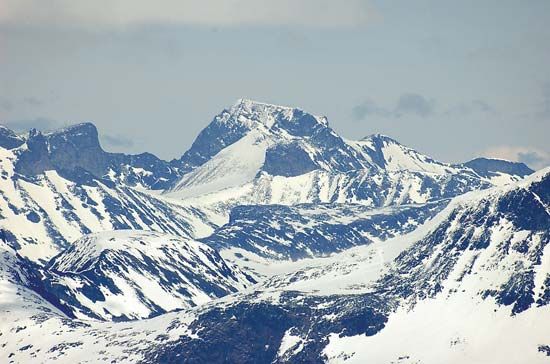
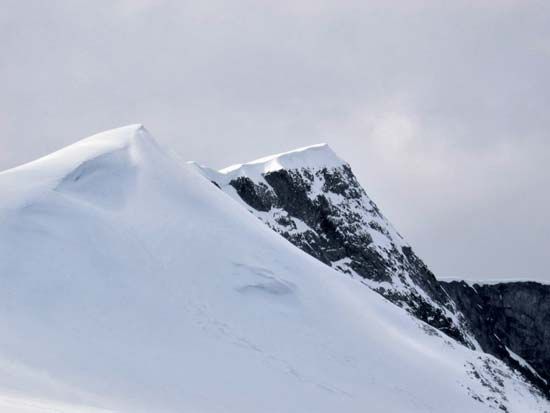
Glitter Mountain (often referred to as Galdhøpiggen) is one of the highest peaks on the Scandinavian Peninsula. Located in the Jotunheim Mountains of south-central Norway, the mountain rises to an elevation of 8,084 feet (2,464 metres). It is characterized by a permanent glacial icecap that is approximately 65 feet (20 metres) thick and serves as a popular destination for tourists.1
What is the significance of the Jotunheim Mountains in Norway?
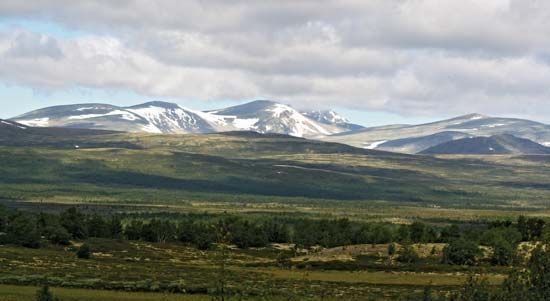
The Jotunheim Mountains (or Jotunheimen, meaning “Giant’s Home”) are significant for their geological, cultural, and recreational importance in Norway. As the highest mountain range in Scandinavia, they contain the region’s loftiest peaks, including Galdhø Peak and Glitter Mountain.34
Geologically, the range is related to the ancient volcanic rocks of Scotland and serves as the source for many of southern Norway’s principal rivers. Culturally, the name reflects their association with the Jötun, a race of giants in Germanic religion who were believed to dwell in Jötunheim. The landscape has also inspired literature, notably serving as the setting for the opening of Henrik Ibsen’s famous drama, Peer Gynt.345
Today, the region is a premier destination for hiking and mountain climbing, while its lower slopes and plateaus continue to support traditional summer pastures for cattle and goats.34
How do glaciers form on high mountain peaks?
Glaciers form on high mountain peaks through the long-term accumulation and transformation of snow into glacier ice. This process occurs above the snow line, the topographic limit where annual snowfall exceeds the amount lost to melting and evaporation.6
The Transformation Process
The transition from snow to ice involves several stages of densification:7
- Initial Compaction: As snow accumulates, the intricate shapes of individual crystals break down due to wind and pressure. Molecules evaporate from sharp points and condense into hollows, causing the grains to round and pack more tightly together.7
- Formation of Firn: Snow that survives a full melting season is known as firn (or névé). At this stage, the density typically exceeds 500 kilograms per cubic meter.7
- Glacier Ice: As more snow accumulates, the weight of the overlying layers exerts stress, causing further recrystallization. Once the density reaches approximately 830–840 kilograms per cubic meter, air spaces between grains are sealed off, rendering the mass impermeable to fluids and officially forming glacier ice.7
Environmental Factors
Glacier formation is heavily influenced by local climate and topography. In maritime environments, high levels of precipitation allow glaciers to exist at lower altitudes despite warmer temperatures. Conversely, in continental or inland regions with less snowfall, glaciers rely on high altitudes or sheltered basins where wind concentrates snow to persist. Additionally, glaciers can gain mass at their base through the refreezing of water, a process that can also lift and alter the glacier’s upper layers.87
What are some other famous mountain ranges in Scandinavia?
In addition to the Jotunheim Mountains, Scandinavia features several other significant mountain ranges and regions:
- Kølen Mountains: Also known as the Kjølen Mountains, this range runs along the border between Norway and Sweden. It is characterized by numerous glaciers and includes Sweden’s highest peaks in the far north.12
- Kebnekaise: Located in northern Sweden, this range is known for its desolate, steep, and sharp-crested peaks. It contains Mount Kebne, the highest point in Sweden, and is famous for its fine glacier scenery.13
- Lang Mountains: This collective complex of ranges in southern Norway acts as a major barrier between the eastern and western parts of the country. It encompasses the Jotunheim Mountains, the Hardanger Plateau, and the Jostedals Glacier, which is the largest ice field in continental Europe.35
- Dovre Mountains: Situated in west-central Norway, this mountainous area lies north and east of the Lang Mountains and serves as a significant geographical feature in the region’s relief.3
Sources
- Glitter Mountain — Encyclopædia Britannica
- Mojave Desert — Encyclopædia Britannica
- Jotunheim Mountains — Encyclopædia Britannica
- Jötun — Encyclopædia Britannica
- Lang Mountains — Encyclopædia Britannica
- glacier - Transformation of snow to ice — Encyclopædia Britannica
- Alps - Geology — Encyclopædia Britannica
- glacier - Mass balance of mountain glaciers — Encyclopædia Britannica
- Snow line — Encyclopædia Britannica
- glacier — Encyclopædia Britannica
- glacier - Surface features — Encyclopædia Britannica
- Kebnekaise — Encyclopædia Britannica
- Scandinavian Peninsula — Encyclopædia Britannica
- Sweden - Relief — Encyclopædia Britannica
- Norway - Relief — Encyclopædia Britannica
Published on · 3 min read