Snow Line
The term "snow line" generally refers to the lower topographic limit of permanent snow cover, where the accumulation of snowfall equals the rate of ablation…
How does the concept of ‘permanent snow line’ differ from the seasonal snow line?
The term “snow line” generally refers to the lower topographic limit of permanent snow cover, where the accumulation of snowfall equals the rate of ablation (melting and evaporation).12
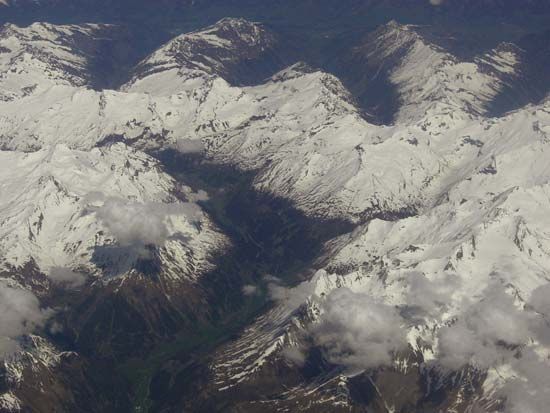
The permanent snow line (or perennial snow line) represents the boundary above which snow remains on the ground throughout the entire year. Its elevation is determined by local climate factors, including summer temperatures and the total annual snowfall. In contrast, a seasonal snow line is a transient boundary that shifts throughout the year; it represents the lower limit of snow cover at any given time, which typically retreats to higher elevations during the summer months as temperatures rise and advances to lower elevations during the winter as new snowfall accumulates.21
While the permanent snow line is a stable climatic indicator that responds to long-term climatic change, the seasonal snow line is highly variable, fluctuating significantly based on immediate weather patterns and annual precipitation cycles.13
What factors other than elevation can influence the snow line’s location?
The location of the snow line is determined by a complex interplay of environmental factors beyond just elevation. While altitude is a primary driver due to the decrease in temperature with height, the following influences are critical:
Climatic and Geographic Influences
- Latitude: The snow line is generally lower in polar regions where temperatures are consistently cold and higher near the Equator, where temperatures remain high despite high altitudes.1
- Temperature and Precipitation: The position of the snow line is fundamentally governed by the balance between annual snowfall and the rate of ablation (melting and evaporation). Areas with higher summer temperatures or lower snowfall will see the snow line rise in elevation.1
- Slope Aspect: The orientation of a slope significantly impacts solar energy receipt. In the Northern Hemisphere, slopes facing the Equator (south-facing) receive more solar energy and are warmer, which can push the snow line up to a kilometer higher than on opposite, cooler slopes.14
- Wind and Relief: Mountains act as barriers to wind systems, forcing air to rise and cool. This leads to increased precipitation on windward slopes, which can influence snow accumulation patterns compared to the drier leeward sides (rain shadows).4
What is the snow line in topography, and how is it defined?
The snow line is defined as the lower topographic limit of permanent snow cover on the Earth’s surface. It represents the specific boundary where the annual accumulation of snowfall is exactly balanced by the rate of ablation, which includes both melting and evaporation.1
This line is not a fixed altitude but an irregular boundary that fluctuates based on several environmental factors, including local temperature, total annual precipitation, and the orientation of the terrain. For instance, the snow line is typically found at lower elevations in polar regions where temperatures are consistently cold, while it reaches much higher altitudes near the Equator due to warmer conditions. Furthermore, the snow line is often closely associated with the equilibrium line on glaciers, where the accumulation and melting of ice are equal. By averaging these altitudes over large areas, scientists can determine a climatic snow line, which serves as a key indicator for monitoring global climatic change.12
How does elevation affect the position of the snow line?
Elevation is a primary factor in determining the position of the snow line, which is the lower topographic limit of permanent snow cover. Because atmospheric temperature drops as altitude increases—a process driven by adiabatic cooling and the expansion of air—higher elevations are naturally colder, which facilitates the accumulation of snow.16
The snow line exists where the annual accumulation of snowfall is balanced by the rate of ablation (melting and evaporation). At higher elevations, the lower temperatures reduce the rate of ablation, allowing snow to persist year-round. Conversely, at lower elevations, warmer temperatures increase ablation, causing the snow to melt.4
While elevation is critical, the specific altitude of the snow line varies significantly based on latitude and local climate. For example, the snow line is found at much lower elevations near the poles, where temperatures are consistently cold, compared to the Equator, where it reaches much higher altitudes due to warmer conditions.4
Sources
- Snow line — Encyclopædia Britannica
- Arctic - Present-day glaciation — Encyclopædia Britannica
- snow line — Merriam-Webster
- Mountain ecosystem - Environment — Encyclopædia Britannica
- permafrost - Effects of solar radiation, vegetation, and snow cover — Encyclopædia Britannica
- Why are higher elevations colder? — Encyclopædia Britannica
Published on · 3 min read