Goulburn River
The Goulburn River serves as a vital tributary within the Murray-Darling Basin system, which is the primary river network of Australia.
What role does the Goulburn River play in the Murray-Darling Basin system?
The Goulburn River serves as a vital tributary within the Murray-Darling Basin system, which is the primary river network of Australia.12
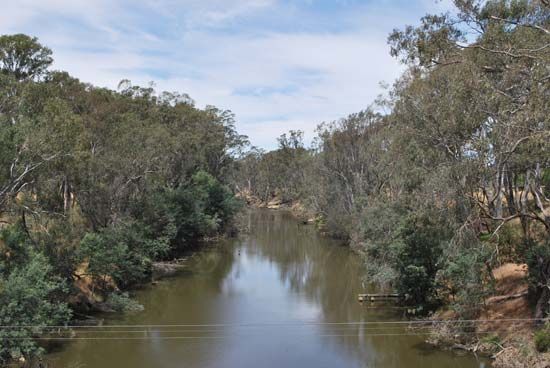
Rising in the Eastern Highlands, the Goulburn flows approximately 352 miles (563 km) before joining the Murray River near Echuca. Its role in the basin is defined by its significant contribution to regional water management and agricultural productivity. The river is regulated by several key infrastructure projects, including the Eildon, Goulburn, and Waranga reservoirs, as well as Lake Nagambie.1
These water management systems support extensive irrigation, which has transformed the surrounding valley into a productive hub for fruit and vegetable farming, dairying, and sheep raising. However, this intensive irrigation has also contributed to environmental challenges, specifically rising water tables and increased soil salinity, which are critical concerns managed under the broader basin-wide strategies for sustainable development.12
Where is the Goulburn River located in Victoria, Australia, and what are its main features?
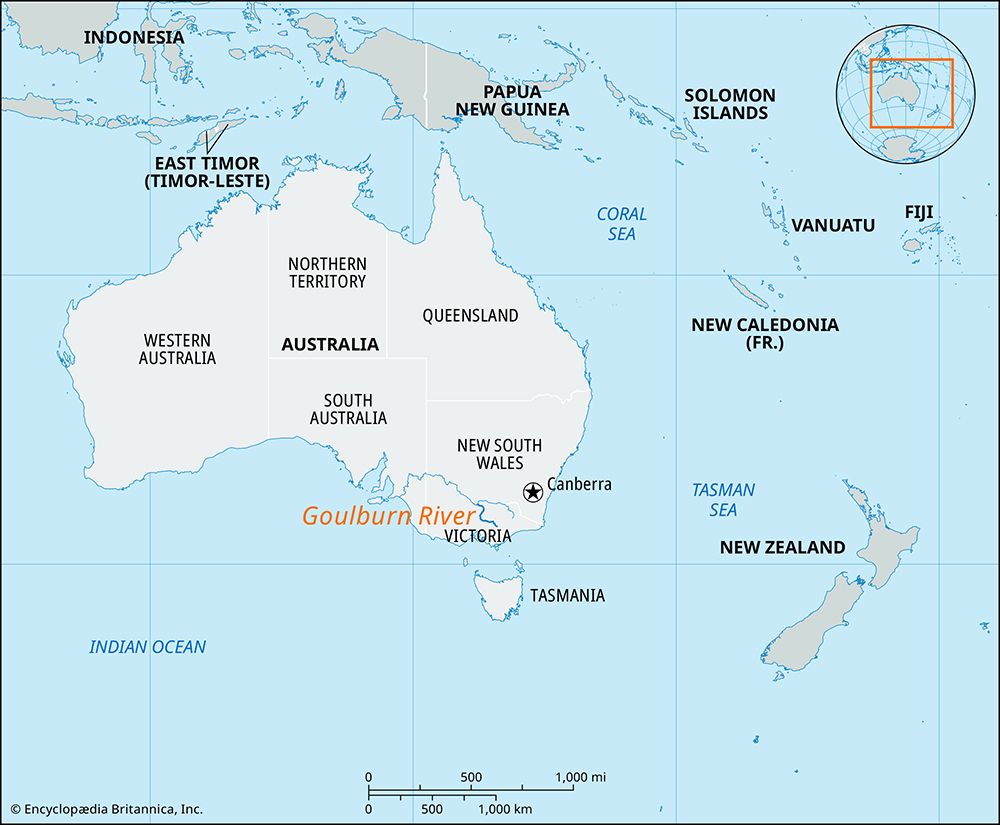
The Goulburn River is located in central Victoria, Australia. It originates at Mount Singleton in the Eastern Highlands, northeast of Melbourne, within Fraser National Park. From there, it flows northward for approximately 352 miles (563 km) before joining the Murray River near Echuca.1
Key features and characteristics of the river include:
- Water Management: The river is heavily regulated by several major infrastructure projects, including the Eildon, Goulburn, and Waranga reservoirs, as well as Lake Nagambie.1
- Economic Importance: The valley supports significant agricultural activity, including fruit and vegetable farming, dairying, and sheep raising, facilitated by irrigation systems introduced in the 1880s.1
- Environmental Challenges: Intensive irrigation has led to rising water tables and increased soil salinity, which are ongoing environmental concerns for the region.1
- Settlements: The principal towns located along the river valley are Seymour and Shepparton.1
What is the historical significance of the Goulburn River to the Indigenous people of the area?
Sorry, the Britannica knowledge base does not contain information regarding the historical significance of the Goulburn River to the Indigenous people of the area.
How does the Goulburn River contribute to Victoria’s water supply and irrigation systems?
The Goulburn River is a vital component of Victoria’s water infrastructure, serving as a primary drainage system for the central part of the state. Its flow is heavily regulated through a series of major reservoirs, including the Eildon, Goulburn, and Waranga reservoirs, as well as Lake Nagambie.1
Since the introduction of irrigation in the 1880s, the river has been essential to the region’s agricultural productivity. By providing a reliable water supply, it supports diverse industries, including fruit and vegetable farming, dairying, and sheep raising. As a major tributary of the Murray River, the Goulburn contributes to the broader Murray-Darling Basin, which accounts for more than 70 percent of Australia’s total irrigated crops and pastures.12
However, this intensive irrigation has introduced significant environmental challenges. The regulation of the river has led to rising water tables and increased soil salinity, which are recognized as critical issues for the region’s long-term sustainable development.12
Sources
- Goulburn River — Encyclopædia Britannica
- Murray River — Encyclopædia Britannica
- Loddon River — Encyclopædia Britannica
- Goulburn — Encyclopædia Britannica
- Hunter River — Encyclopædia Britannica
Published on · 2 min read