Gran Paradiso National Park
Gran Paradiso National Park is a significant protected area in northwestern Italy that encompasses the Graian Alps. Its history began in 1836 when the region…
What is the history and significance of Gran Paradiso National Park in Italy?
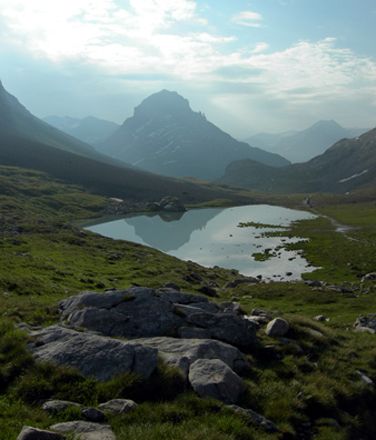
Gran Paradiso National Park is a significant protected area in northwestern Italy that encompasses the Graian Alps. Its history began in 1836 when the region was designated as a hunting zone, later becoming the Royal Hunting Reserve of the Gran Paradiso in 1856. It was officially established as a national park in 1922 and gained “autonomous organization” status through legislation in 1947.12
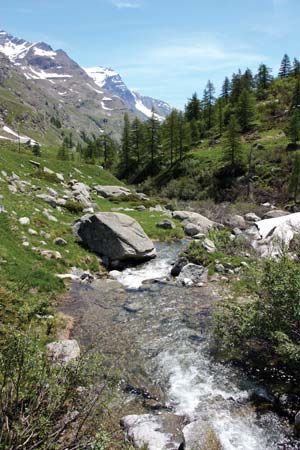
The park is ecologically vital, covering over 150,000 acres of alpine terrain, including glaciers, coniferous forests, and meadows. It serves as a critical habitat for diverse wildlife, such as ibex, chamois, ermine, and golden eagles. Beyond conservation, the park is a hub for scientific research, focusing on soil studies, climatology, and the mountain economy of Italy. The central feature of the park is the Gran Paradiso mountain, which, at 13,323 feet, is the highest peak located entirely within Italy.12
What unique flora and fauna can be found in Gran Paradiso National Park?
Gran Paradiso National Park hosts a diverse array of alpine flora and fauna, shaped by its varied elevation and rugged terrain.
Fauna
The park is perhaps most famous for the protection of the ibex (Capra ibex ibex), a sturdy wild goat that serves as a symbol of the region’s conservation efforts. Other notable mammals found within the park include:134
- Chamois: A nimble, goatlike animal well-adapted to craggy landscapes.156
- Small Mammals: The park is home to ermine (stoat), weasels, hares, and marmots, the latter of which hibernate in underground galleries during the winter.154
- Birds: The golden eagle is a prominent predator in the park.14
Flora
The park’s vegetation is defined by distinct alpine zones that shift with altitude:15
- Forests: Lower slopes are characterized by coniferous forests, including species such as spruce, larch, and various types of pine. At higher elevations, the hardy Arolla pine can be found near the tree line.156
- Alpine Meadows: Above the tree line and below the permanent snow line, the landscape features lush alpine meadows and pastures, often referred to as alpages.15
- Iconic Flowers: In these high-altitude regions, visitors can find iconic alpine flora, including edelweiss, alpine rose, heather, and gentian.6
What is the geographical location and size of Gran Paradiso National Park?
Gran Paradiso National Park is located in northwestern Italy, extending along the upper Valle d’Aosta region. The park encompasses the Graian Alps and is centered around the Gran Paradiso mountain, which stands as the highest peak located entirely within Italy.12
Regarding its size and elevation, the park covers an area of 153,240 acres (62,000 hectares). Its terrain is characterized by a dramatic range in elevation, stretching from approximately 3,000 to 13,000 feet (1,200 to 4,100 meters) above sea level.1
What are some popular hiking trails and outdoor activities available in the park?
While the provided search results confirm that Gran Paradiso National Park is a popular alpine resort area centered around the Gran Paradiso mountain, they do not contain specific details regarding individual hiking trails or a comprehensive list of outdoor activities.
The park’s rugged terrain, which includes glaciers, coniferous forests, and alpine meadows, naturally supports mountain-based recreation, and the area has been a destination for mountaineers since the first summit ascent in 1860. However, the current knowledge base lacks specific information on named trails or organized recreational programs.12
Sources
- Gran Paradiso National Park — Encyclopædia Britannica
- Gran Paradiso — Encyclopædia Britannica
- Alps - Plant and animal life — Encyclopædia Britannica
- Exploring 7 of Earth’s Great Mountain Ranges - Alps — Encyclopædia Britannica
- ibex — Encyclopædia Britannica
- Italy - Animal life — Encyclopædia Britannica
Published on · 3 min read