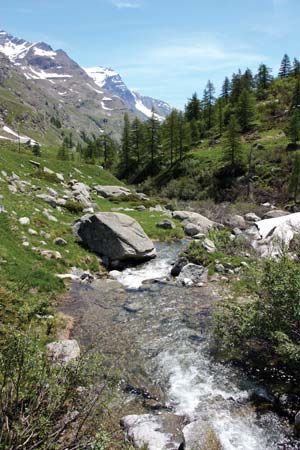
Vanoise National Park
The provided information regarding Vanoise National Park focuses primarily on its geography, biodiversity, and the challenges of sustainable development in…
What cultural heritage sites or traditional practices are preserved within Vanoise National Park?
The provided information regarding Vanoise National Park focuses primarily on its geography, biodiversity, and the challenges of sustainable development in its peripheral zones. The current knowledge base does not contain specific details regarding preserved cultural heritage sites or traditional practices within the park boundaries.
How does Vanoise National Park contribute to biodiversity conservation in the Alps?
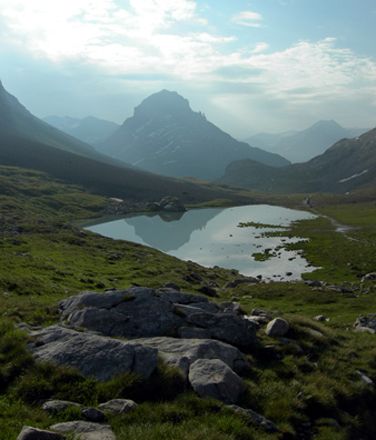
Vanoise National Park contributes to biodiversity conservation in the Alps by protecting a vast, high-altitude ecosystem that serves as a critical habitat for diverse flora and fauna. Established in 1963 as the oldest French national park, it spans over 130,000 acres and is contiguous with Italy’s Gran Paradiso National Park, creating a large, protected transboundary corridor for wildlife.1
The park preserves varied ecological zones, ranging from coniferous forests—featuring larches, firs, and spruces—to high-altitude quartzite and schist regions that support specialized alpine plants. These habitats sustain a wide array of species, including golden eagles, ptarmigan, ibex, and chamois.1
To further safeguard these resources, the park utilizes a 350,000-acre peripheral buffer zone designed to prevent the over-exploitation of natural resources, though the park continues to balance these conservation goals with the pressures of local ski resort development.1
What are some of the unique geological features found in Vanoise National Park?
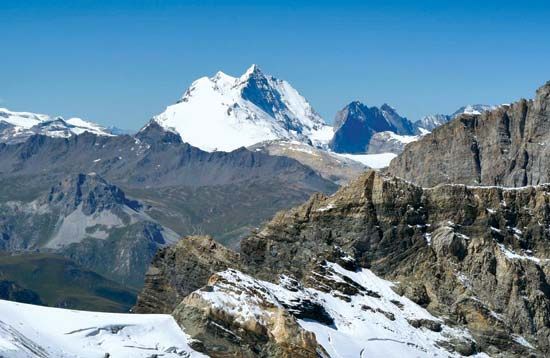
Vanoise National Park is defined by the rugged topography of the Massif de la Vanoise, a mountain range characterized by significant elevation and distinct geological formations.
Key features include:
- High-Altitude Peaks: The park contains the Pointe de la Grande Casse, which stands at 12,638 feet (3,852 meters) and serves as the highest point in the park. Additionally, there are 107 other peaks that exceed 9,800 feet (3,000 meters) in elevation.1
- Diverse Rock Substrates: The landscape features specific zones of quartzite and schist. These geological compositions are essential for supporting a variety of specialized alpine flora, such as rock campions, cowberries, and blue-spiked rampions.1
- River Boundaries: The massif is geographically bounded by the Isère River to the east and the Arc River to the south, which help define the park’s dramatic mountainous terrain.1
How does Vanoise National Park collaborate with neighboring protected areas, including those across national borders?
Vanoise National Park maintains a significant transboundary partnership with Italy’s Gran Paradiso National Park. Because the two parks are contiguous, they function as a unified, large-scale protected corridor that facilitates the movement of wildlife and the preservation of high-altitude ecosystems across the international border between France and Italy.1
Within France, the park also collaborates with surrounding areas through a designated 350,000-acre peripheral buffer zone. This zone includes protected regions such as the La Grande Sassière Nature Reserve. This buffer system is designed to extend conservation efforts beyond the park’s core boundaries, aiming to prevent the over-exploitation of natural resources and promote sustainable development in the surrounding landscape, despite the ongoing challenges posed by the presence of large ski resorts.1
We could dive deeper into the specific management strategies used for transboundary wildlife protection or explore the history of how these parks were established to work together.
Sources
- Vanoise National Park — Encyclopædia Britannica
Published on · 2 min read