California Condor
The California condor (Gymnogyps californianus) is a New World vulture and the largest land bird in North America. These impressive scavengers can weigh up…
What is a California condor?
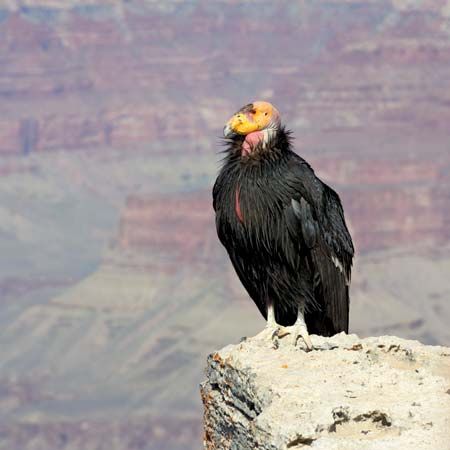
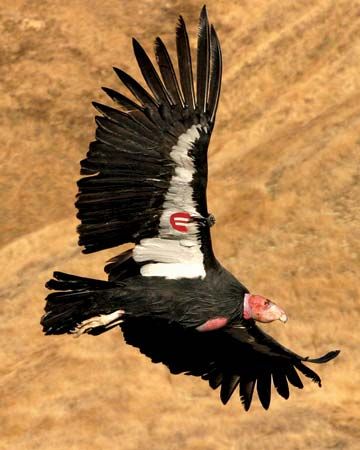
The California condor (Gymnogyps californianus) is a New World vulture and the largest land bird in North America. These impressive scavengers can weigh up to 25 pounds, possess a wingspan of approximately 9.5 feet, and are capable of living for 60 years. They are known for their ability to soar for hours on air currents, reaching altitudes of up to 15,000 feet while searching for carrion.1
Once widespread, the species faced a severe population decline due to habitat loss, environmental pollutants like DDT, and lead poisoning from consuming bullet fragments in carcasses. By 1987, the species was declared extinct in the wild, prompting a massive conservation effort that brought the remaining birds into captivity.12
Thanks to successful captive-breeding programs, the population has made a remarkable recovery, with hundreds of individuals now living in the wild across California, Arizona, Utah, and Mexico.12
Where does the California condor live?
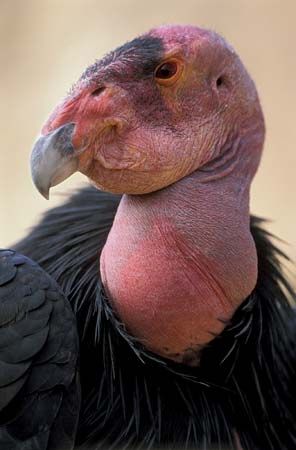
The California condor primarily inhabits the deserts of California, though established wild populations now exist in Arizona, Utah, and Mexico.13
These birds are wide-ranging scavengers, with hunting grounds that span from the Pacific Coast to various mountain ranges and southwestern deserts. When nesting, they prefer high elevations of up to 6,000 feet, typically selecting sites in caves on rocky cliff faces or within cavities in large trees, such as giant sequoias or redwoods. Additionally, captive populations are maintained at zoos in Los Angeles, San Diego, and Oregon.13
What does the California condor eat?
The California condor is a carnivorous scavenger that feeds exclusively on carrion. These birds travel hundreds of miles daily to locate the carcasses of large animals, such as cattle and deer.13
Because they rely entirely on scavenging, their health is closely tied to the quality of their food sources. A significant threat to the species is lead poisoning, which occurs when condors consume animal carcasses containing lead bullet fragments. Despite conservation efforts and regulations like California’s 2013 ban on lead ammunition, this remains a persistent challenge for the population.13
Why is the California condor considered endangered?
The California condor is classified as critically endangered due to a combination of historical human interference and ongoing environmental threats.13
As settlers expanded into the American West, the population plummeted because people destroyed nests, collected eggs, and killed the birds. Additionally, the condors suffered from a dwindling food supply as wild-game populations declined.1
Today, the species continues to face significant challenges:
- Lead Poisoning: This is a primary cause of death. Condors often ingest lead bullet fragments when scavenging on carcasses, which leads to fatal poisoning.13
- Environmental Pollutants: Exposure to pesticides and chemicals like DDT has historically harmed the development of condor embryos.1
- Low Reproductive Rate: Condors typically lay only one egg per nesting season, making it difficult for the population to recover quickly from high mortality rates.13
These factors were so severe that by 1987, the species was declared extinct in the wild, necessitating a massive captive breeding program to prevent total extinction.13
Sources
- California condor — Encyclopædia Britannica
- conservation - Protective custody — Encyclopædia Britannica
- Condor — Encyclopædia Britannica
Published on · 3 min read