Grand Harbour
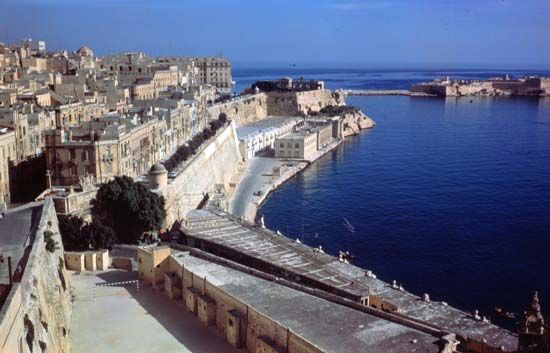
Grand Harbour is a picturesque inlet located on the eastern coast of Malta in the Mediterranean Sea. It is separated from the neighboring Marsamxett Harbour…
What is Grand Harbour?
Grand Harbour is a picturesque inlet located on the eastern coast of Malta in the Mediterranean Sea. It is separated from the neighboring Marsamxett Harbour by Mount Sceberras, the rocky promontory upon which Malta’s capital, Valletta, is built.12
The harbour has played a central role in Maltese history, most notably serving as a primary defensive site during the Siege of Malta in 1565, when the Knights Hospitaller successfully defended the island against the Ottoman Empire. Today, the area remains a vital maritime hub, functioning as a major port of entry for Malta equipped with customs facilities and several dry docks. The settlements surrounding the harbour, including the “Three Cities” such as Vittoriosa, are deeply intertwined with the harbour’s long-standing strategic and commercial significance.341
Who were the Knights Hospitaller and why were they in Malta?
The Knights Hospitaller (also known as the Order of the Knights of Malta) were a religious military order founded in 11th-century Jerusalem to care for sick and poor pilgrims. Over time, they evolved into a formidable military force that defended the Crusader kingdom and later operated as a sovereign state from Rhodes.5
Following their expulsion from Rhodes by the Ottoman Empire in 1522, the Knights spent several years as a wandering order without a base. In 1530, the Holy Roman emperor Charles V granted them the Maltese archipelago.52
The Knights were in Malta primarily to serve as a strategic Christian bulwark against Ottoman expansion in the Mediterranean. Their presence transformed the islands into a heavily fortified fortress, most famously demonstrated during the Siege of Malta in 1565, where they successfully repelled an Ottoman invasion. The order continued to rule Malta as a sovereign state until 1798, leaving behind a significant architectural and artistic legacy, including the capital city of Valletta.652
How did the city of Valletta get its name?
The city of Valletta was named in honor of Jean Parisot de la Valette, who served as the grand master of the Hospitallers (Knights of St. John of Jerusalem). The city was established following the Great Siege of Malta in 1565, a pivotal conflict in which de la Valette led the order to victory against the Ottoman Empire, effectively halting their expansion in southern Europe.3
What role did Malta play during World War II?
During World War II, the island of Malta served as a vital strategic base for the Allied Powers in the Mediterranean. Its location allowed the Allies to disrupt Axis supply lines, which was critical to the success of campaigns in North Africa.78
Because of its strategic importance, Malta was subjected to heavy and sustained bombardment by German and Italian aircraft, resulting in significant devastation across the islands. Despite enduring far greater tonnage of bombs than other Mediterranean outposts, Malta remained a functional base because its supply lines were never entirely severed.78
In recognition of the extraordinary bravery and gallantry displayed by the Maltese people during these attacks, King George VI awarded the island the George Cross in 1942. This decoration, which honors acts of the greatest heroism in extreme danger, remains a symbol of the island’s resilience during the conflict.97
Sources
- Grand Harbour — Encyclopædia Britannica
- Siege of Malta — Encyclopædia Britannica
- Valletta — Encyclopædia Britannica
- Vittoriosa — Encyclopædia Britannica
- Hospitallers — Encyclopædia Britannica
- Malta - Early history — Encyclopædia Britannica
- George Cross — Encyclopædia Britannica
- Allied invasion of Sicily - Allied operations in the Mediterranean and the decision to attack Italy — Encyclopædia Britannica
- Malta — Encyclopædia Britannica
- Cospicua — Encyclopædia Britannica
- World War II - Tunisia , November 1942–May 1943 — Encyclopædia Britannica
- World War II - Egypt and Cyrenaica , 1940–summer 1941 — Encyclopædia Britannica
Published on · 2 min read