Green Bay
Sorry, the Britannica knowledge base does not contain specific information regarding how the ecosystem of Green Bay impacts the broader Lake Michigan…
How does Green Bay’s ecosystem impact the broader Lake Michigan environment?
Sorry, the Britannica knowledge base does not contain specific information regarding how the ecosystem of Green Bay impacts the broader Lake Michigan environment.
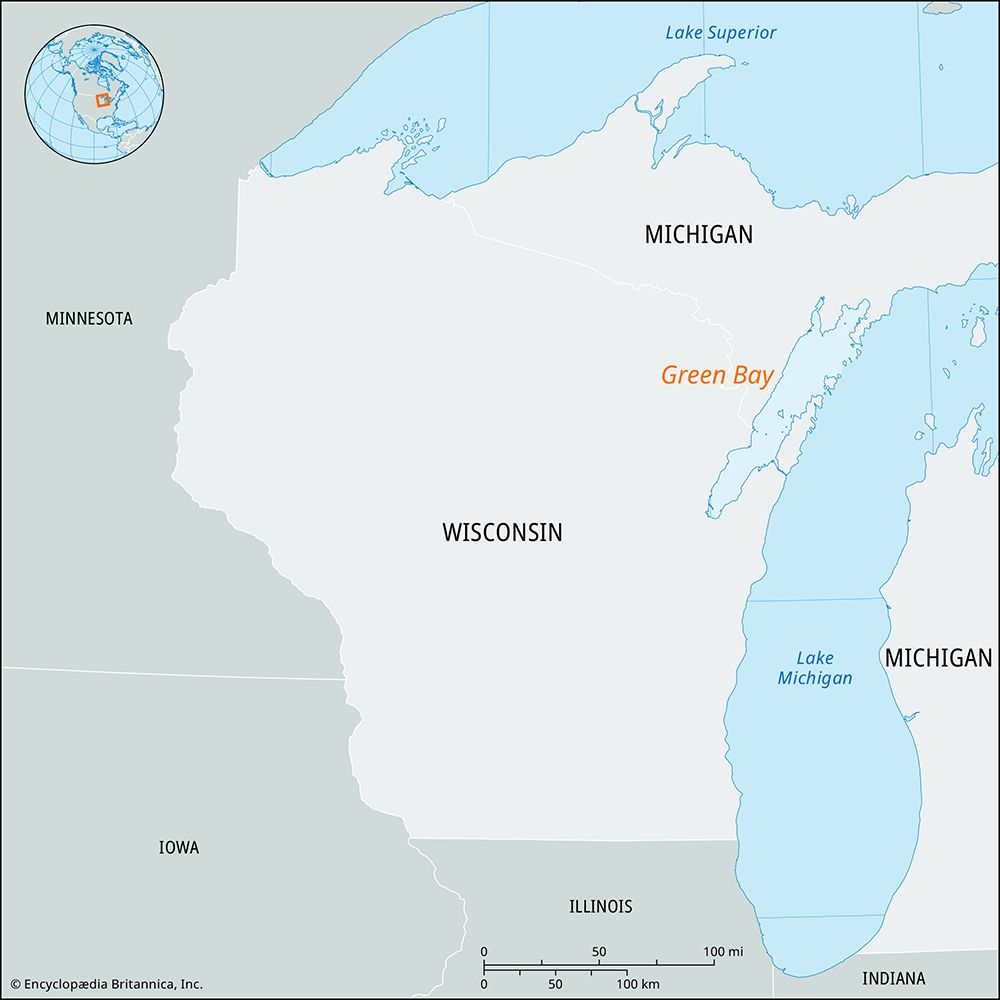
While the provided sources confirm that the Fox River and Menominee River flow into Green Bay—which serves as a northwestern arm of Lake Michigan—they do not detail the specific ecological interactions or environmental impacts between the bay and the main lake.
What are the main economic activities associated with Green Bay?
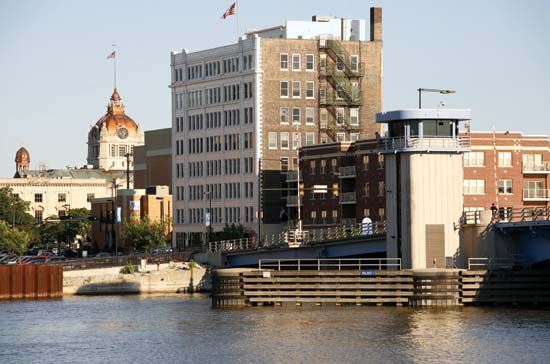
The economy of Green Bay, Wisconsin, is diverse, supported by its status as a significant Great Lakes port of entry and its historical roots as a trade hub.3
The city’s primary economic activities include:
- Manufacturing: Papermaking is a cornerstone of the local economy. The industrial sector also produces papermaking machinery, furniture, and packaging materials.31
- Food Processing: The region is heavily involved in processing meat, dairy products (including cheese), and various vegetables.3
- Logistics and Distribution: As a major port, the city maintains a robust wholesale and distributing business, supported by extensive trucking operations.3
- Services and Tourism: The economy is further bolstered by health care, insurance, and tourism—the latter of which is supported by attractions like the Green Bay Packers at Lambeau Field, local museums, and nearby casinos.3
- Agriculture: Dairying remains a consistent component of the broader regional economy.3
Additionally, the discovery of manganese deposits on the floor of the bay in 1968 represents a notable, though distinct, aspect of the area’s natural resource potential.4
How did Green Bay get its name, and what is its historical significance?
The name “Green Bay” originated from the French explorer Jean Nicolet, who visited the region in 1634. He named the inlet La Baye Verte (“The Green Bay”) due to the distinctive greenish color of the water. When the British took control of the area following the French and Indian War, they adopted the English translation, and the original French name was eventually phased out.1
Historically, the area served as a vital gateway for the fur trade, acting as the head of a crucial portage route that connected the Great Lakes to the Mississippi River via the Fox and Wisconsin rivers. The region was home to several Indigenous peoples, including the Ho-Chunk, Menominee, Fox, and Ojibwa. Over the centuries, it transitioned from a French fur-trading hub and mission site to a British-controlled territory, and finally to a U.S. settlement following the War of 1812.31
What role does Green Bay play in shipping and transportation in the Great Lakes region?
Green Bay serves as a vital Great Lakes port of entry, playing a significant role in regional shipping and distribution. Its strategic location at the mouth of the Fox River allows it to function as a major hub for heavy shipping and wholesale logistics.1
The port’s accessibility is enhanced by the Sturgeon Bay and Lake Michigan Ship Canal, which cuts across the Door Peninsula to provide a shorter, more efficient route for vessels traveling to the ports of Green Bay, Marinette, and Menominee. To accommodate larger commercial traffic, the entrance channel to the port was deepened to 26 feet (8 meters) in 1973. While the bay itself presents navigation challenges due to submerged reefs, shoals, and islands, it remains a cornerstone of the area’s economy, supporting extensive trucking and distribution networks that connect the region to broader markets.31
Sources
- Green Bay — Encyclopædia Britannica
- Lake Michigan — Encyclopædia Britannica
- Green Bay — Encyclopædia Britannica
- Wisconsin - Manufacturing of Wisconsin — Encyclopædia Britannica
Published on · 3 min read