Guiana Current
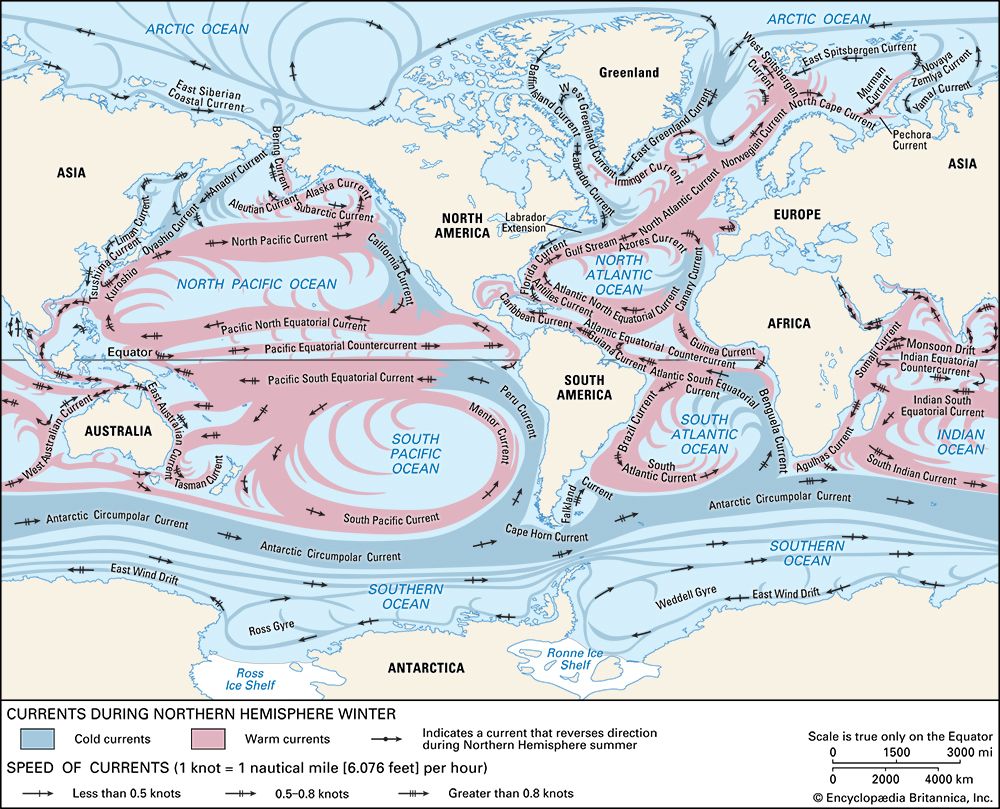
The Guiana Current is a shallow, northwest-flowing surface oceanic current located along the northern coast of South America. It originates as a branch of…
What is Guiana Current?
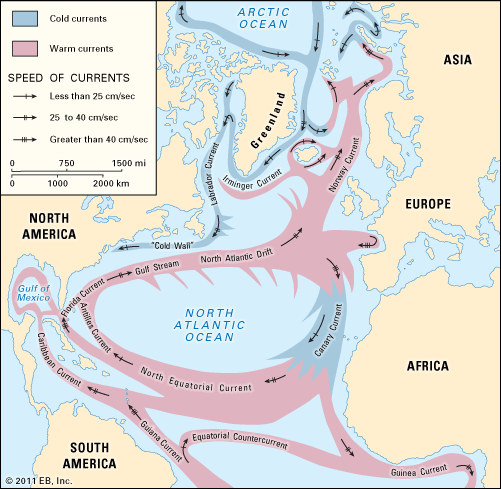
The Guiana Current is a shallow, northwest-flowing surface oceanic current located along the northern coast of South America. It originates as a branch of the South Equatorial Current that crosses into the Northern Hemisphere.12
As it flows, the current is augmented by the Atlantic North Equatorial Current and discharge from the Amazon and Orinoco rivers. This river drainage results in relatively low salinity levels, typically ranging between 35 and 36.5 parts per thousand. The current is characterized by warm surface temperatures, which fluctuate annually between 79° and 82° F (26° to 28° C).1
Ultimately, the Guiana Current joins with the North Equatorial Current to feed into the Caribbean Current, which flows through the Caribbean Sea.3
How do the Amazon and Orinoco rivers influence ocean salinity?
The Amazon and Orinoco rivers significantly influence ocean salinity through the process of dilution. When these large freshwater sources discharge into the ocean, they lower the salt concentration in the surrounding nearshore regions.14
This effect is particularly evident in the Guiana Current, which flows along the northern coast of South America. As the current receives drainage from both the Amazon and Orinoco rivers, its salinity levels are reduced, often varying between 35 and 36.5 parts per thousand.1
Generally, in nearshore areas where the ocean receives substantial freshwater input, salinity is depressed compared to the open ocean, which maintains a mean value of approximately 35 psu (practical salinity units). This phenomenon illustrates the broader principle that surface processes—such as the addition of freshwater from rivers—are primary drivers of local departures from the average salinity of seawater.4
What is the difference between the Guiana Current and the Guinea Current?
The Guiana Current and the Guinea Current are distinct oceanic features located in different regions of the Atlantic Ocean. Their primary differences lie in their geographic location, direction of flow, and origin:
- Guiana Current: This is a northwest-flowing surface current located along the northern coast of South America. It originates as a branch of the Atlantic South Equatorial Current that turns north upon approaching the coast of Brazil. It is influenced by the Atlantic North Equatorial Current and freshwater discharge from the Amazon and Orinoco rivers, which can lower its salinity.61
- Guinea Current: This is an eastward-flowing surface current located off the western coast of Africa near the Gulf of Guinea. It serves as the eastward continuation of the Atlantic Equatorial Countercurrent. Unlike the Guiana Current, it flows southeastward and its position shifts seasonally between approximately 7° N and 15° N latitude.78
How does the South Equatorial Current divide into different branches?
The South Equatorial Current (SEC) divides into different branches depending on the ocean basin in which it flows, as its path is dictated by continental landmasses and wind patterns.
Atlantic Ocean
In the Atlantic, the South Equatorial Current flows westward until it reaches Cape St. Roque, Brazil, where it splits into two primary streams:10
- Northward Branch: This stream becomes the Guiana Current, which eventually feeds into the Caribbean Current, equatorial countercurrents, and the Guinea Current7.
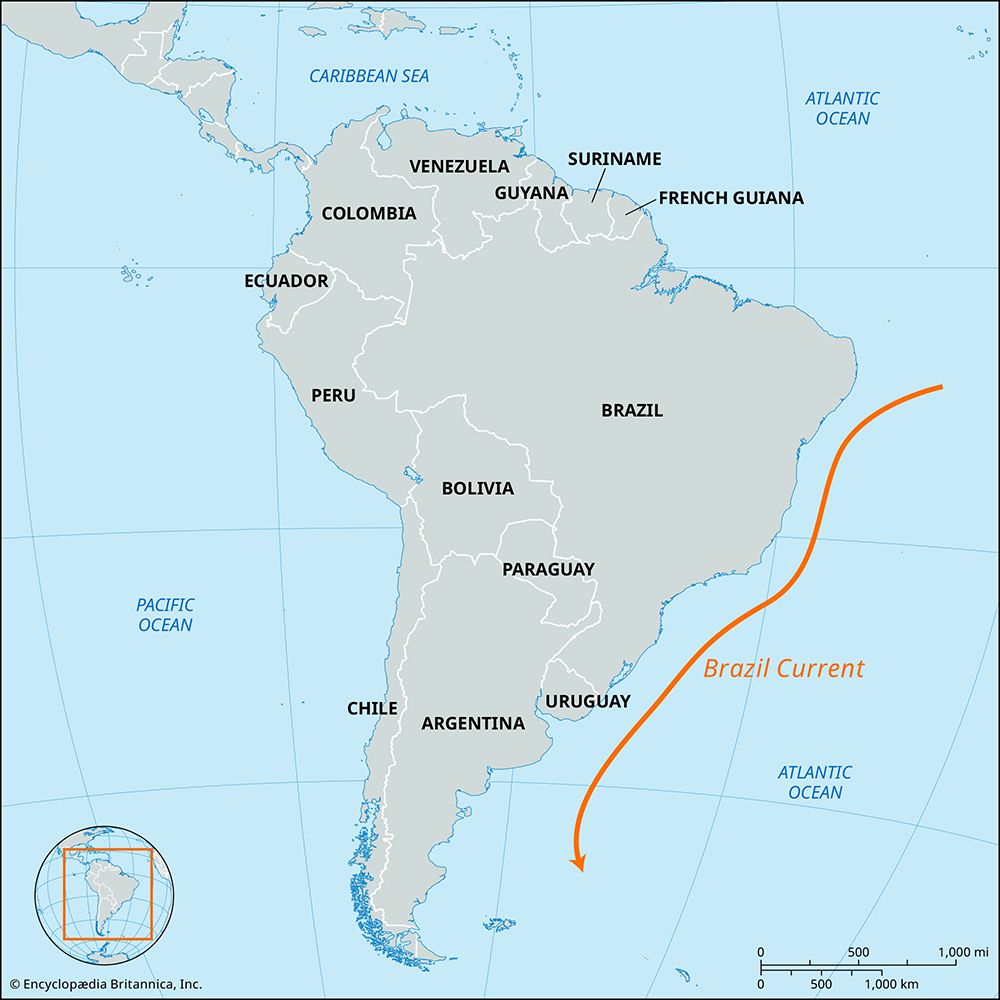
- Southward Branch: This stream becomes the Brazil Current, which flows south along the coast of South America before turning east as the South Atlantic Current and eventually veering north as the Benguela Current.10
Indian Ocean
In the Indian Ocean, the South Equatorial Current divides upon reaching Madagascar:107
- Western Branch: One part passes north of Madagascar and turns south through the Mozambique Channel to form the Agulhas Current.7
- Eastern Branch: The other part turns south to the east of Madagascar before curving eastward to become the South Indian Current.7
Pacific Ocean
In the Pacific, the South Equatorial Current flows westward until it reaches approximately longitude 180° E, where it splits:10
- Northern Branch: Part of the current turns north to blend with the equatorial countercurrent.10
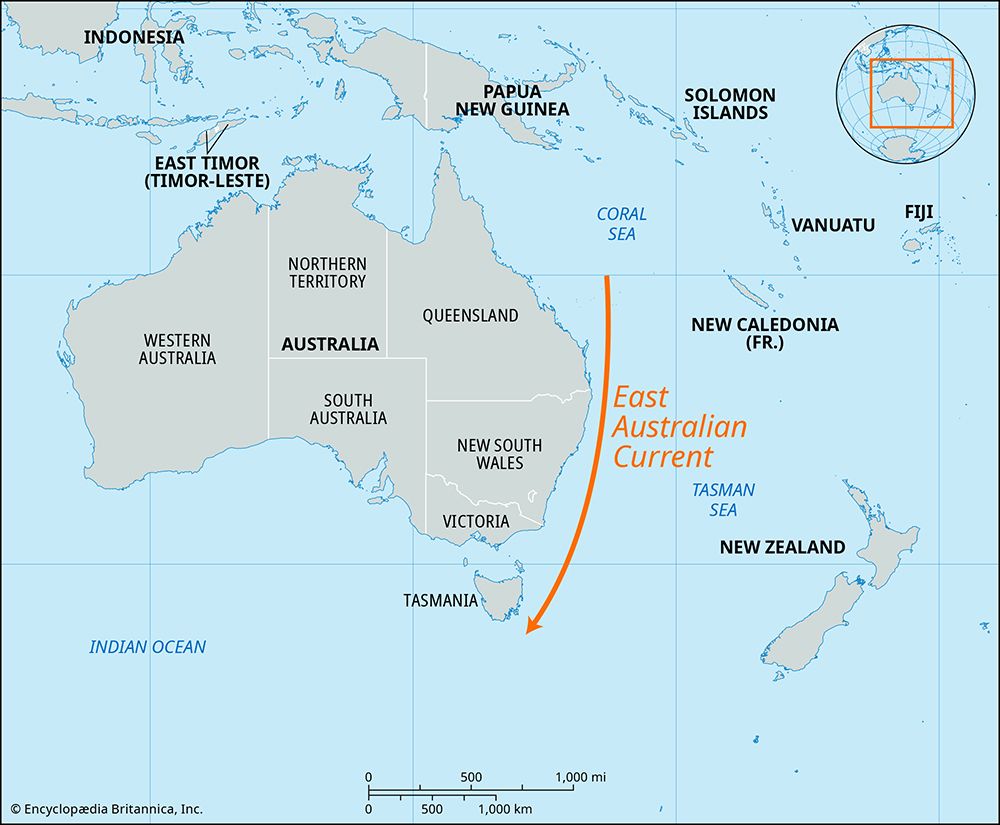
- Southern Branch: The remainder veers south to become the East Australian Current and a flow that passes east of New Zealand.10
Sources
- Guiana Current — Encyclopædia Britannica
- Atlantic Ocean - The South Atlantic — Encyclopædia Britannica
- Caribbean Current — Encyclopædia Britannica
- seawater - Salinity distribution — Encyclopædia Britannica
- Orinoco River - Physiography of the Orinoco — Encyclopædia Britannica
- Guinea Current — Encyclopædia Britannica
- Equatorial current — Encyclopædia Britannica
- Gulf of Guinea — Encyclopædia Britannica
- Equatorial countercurrent — Encyclopædia Britannica
- Brazil Current — Encyclopædia Britannica
- Indian Ocean - Surface currents — Encyclopædia Britannica
Published on · 3 min read