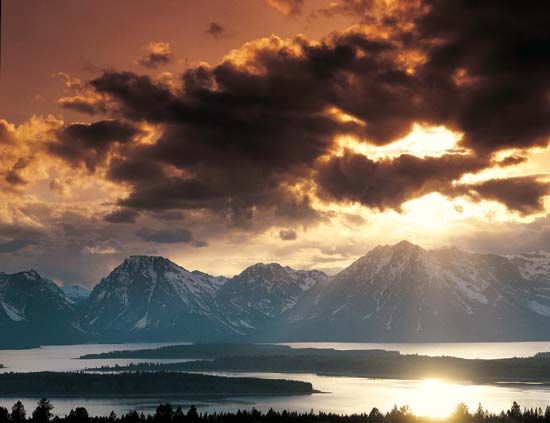
Grand Teton National Park
Grand Teton National Park is home to a diverse array of wildlife that thrives across its varied mountain and valley landscapes.
What diverse wildlife can be found in Grand Teton National Park?
Grand Teton National Park is home to a diverse array of wildlife that thrives across its varied mountain and valley landscapes.
The park’s fauna includes:
- Large Mammals: Herds of bison, elk, and antelope roam freely throughout the region, while moose are frequently spotted grazing in the park’s wetter areas.1
- Predators: Both black bears and brown (grizzly) bears inhabit the more remote sections of the park.1
- Birds: The park supports numerous avian species, most notably bald eagles and the vibrant western bluebird.1
- Aquatic Life: The park’s streams and water bodies are known to abound with various species of fish.1
The ecosystem is further supported by a rich botanical environment, ranging from lodgepole pine forests to seasonal wildflowers that bloom throughout the warmer months.1
Where is Grand Teton National Park located, and what are its main geographical features?
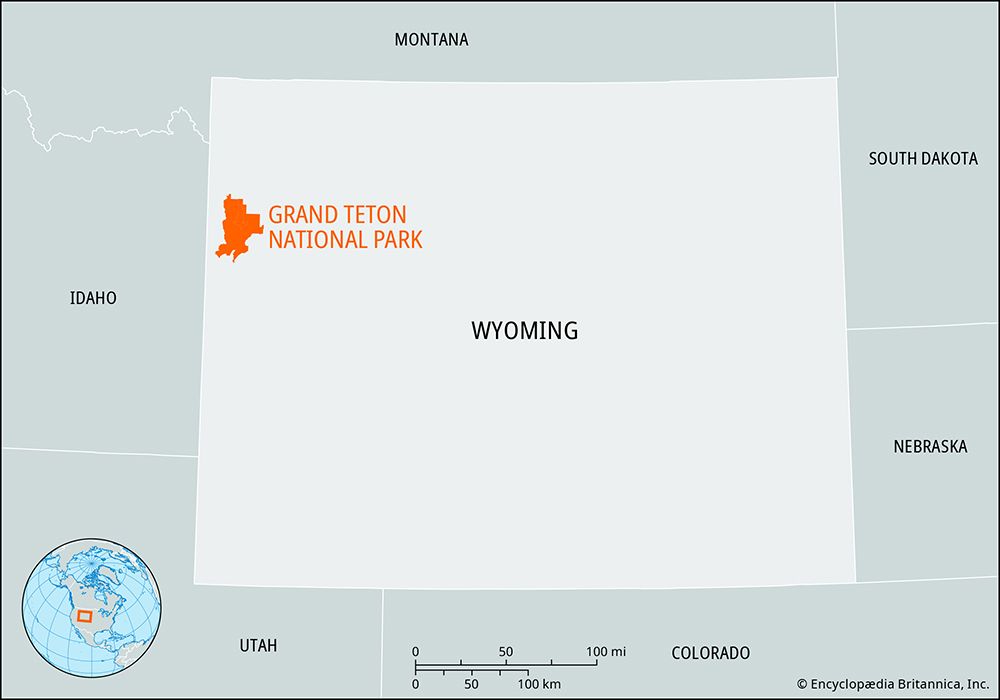
Grand Teton National Park is located in the northwestern region of Wyoming, United States. It is situated just south of Yellowstone National Park and north of the city of Jackson.1
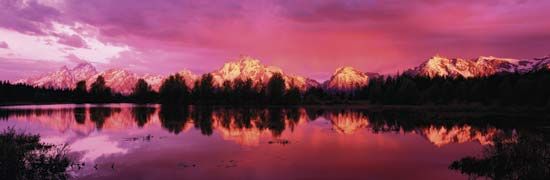
The park’s geography is defined by two primary features:
- The Teton Range: This segment of the Rocky Mountains consists of a massive fault block that was uplifted approximately six million years ago. Its peaks are glacially scoured and rugged, with the highest point, Grand Teton, reaching 13,770 feet (4,198 meters) above sea level.31
- Jackson Hole: Located to the east of the Teton Range, this fertile valley represents a subsiding block along the same fault line. The landscape is characterized by morainic terrain and is dotted with glacial lakes, including Jenny Lake and the large, dam-formed Jackson Lake. The Snake River flows through this valley, which sits roughly 7,000 feet below the highest mountain peaks.31
What are some of the most iconic landmarks or viewpoints within Grand Teton National Park?
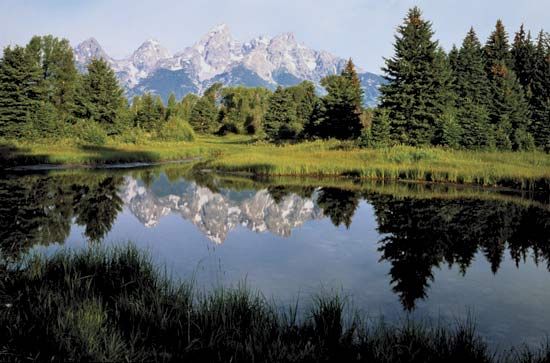
Grand Teton National Park is celebrated for its dramatic, glacially scoured landscape, offering several iconic landmarks and viewpoints:
- Grand Teton: Rising to 13,770 feet (4,198 meters), this is the highest peak in the Teton Range. It serves as the park’s namesake and a premier destination for mountaineers.13
- Jenny Lake: Situated at the base of the tallest peaks, this glacial lake is one of the most well-known and picturesque spots in the park.1
- Jackson Lake: The largest lake in the park, this body of water was formed by a dam across the Snake River and provides expansive views of the surrounding mountains.1
- Jackson Hole: This fertile valley sits at the eastern base of the Teton Range. Its morainic landscape offers a unique vantage point to appreciate the abrupt, 7,000-foot rise of the mountains above the valley floor.13
The park also features over 235 miles of hiking trails that provide access to these and other scenic vistas throughout the region.1
How does Grand Teton National Park compare in size and features to other national parks in the United States?
Grand Teton National Park covers 484 square miles (1,254 square km), making it significantly smaller than its neighbor to the north, Yellowstone National Park, which spans 3,472 square miles (8,992 square km). While Yellowstone is recognized as the world’s first national park and is famous for its vast concentration of hydrothermal features, Grand Teton is distinguished by its dramatic, glacially scoured mountain topography.13
Key features that set Grand Teton apart include:
- Geological Structure: The park is defined by the Teton Range, a massive fault block uplifted six million years ago, which rises abruptly 7,000 feet above the Jackson Hole valley floor.16
- Recreational Focus: It is renowned as a premier destination for mountaineering and climbing, offering routes of varying skill levels on its high peaks, alongside over 235 miles of hiking trails.16
- Connectivity: The park is linked to Yellowstone via the John D. Rockefeller, Jr., Memorial Parkway, creating a continuous protected corridor of diverse ecosystems.13
Sources
- Grand Teton National Park — Encyclopædia Britannica
- Jackson Hole National Monument — Encyclopædia Britannica
- Teton Range — Encyclopædia Britannica
- Jackson — Encyclopædia Britannica
- Jackson Hole — Merriam-Webster
- Yellowstone National Park — Encyclopædia Britannica
Published on · 3 min read