Grasshopper
Throughout history, humans have interacted with grasshoppers primarily as both a food source and an agricultural challenge.
How have humans used grasshoppers throughout history, including as food?
Throughout history, humans have interacted with grasshoppers primarily as both a food source and an agricultural challenge.
Culinary Use
Grasshoppers are a form of entomophagy—the practice of consuming insects for nutrition. They are eaten in many parts of the world, particularly in tropical regions where they are often harvested from nature. Culinary preparations include drying, roasting, jellying, dipping in honey, or grinding them into a meal. As a food source, they provide protein, energy, and essential fatty acids, and they are considered a sustainable alternative to conventional livestock due to their efficient conversion of feed into body weight and lower environmental impact.
Agricultural Impact
Conversely, grasshoppers are widely recognized as significant crop pests. Certain species, particularly migratory locusts, can form gregarious swarms capable of causing widespread agricultural devastation. In cattle-growing regions, they also compete with livestock for available forage. Consequently, humans have historically employed insecticides and poison baits to manage their populations and protect food supplies.
What types of habitats do grasshoppers typically live in?
Grasshoppers are highly adaptable insects found in a wide variety of environments across the globe. While they occur in the greatest numbers in grasslands, semiarid regions, and lowland tropical forests, they have evolved to occupy diverse and sometimes specialized niches.1
Their habitat preferences include:
- Extreme Altitudes: Some species thrive in the Himalayas at elevations reaching 6,000 meters (about 18,000 feet).1
- Aquatic and Semi-Aquatic Zones: Certain grasshoppers, such as those in the family Pauliniidae, live on floating vegetation and swim among underwater aquatic plants.1
- Deserts: Desert-dwelling species have developed unique survival strategies, including “self-burial,” where they maneuver their legs to submerge themselves in sand to escape harsh conditions.1
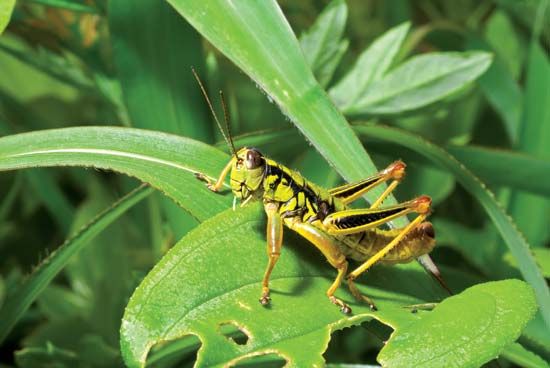
- Vegetation: Many slender species live directly among grasses, using camouflage to cling lengthwise to stems and remain motionless to avoid detection.1
Across these environments, grasshoppers often exhibit body colors that simulate their background, helping them blend into rocky, sandy, or vegetated surroundings.1
How do grasshoppers defend themselves against predators?
Grasshoppers have evolved a variety of defensive strategies to protect themselves from predators, primarily focusing on concealment and chemical deterrence.
Camouflage and Concealment
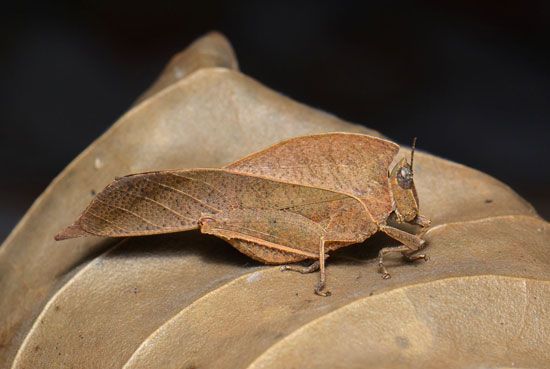
Many grasshoppers rely on camouflage to avoid detection. Their body colors often simulate their habitat, allowing them to blend into rocky, sandy, or vegetated environments. Some species resemble leaves, while others are slender and cling lengthwise to grass stems, remaining motionless or sidling behind the stems to stay hidden. In some cases, grasshoppers can even change their color to match their surroundings, a process often triggered by light or temperature. Additionally, some desert-dwelling species practice “self-burial,” maneuvering their legs to submerge themselves in sand for protection.561
Chemical and Physical Defenses
When threatened or handled, many grasshoppers employ chemical mechanisms:
- Regurgitation: Most grasshoppers will regurgitate a brown, molasses-like fluid from their mouths as a deterrent.7
- Secretions: Some species exude irritating fluids through their spiracles or from specialized glands located on their body or leg joints.7
- Auditory Warnings: These chemical releases are sometimes accompanied by hissing sounds or the blowing of bubbles from their spiracles.7
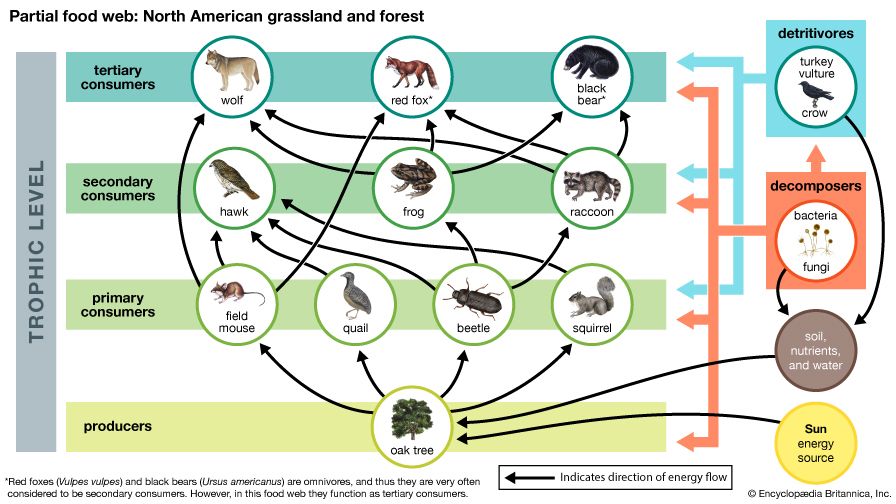
While they lack stingers, these diverse defensive behaviors help grasshoppers survive within the complex food web where they are preyed upon by birds, frogs, and snakes.76
What’s the difference between grasshoppers and locusts?
The term “locust” refers to specific species of short-horned grasshoppers that exhibit a unique biological phenomenon known as phase polyphenism. While all locusts are grasshoppers, not all grasshoppers are locusts; the distinction lies in their ability to shift between two distinct phases based on environmental conditions and population density.89
The Phase Theory
A locust species exists in two forms, which differ significantly in behavior, physiology, and appearance:8
- Solitary Phase: This is the normal state for the species. Individuals are sluggish, live in isolation, and possess coloration that camouflages them with their surroundings. Physically, they typically have shorter wings and longer legs.8
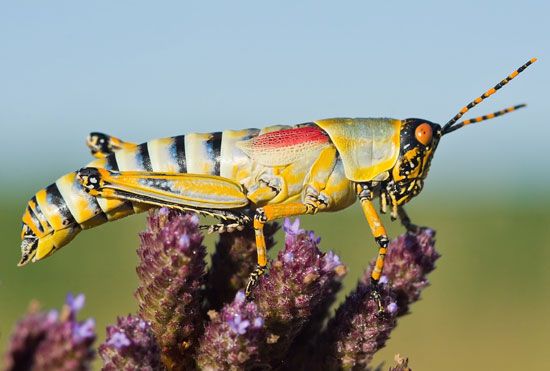
- Gregarious Phase: When population density increases—often due to crowding in marginal habitats—individuals undergo a physiological transformation. They become active, nervous, and highly social, gathering in massive swarms. Physically, these individuals develop longer wings, broader shoulders, and distinct color patterns (often black and yellow or orange).89
This transformation is driven by hormonal changes triggered by crowding and environmental stress. Once a population shifts to the gregarious phase, they become highly migratory and can cause extensive damage to crops, making them a significant agricultural concern.89
Sources
- grasshopper — Encyclopædia Britannica
- entomophagy — Encyclopædia Britannica
- Orthoptera - Importance — Encyclopædia Britannica
- homopteran - Habitats — Encyclopædia Britannica
- Orthoptera - Defense — Encyclopædia Britannica
- Orthoptera - Camouflage — Encyclopædia Britannica
- Orthoptera - Movement — Encyclopædia Britannica
- locust — Encyclopædia Britannica
- Orthoptera - Hormones — Encyclopædia Britannica
Published on · 4 min read