Blister Beetle
There are approximately 2,500 species of blister beetles (family Meloidae), which are characterized by their ability to secrete the irritating substance…
What are the different species of blister beetles, and how do they vary?
There are approximately 2,500 species of blister beetles (family Meloidae), which are characterized by their ability to secrete the irritating substance cantharidin. While they share common defensive traits, they vary significantly in appearance, behavior, and life history.1
Physical and Behavioral Variations
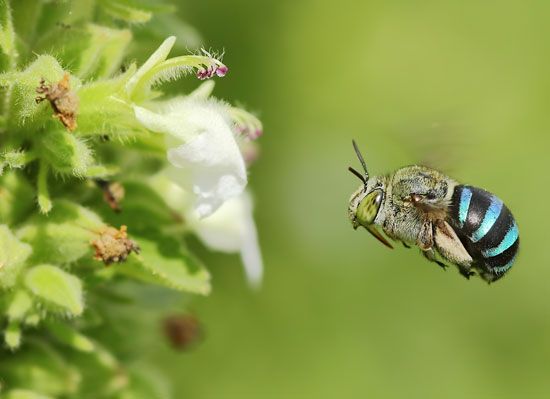
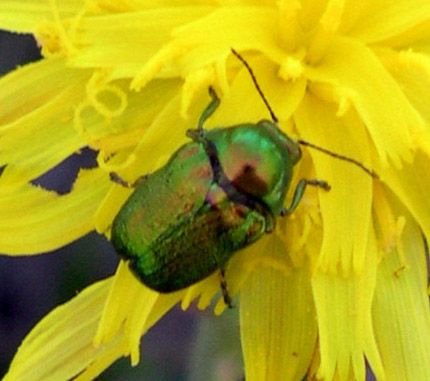
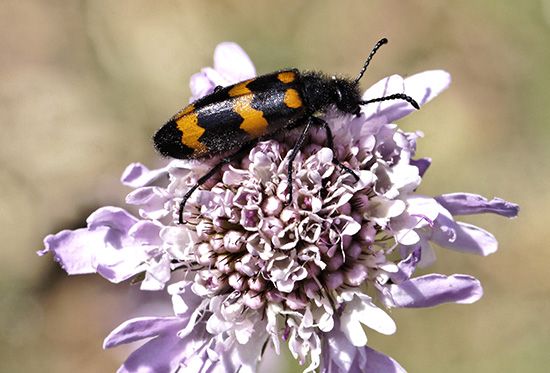
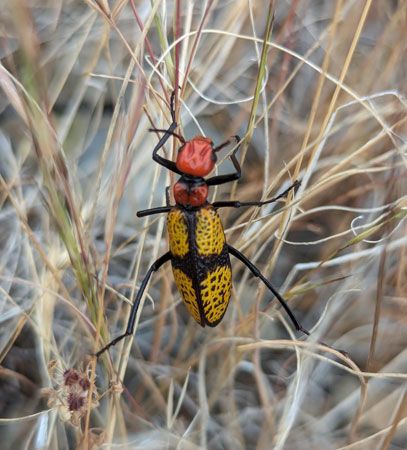
- Appearance: Adults typically range from 3 to 20 mm in length and often feature bright, warning colors or metallic green and blue wing covers (elytra).1
- Subfamily Meloinae: Often called oil beetles, these species lack hindwings and possess short, overlapping wing covers. They secrete an oily, foul-tasting substance to deter predators.1
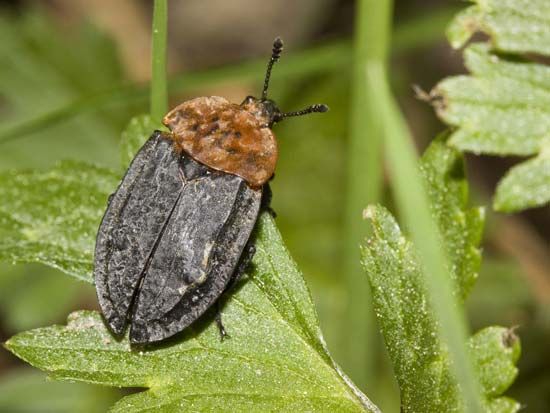
- Specific Examples: The Spanish fly (Lytta vesicatoria) is noted for its emerald green color and is a primary source of cantharidin. In contrast, the spotted blister beetle (Epicauta maculata) is a gray, black-spotted insect known for damaging crops like potatoes.12
Life History
Blister beetles undergo hypermetamorphosis, a complex developmental process involving different larval stages. For instance, Sitaris muralis larvae are parasitic on bees, while Epicauta vittata larvae feed on grasshopper eggs.13
How do blister beetles use cantharidin, and why is it significant?
Blister beetles utilize cantharidin primarily as a chemical defense mechanism. When the insects are threatened, handled, or crushed, they release this potent substance from their mouths and leg joints to deter predators.1
The significance of cantharidin lies in its dual nature as both a biological tool and a substance with historical and modern applications:
- Medical Utility: Because it acts as a topical skin irritant, cantharidin is used in modern medicine to remove warts and molluscum. It has also been used traditionally as an exfoliating agent and a treatment for rheumatism.1
- Historical Context: The substance has a long, controversial history as an aphrodisiac and a primary ingredient in traditional “love potions,” often sourced from the Spanish fly.1
- Toxicity: Cantharidin is a powerful burn agent that is poisonous in large doses. It poses a significant risk to livestock, as horses and other animals can be fatally poisoned if they consume beetles accidentally baled into hay.1
What are the defining characteristics of blister beetles?
Blister beetles, belonging to the family Meloidae, are a group of approximately 2,500 species defined by several distinct characteristics:
- Chemical Defense: Their most notable trait is the ability to secrete cantharidin, a potent, blistering toxin released from their mouths and leg joints when they are threatened or crushed.14
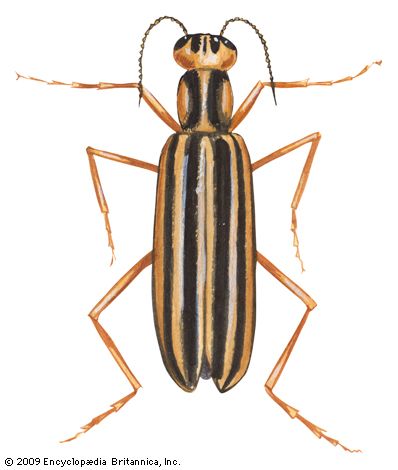
- Physical Appearance: Adults typically have long, slender, cylindrical, and leathery bodies ranging from 3 to 20 mm in length. They often feature bright, warning colors—such as stripes or spots—or metallic green and blue wing covers (elytra), which eliminate the need for camouflage.1
- Development: They undergo a complex life cycle known as hypermetamorphosis, involving distinct larval stages that differ significantly from one another.13
- Ecological Impact: These beetles are both beneficial and harmful. While some larvae help control grasshopper populations, adults can be destructive to crops, and their toxicity poses a lethal risk to livestock that consume them in contaminated hay.1
What role do blister beetles play in their ecosystem?
Blister beetles (family Meloidae) play a complex and multifaceted role in their ecosystems, acting as both beneficial regulators and potential pests depending on their life stage and environment.
Ecological Contributions
- Population Control: The larvae of certain species, such as Epicauta vittata, serve as natural regulators of grasshopper populations by feeding on their eggs in the soil.1
- Parasitic Relationships: Many blister beetle larvae are specialized parasites. For instance, some species deposit eggs near bee nests; the active larvae, known as triungulins, attach themselves to bees to reach the nest, where they feed on bee eggs and stored food resources.16
Impact on the Environment
- Herbivory: Adult blister beetles are typically herbivores that feed on floral parts and foliage. While this is a natural behavior, large aggregations of adults can cause significant damage to cultivated crops.1
- Toxicity and Defense: By secreting cantharidin, these beetles deter many predators. However, this chemical defense has unintended consequences for the broader ecosystem, as it poses a lethal poisoning risk to livestock that accidentally consume the beetles when they are baled into hay.1
Sources
- blister beetle — Encyclopædia Britannica
- Coleoptera - Larvae — Encyclopædia Britannica
- spotted blister beetle — Merriam-Webster
- Meloidae — Merriam-Webster
- blister beetle — Merriam-Webster
- Coleoptera - Feeding habits and habitats — Encyclopædia Britannica
- neuropteran - Ecology — Encyclopædia Britannica
Published on · 3 min read