Great Smoky Mountains
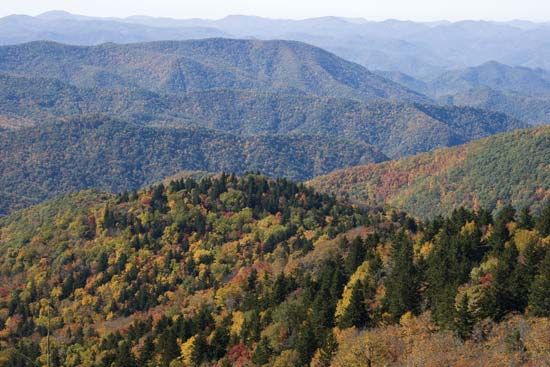
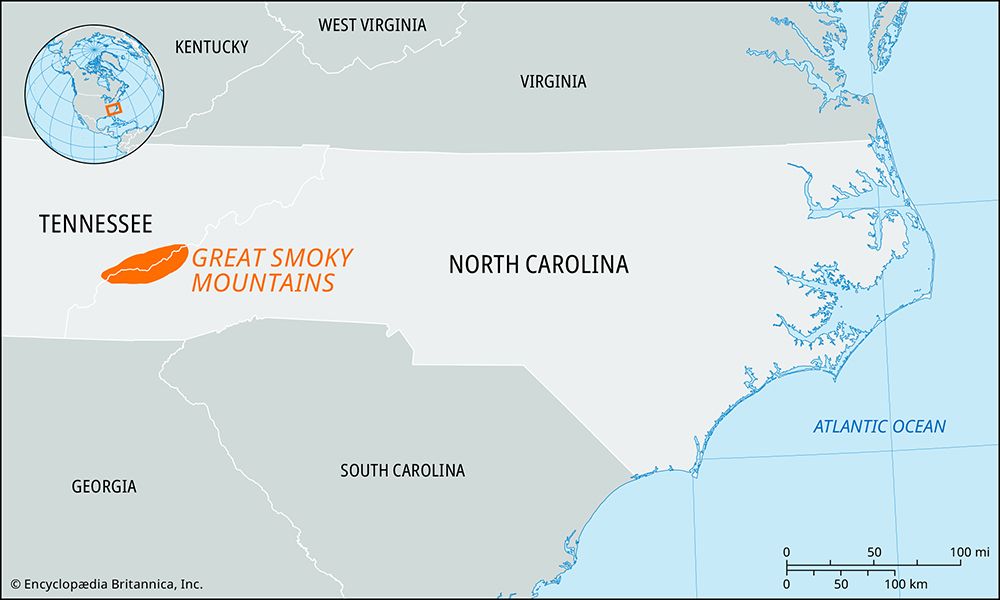
The Great Smoky Mountains are a western segment of the Appalachian Mountains located along the border of eastern Tennessee and western North Carolina.
Where are the Great Smoky Mountains located, and what makes them unique?
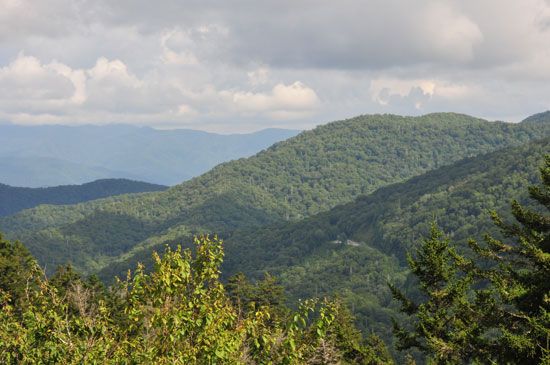
The Great Smoky Mountains are a western segment of the Appalachian Mountains located along the border of eastern Tennessee and western North Carolina.1
These mountains are unique for several reasons:
- Natural Heritage: The region is named for the characteristic bluish haze that hangs over the peaks. It contains the Great Smoky Mountains National Park, a UNESCO World Heritage site established to preserve one of the last large areas of southern primeval hardwood forest in the United States.12
- Biodiversity: The area supports an immense variety of plant and animal life, including black bears, diverse salamander species, and relict ice-age forests of red spruce and Fraser fir.12
- Cultural Significance: Originally the domain of the Cherokee people, who called the land the “Place of Blue Smoke,” the region also preserves historic log buildings from early European settlers.12
What are some of the most popular hiking trails in the Great Smoky Mountains?
The Great Smoky Mountains National Park offers an extensive network of approximately 800 miles (1,300 km) of hiking trails, providing diverse opportunities for outdoor exploration.2
A primary highlight is the Appalachian National Scenic Trail, which follows the crestline along the border of Tennessee and North Carolina for about 200 miles (300 km). This segment of the trail is particularly noted for its passage through high-elevation “grassy balds”—mountainous areas devoid of woody plants—and its vibrant displays of rhododendron, azalea, and dogwood blossoms in the spring.21
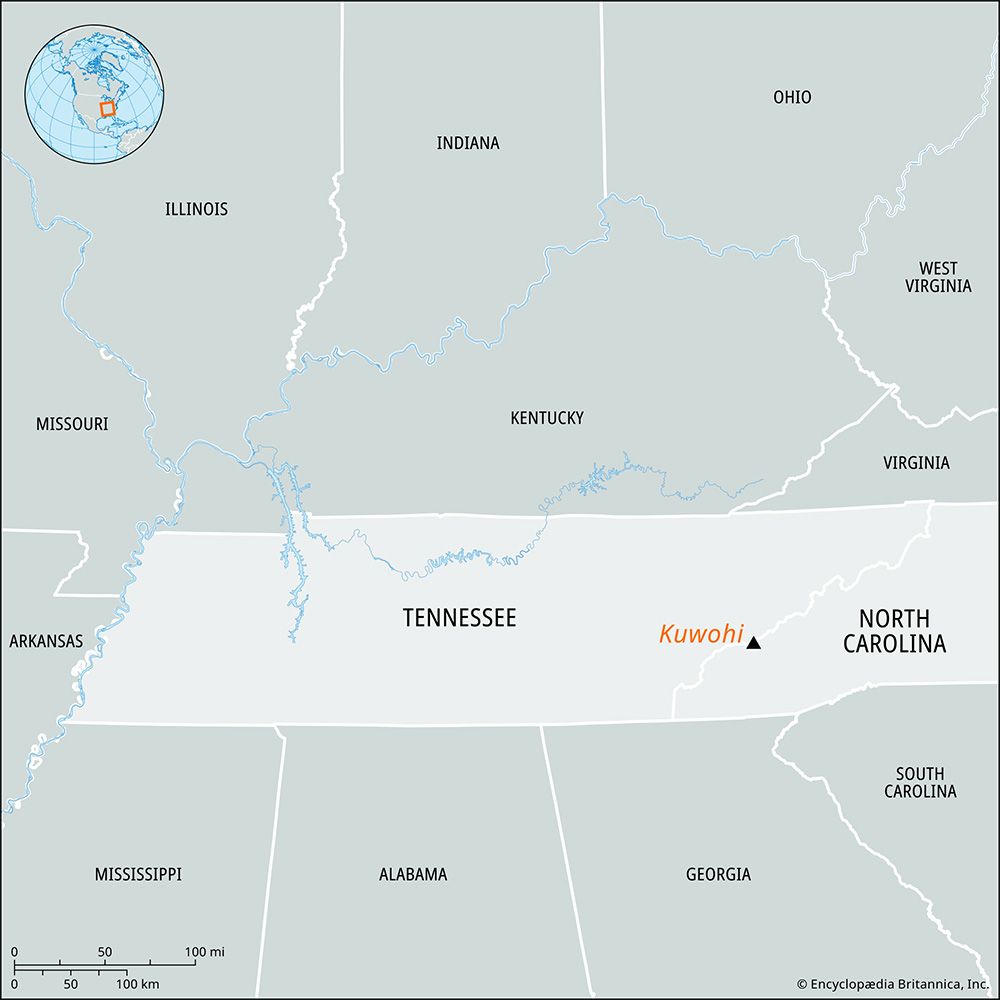
The trail reaches its highest elevation of 6,643 feet (2,025 meters) at the summit of Kuwohi, which serves as a major landmark within the park. While the park features numerous paths ranging from short walks to rugged wilderness treks, the Appalachian Trail remains the most iconic route for both day hikers and those attempting to traverse the entire length of the footpath.21
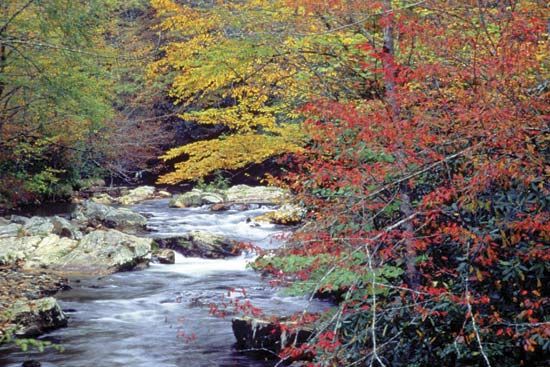
How did the Great Smoky Mountains get their name?
The Great Smoky Mountains derive their name from the characteristic bluish haze that frequently blankets the region.41
The Cherokee people, the original inhabitants of this segment of the Appalachian Mountains, referred to the area as Shaconage, which translates to “place of the blue smoke.” Contrary to the name, this phenomenon is not caused by actual smoke. Instead, it is a natural occurrence resulting from vegetation in the region. Plants and trees release volatile organic compounds that react with other atmospheric substances to create aerosols. These fine particles scatter blue and violet light from the Sun, producing the distinctive blue-tinted mist that gives the mountains their appearance.4
How do the Great Smoky Mountains contribute to the local economy of North Carolina and Tennessee?
The Great Smoky Mountains serve as a significant economic engine for Tennessee and North Carolina, primarily by functioning as a premier destination for tourism and recreation. As one of the most heavily visited national parks in the United States, the Great Smoky Mountains National Park draws millions of visitors who engage in activities such as hiking, fishing, horseback riding, and scenic driving tours.21
The economic impact is bolstered by several key factors:
- Tourist Hubs: Nearby cities like Gatlinburg and Pigeon Forge, Tennessee, have developed into major tourist destinations, featuring attractions such as the Dollywood resort complex.15
- Infrastructure and Access: The park serves as the southern terminus for the Blue Ridge Parkway, a major noncommercial motor route that facilitates regional travel and tourism.15
- Cultural and Natural Attractions: Visitors are drawn to the region’s biodiversity, historic log buildings, and craft centers, which support local hospitality and service industries.12
While tourism provides substantial economic benefits, it also introduces challenges related to environmental stress, requiring a balance between development and preservation.2
Sources
- Great Smoky Mountains — Encyclopædia Britannica
- Great Smoky Mountains National Park — Encyclopædia Britannica
- Appalachian National Scenic Trail — Encyclopædia Britannica
- Where do the Great Smoky Mountains get their name? — Encyclopædia Britannica
- Appalachian Mountains - Recreation and tourism — Encyclopædia Britannica
Published on · 3 min read