French Broad River
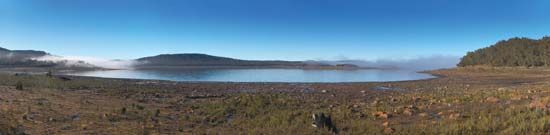
The French Broad River is a 210-mile-long waterway that originates in the Blue Ridge mountains of Transylvania County, North Carolina.
What is French Broad River?
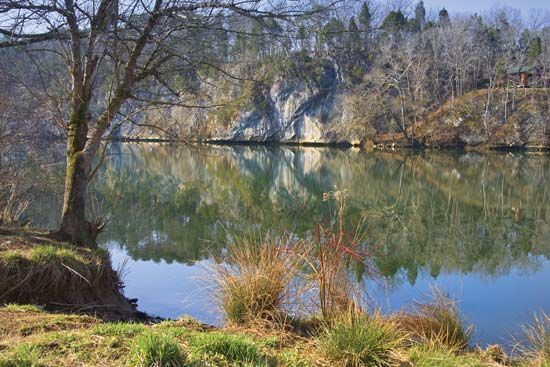
The French Broad River is a 210-mile-long waterway that originates in the Blue Ridge mountains of Transylvania County, North Carolina.12
The river flows northeast past Brevard and northwest through Asheville, eventually cutting through the Great Smoky Mountains into Tennessee. Near Knoxville, it joins the Holston River to form the Tennessee River. The river features the Douglas Dam and Reservoir, which is managed by the Tennessee Valley Authority.1
The name “French Broad” was adopted to distinguish the river from North Carolina’s Broad River, with the “French” designation referencing early French settlers located to the west. Its primary tributaries include the Pigeon and Nolichucky rivers.1
How does the Tennessee Valley Authority impact the river?
The Tennessee Valley Authority (TVA) has fundamentally transformed the Tennessee River system and its tributaries, including the French Broad River, through a comprehensive program of dam construction and resource management.34
The agency’s impact on the river includes:
- Flood Control: By managing a system of dams as a single unit, the TVA has effectively eliminated major flood damage along the river, which was previously prone to severe, destructive flooding.34
- Navigation: The TVA improved the river as a major inland waterway by deepening channels and installing navigation locks at its main dams. This has significantly increased commercial river traffic.31
- Power Generation: The construction of hydroelectric dams, such as the Douglas Dam on the French Broad, provides low-cost electricity that spurred regional industrial and economic development.345
- Environmental and Recreational Changes: The dams created the “Great Lakes of the South,” which serve as hubs for boating, fishing, and recreation. Additionally, the TVA implemented programs to eradicate malaria and improve land conservation practices.34
What are the main tributaries of the French Broad River?
The main tributaries of the French Broad River are the Pigeon and Nolichucky rivers.1
How do the Blue Ridge Mountains influence the river’s path?
The Blue Ridge mountains play a foundational role in shaping the path of the French Broad River. The river rises within these mountains in Transylvania County, North Carolina, and its course is dictated by the complex geology of the Appalachian Mountains the Appalachian Mountains.1
Because many major Appalachian rivers are older than the mountains themselves, they often cut through rising terrain rather than flowing around it. As the mountains were uplifted, the French Broad maintained its westward trajectory, carving through the landscape to create deep gorges and narrow passages. This process is characteristic of the region, where rivers have historically cut their own routes through the folding and faulting of the earth’s crust.16
The mountains also influence the river’s flow through high precipitation; the Blue Ridge and the Great Smoky Mountains receive significant rainfall, which historically led to rapid rises in stream levels and necessitated the flood control measures later implemented by the Tennessee Valley Authority.4
Sources
- French Broad River — Encyclopædia Britannica
- French Broad — Merriam-Webster
- Tennessee Valley Authority — Encyclopædia Britannica
- Appalachian Mountains - Drainage — Encyclopædia Britannica
- Tennessee River — Encyclopædia Britannica
- Appalachian Mountains - Geology of the Appalachian Mountains — Encyclopædia Britannica
- Little Tennessee River — Encyclopædia Britannica
- river - Valley evolution — Encyclopædia Britannica
Published on · 2 min read