Guam
Guam’s economy is distinct due to its status as an unincorporated U.S. territory and its strategic role as a major U.S. military hub. Unlike many U.S.…
How does Guam’s economy differ from other U.S. territories or states?
Guam’s economy is distinct due to its status as an unincorporated U.S. territory and its strategic role as a major U.S. military hub. Unlike many U.S. states, Guam’s economy shifted significantly after World War II from subsistence agriculture and fishing toward a reliance on imported foodstuffs and military-related employment.1
Key economic differentiators include:
- Military Integration: The presence of facilities like Andersen Air Force Base and various U.S. Navy installations serves as a primary economic driver, drawing labor away from traditional sectors.1
- Duty-Free Status: As a duty-free port, Guam attracts small-scale manufacturing and international trade, distinguishing it from the standard tax and trade regulations found in U.S. states.1
- Tourism Focus: Tourism is the most prominent economic component, supported by luxury development in areas like Tumon Bay and an international airport that connects the island to Asia and the broader Pacific.1
While the provided search results detail Guam’s unique military and trade position, they do not offer a comprehensive comparative analysis of every economic metric against all other U.S. states or territories.
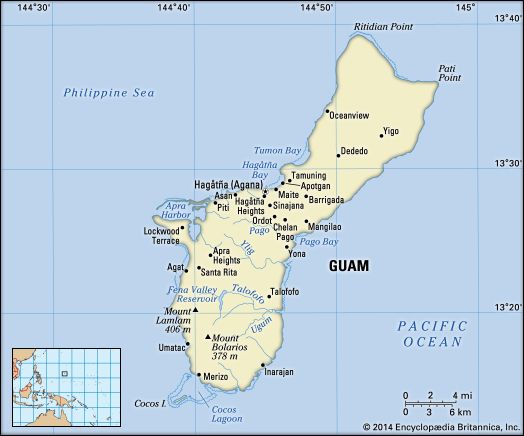
How did World War II impact Guam, and what role did the island play in the Pacific theater?
During World War II, Guam served as a critical strategic asset in the Pacific theater. Following the attack on Pearl Harbor, Japanese forces occupied the island by December 12, 1941, holding it until Allied forces launched a successful liberation campaign, known as Operation Stevedore, from July 21 to August 10, 1944.41
The liberation was a significant military operation involving all branches of the U.S. armed forces, supported by indigenous Chamorro guerrillas. The battle resulted in heavy casualties, with approximately 1,700 Americans killed and 18,000 Japanese defenders lost.4
Once retaken, Guam became a vital U.S. military hub, providing essential airfields and a deep-water harbor for Allied operations. It served as a primary base for squadrons of bombers that conducted attacks on Japan during the final stages of the war. This transition to a major military installation permanently altered the island’s landscape and economy, shifting it away from traditional subsistence agriculture toward a reliance on military infrastructure and imported goods.415
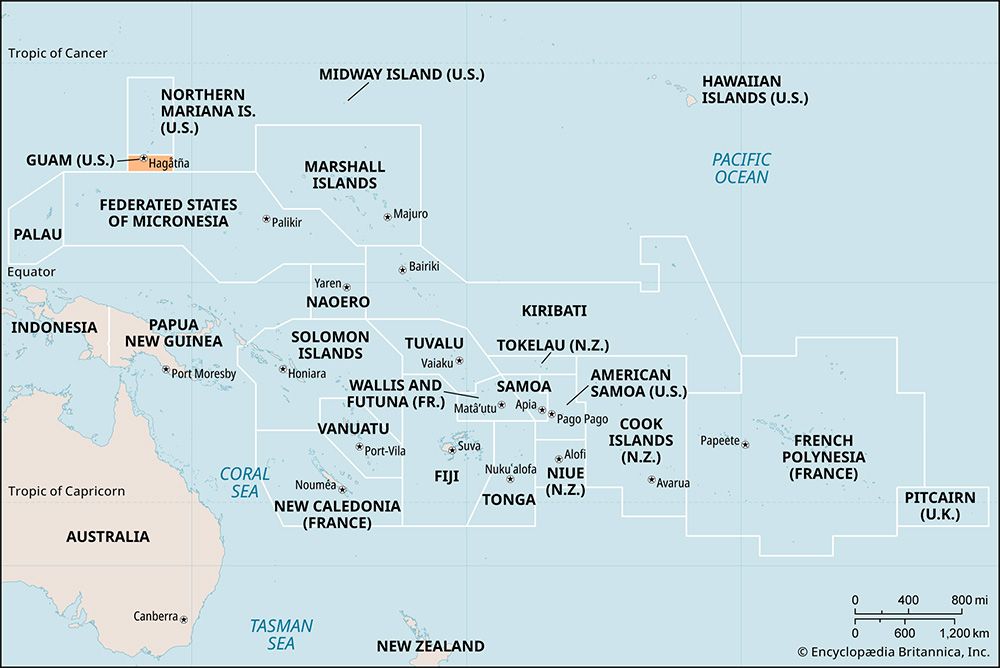
What are some traditional Chamorro foods and customs that visitors can experience in Guam?
The provided search results offer historical and demographic information about the Chamorro people, noting their indigenous roots in the Mariana Islands and their significant presence in Guam. However, the current knowledge base does not contain specific details regarding traditional Chamorro foods or specific customs that visitors can experience.
Because the provided search results do not include information about culinary traditions or visitor-oriented cultural practices, I cannot answer your request regarding these specific topics.
How did Guam become a U.S. territory, and what is its current political status?
Guam became a U.S. territory following the Spanish-American War. Under the 1898 Treaty of Paris, Spain ceded the island to the United States as indemnity.58
Currently, Guam is an unincorporated territory of the United States, governed by the Organic Act of Guam passed by Congress in 1950. This act granted U.S. citizenship to the Chamorro people. While residents are U.S. citizens, they do not have the right to vote in national presidential elections. However, Guam elects a nonvoting delegate to the U.S. House of Representatives who may vote in committees, and the island maintains its own local government, including a popularly elected governor and a unicameral legislature.25
In 1982, voters expressed a preference for commonwealth status, and negotiations regarding this potential change in political relationship have continued into the 21st century.52
Sources
- Guam - Economy — Encyclopædia Britannica
- Guam - Government and society — Encyclopædia Britannica
- Micronesia - Economy — Encyclopædia Britannica
- Battle of Guam — Encyclopædia Britannica
- Guam - History — Encyclopædia Britannica
- Chamorro — Encyclopædia Britannica
- Northern Mariana Islands - Cultural life — Encyclopædia Britannica
- Treaty of Paris — Encyclopædia Britannica
Published on · 3 min read