Guayule
Guayule (Parthenium argentatum) is a rubber-containing desert shrub belonging to the Asteraceae family. Native to the north-central plateau of Mexico and the…
What is Guayule?
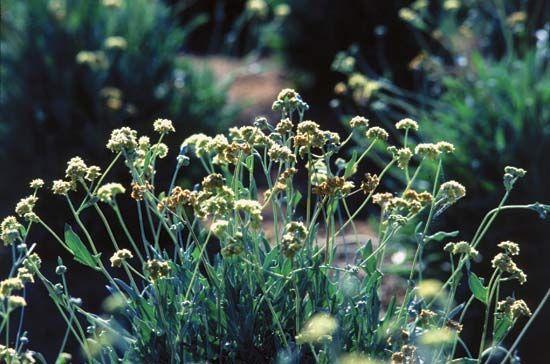
Guayule (Parthenium argentatum) is a rubber-containing desert shrub belonging to the Asteraceae family. Native to the north-central plateau of Mexico and the Big Bend region of Texas, the plant is characterized by its narrow, silvery leaves and small white flowers.12
Historically, prehistoric peoples obtained rubber by chewing the plant’s bark, while modern production involves mechanically macerating the shrub. Although commercial production peaked during World War II as a strategic resource for the United States, it largely ceased following the war. However, research into guayule as a sustainable alternative source of rubber continues in several countries, including Mexico, Spain, Turkey, and the United States.1
How does guayule rubber compare to rubber from trees?
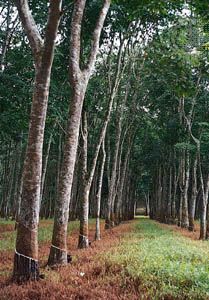
Guayule rubber is derived from the maceration of the shrub Parthenium argentatum, whereas natural rubber is traditionally harvested from the Hevea brasiliensis tree. While the provided search results confirm that guayule serves as a source of rubber, they do not contain specific technical data comparing the physical properties, chemical composition, or performance characteristics of guayule rubber against tree-derived rubber.1
We could dive deeper into the industrial applications of natural rubber or explore the botanical differences between these two sources if you would like to learn more.
Why was guayule important during World War II?
During World War II, guayule became a critical focus for the United States as a strategic resource due to the disruption of global supply chains. Following Japan’s entry into the war in 1941, the Allies were largely cut off from traditional Asian sources of natural rubber, which were essential for the automotive industry and military production.12
In response to this shortage, the U.S. government initiated vigorous efforts to cultivate the guayule shrub in the southwestern United States as an alternative source of natural rubber. While these cultivation attempts ultimately met with limited success compared to the rapid development of the synthetic rubber industry, they represented a significant wartime effort to secure essential materials for the Allied war effort.12
What other plants can be used to produce natural rubber?
While many trees, shrubs, and herbaceous plants are capable of producing rubber, Hevea brasiliensis remains the primary commercial source because no other species matches its efficiency in production.4
Historically, the rubber plant (Ficus elastica) served as a source of natural rubber before being largely supplanted by Hevea brasiliensis in the early 20th century. Although other plants contain rubber-producing latex, industry botanists have focused their efforts exclusively on the Hevea tree due to its superior yield and the practical challenges of cultivating alternative species for industrial-scale output.54
Sources
- Guayule — Encyclopædia Britannica
- guayule — Merriam-Webster
- rubber - Development of the natural rubber industry — Encyclopædia Britannica
- rubber - The rubber tree — Encyclopædia Britannica
- rubber - Tapping and coagulation — Encyclopædia Britannica
- rubber tree — Encyclopædia Britannica
Published on · 2 min read