Asteraceae
Humans have long cultivated members of the Asteraceae family for their aesthetic appeal, selecting for desirable traits such as specific sizes, shapes, and…
How have humans cultivated and bred Asteraceae plants for ornamental purposes?
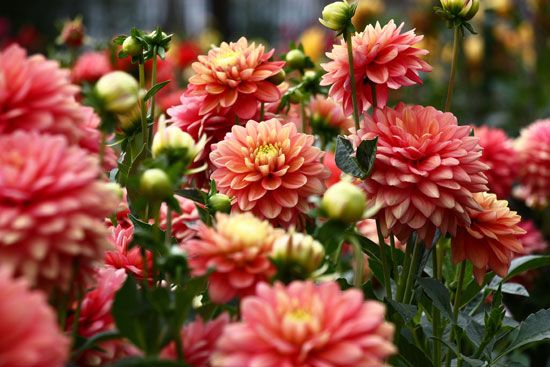
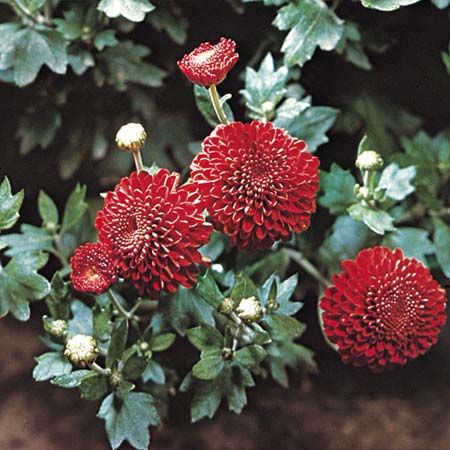
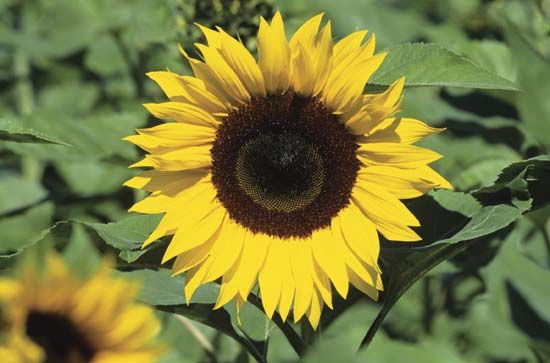
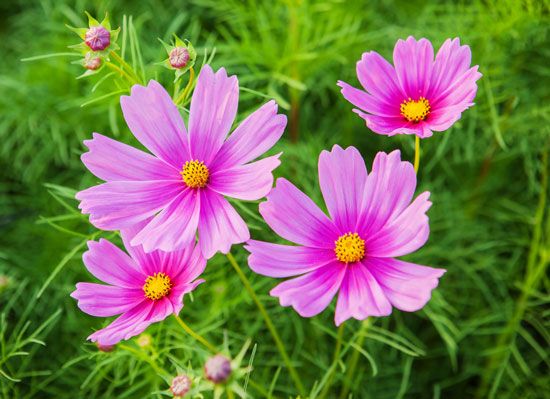
Humans have long cultivated members of the Asteraceae family for their aesthetic appeal, selecting for desirable traits such as specific sizes, shapes, and colors. Because many Asteraceae species are popular garden ornamentals—including dahlias, chrysanthemums, zinnias, and sunflowers—breeders focus on manifold characteristics that enhance their utility and beauty.123
The breeding process often involves controlled hybridization, where breeders carefully manage pollination to ensure that pollen from a desired male parent reaches the stigma of a selected female parent. This can be a tedious, manual process requiring the removal of anthers and the protection of flowers from foreign pollen. However, the resulting $F_1$ hybrids often exhibit heterosis, or hybrid vigor, which can manifest as increased growth rates, greater uniformity, and earlier flowering. While hand-producing these seeds is expensive, the high demand from home gardeners and greenhouse growers makes the practice economically viable. Modern techniques, such as utilizing cytoplasmic male sterility, have further streamlined the production of these hybrid varieties by eliminating the need for manual emasculation.45
How has the classification and taxonomy of the Asteraceae family evolved over time?
The classification and taxonomy of the Asteraceae family have evolved significantly as botanical systems have shifted from morphological observations to molecular phylogenetics.
Currently, the family is placed within the order Asterales, which is a member of the core asterid clade in the Angiosperm Phylogeny Group (APG) classification system. This modern framework relies heavily on genetic evidence to establish evolutionary relationships, linking Asteraceae to other families—such as Campanulaceae—through shared chemical characteristics, including the presence of inulin and ellagic acid, as well as specialized reproductive traits like plunger pollination.78
Historically, the family has been recognized for its distinct composite flower heads and one-seeded achene fruits. While early classifications were based primarily on these visible features, contemporary taxonomy uses molecular data to refine the placement of its more than 1,620 genera and 25,000 species. Paleobotanical evidence, such as fossils from the Eocene Epoch, continues to inform our understanding of the family’s deep evolutionary history, which likely began in South America approximately 50 million years ago.98
What role do Asteraceae plants play in supporting pollinators and other wildlife?
Asteraceae plants are vital to pollinators and other wildlife, primarily due to their accessible floral structure and diverse reproductive strategies.
Supporting Pollinators
The family is highly effective at attracting insects, which are their most common pollinators. Because the individual florets within a composite head are typically small, the nectar is easily reachable by a wide variety of visitors without requiring specialized, long mouthparts. The pollen is also freely exposed on the surface of the flower head, making it readily available to diverse insect species, including bees, butterflies, and moths.11
The family utilizes a specialized system known as plunger pollination, where the style pushes pollen out on specialized hairs to present it to visitors while the stigma remains unreceptive. This mechanism facilitates efficient outcrossing, ensuring the plant’s reproductive success while providing a reliable food source for pollinators.11
Wildlife Interactions
Beyond pollination, Asteraceae species interact with wildlife in various ways:
- Seed Dispersal: Many species, such as Bidens (beggar-tick), have evolved barbed pappus awns that attach to the fur or feathers of animals, utilizing them for seed transportation.2
- Chemical Defense: The family produces a wide array of secondary metabolites, such as sesquiterpene lactones and alkaloids, which serve as defensive mechanisms against herbivores and parasites.2
- Habitat Provision: Occurring in nearly every terrestrial habitat, these plants provide essential resources in diverse environments, including disturbed sites and harsh landscapes like sand dunes.2
How many species are estimated to be in the Asteraceae family, and where are they found globally?
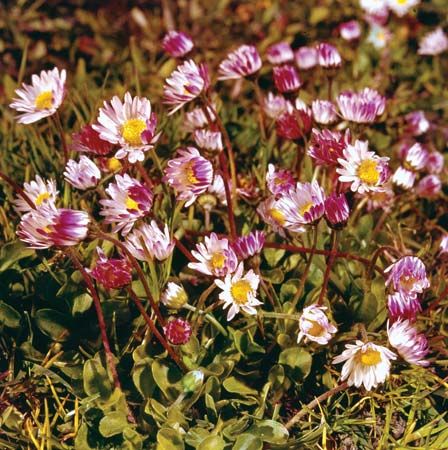
The Asteraceae family, commonly known as the aster, daisy, or composite family, is estimated to comprise more than 25,000 species and over 1,620 genera.10
These plants are distributed throughout the world, occupying a vast array of habitats as herbaceous plants, shrubs, and trees. As one of the largest families of angiosperms, they are found globally, second in size only to the Orchidaceae family. Paleobotanical evidence suggests that the family likely originated in South America, with fossils dating back to the Eocene Epoch found in Argentina.10
Sources
- Plant breeding - Goals — Encyclopædia Britannica
- Asteraceae - Economic importance — Encyclopædia Britannica
- Plant breeding - Mating systems — Encyclopædia Britannica
- Asterales - Asteraceae — Encyclopædia Britannica
- Plant breeding - Breeding self-pollinated species — Encyclopædia Britannica
- Plant breeding - Hybrid varieties — Encyclopædia Britannica
- Asparagales - Organization and taxonomy — Encyclopædia Britannica
- list of plants in the family Asteraceae — Encyclopædia Britannica
- Asterales — Encyclopædia Britannica
- Asteraceae — Encyclopædia Britannica
- Asteraceae - Pollination — Encyclopædia Britannica
- angiosperm - Pollination — Encyclopædia Britannica
- pollination - Bees — Encyclopædia Britannica
- Caryophyllales - Distribution and abundance — Encyclopædia Britannica
Published on · 3 min read