Gudbrands Valley
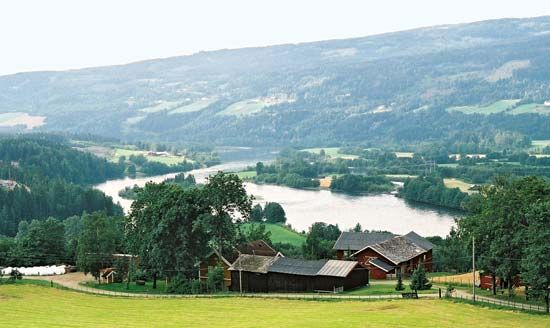
Gudbrands Valley, also known as Gudbrandsdalen, is located in south-central Norway. It is a significant geographical feature that extends approximately 100…
Where is Gudbrands Valley located in Norway, and what are its main geographical features?
Gudbrands Valley, also known as Gudbrandsdalen, is located in south-central Norway. It is a significant geographical feature that extends approximately 100 to 140 miles in a northwest to southeast direction.12
The valley is defined by several prominent natural landmarks:
- Waterways: It comprises the valley of the Lågen river, which flows southeast from the Dovre Mountains and Lake Lesjaskogen to Lake Mjøsa at the valley’s southern end.13
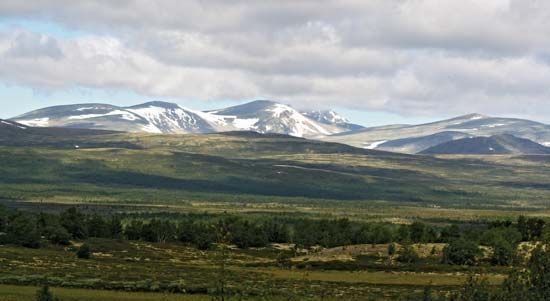
- Mountain Ranges: The valley is flanked to the west by the Jotunheim Mountains and to the east by the Rondane Mountains.1
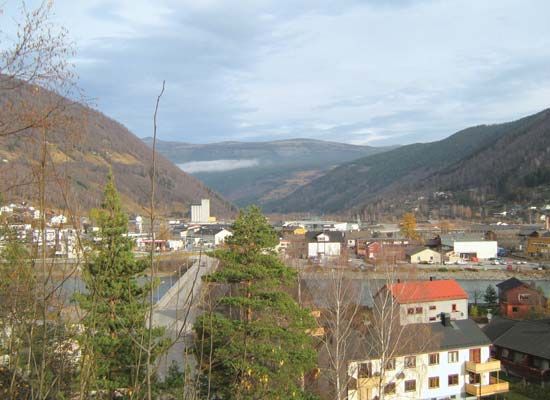
Historically, the valley has served as a vital trade route and is culturally significant for its unique dialect and associations with folklore, such as the legend of Peer Gynt. Today, the town of Lillehammer—famous for hosting the 1994 Winter Olympics—serves as a primary gateway to the region.14
Are there any famous folktales or legends connected to Gudbrands Valley?
Gudbrands Valley is deeply rooted in Norwegian folklore and is famously associated with several sagas and legends.1
The most prominent figure linked to the region is Peer Gynt, a legendary Norwegian folk hero. While he is the subject of a famous 1867 verse drama by Henrik Ibsen, the character was inspired by traditional tales. In these stories, Peer Gynt is depicted as a charming but arrogant and lazy peasant youth who embarks on a series of disastrous and fantastic adventures. The nearby Jotunheim Mountains—whose name translates to “Giant’s Home”—also feature in early Norse sagas and serve as a dramatic setting for Ibsen’s play.1567
Beyond these specific legends, the valley is recognized as a historic trade route and a site of ancient graves, contributing to its rich cultural heritage. Visitors interested in these traditions can explore the Maihaugen open-air folk museum in Lillehammer, which preserves the art, architecture, and history of the region.14
How does the climate of Gudbrands Valley differ from other regions in Norway?
The climate of Gudbrands Valley differs significantly from Norway’s coastal regions due to its inland location. While western Norway experiences a marine climate characterized by mild winters, cool summers, and high precipitation, Gudbrands Valley—situated in the interior—features an inland climate.1
Because it is sheltered by surrounding mountain ranges, such as the Jotunheim Mountains and the Rondane Mountains, the valley experiences:1
- Temperature Extremes: It has warmer summers and colder winters compared to the coastal areas.1
- Lower Precipitation: The region receives significantly less rainfall, with mean annual precipitation levels falling below 30 inches (760 mm), whereas western coastal areas can see up to 90 inches.1
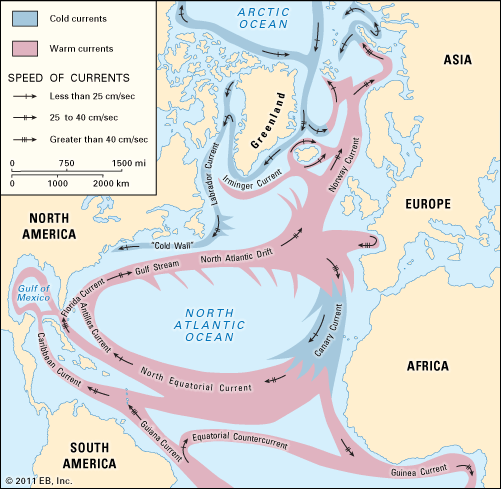
This inland environment contrasts with the coastal regions, which are heavily influenced by the Gulf Stream and the Norwegian Current, keeping the coast warmer and wetter throughout the year.1
What are some traditional crafts or industries associated with Gudbrands Valley?
Gudbrands Valley, known as Gudbrandsdalen, has a long-standing tradition of both primary industries and specialized folk arts.
Primary Industries
The economy of the valley has historically been driven by the natural resources of the region. The chief occupations include:
- Stock raising and Dairying: These agricultural practices remain central to the valley’s economy.1
- Lumbering: The extensive forests in the region support a significant timber industry.1
- Quarrying: The area is known for the extraction of slate, which is quarried locally.1
Traditional Crafts
The valley is particularly celebrated for its contributions to Norwegian folk art, most notably:
- Pictorial Weaving: Gudbrandsdalen is recognized for its distinct tradition of pictorial weaving, which serves as a significant cultural craft for the region.10
These industries and crafts have helped the valley develop its own unique culture and identity, which is further preserved at the Maihaugen open-air museum in Lillehammer.1
Sources
- Gudbrands Valley — Encyclopædia Britannica
- Gudbrandsdalen — Merriam-Webster
- Lågen — Encyclopædia Britannica
- Lillehammer — Encyclopædia Britannica
- Peer Gynt — Encyclopædia Britannica
- Jotunheim Mountains — Encyclopædia Britannica
- Peer Gynt — Encyclopædia Britannica
- Norway - Climate of Norway — Encyclopædia Britannica
- Norway - Soils — Encyclopædia Britannica
- Folk art - Northern Europe — Encyclopædia Britannica
Published on · 3 min read