Lågen
The name Lågen refers to two distinct rivers in Norway:
What is Lågen?
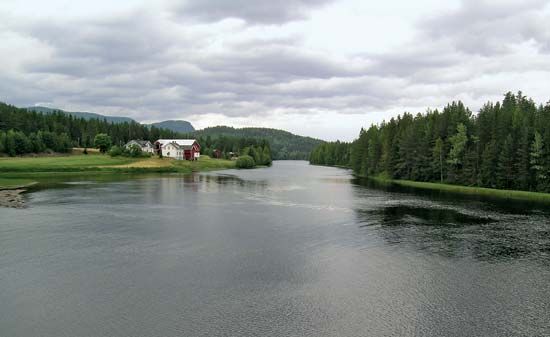
The name Lågen refers to two distinct rivers in Norway:
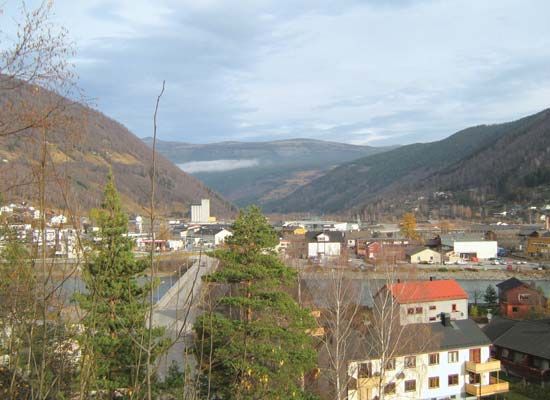
- South-central Norway: This Lågen flows through the Gudbrands Valley. It originates in the Dovre Plateau and travels 122 miles southeast to Lake Mjøsa at Lillehammer. Beyond the lake, it continues as the Vorma River to join the Glomma River. This river is a vital transport corridor, with major road and rail routes between Oslo and Trondheim following its path, and it supports significant hydroelectric power generation.12
- Southeastern Norway: This river, also known as the Numedalslågen, is the third-longest in Norway at 209 miles. It rises in the Hardanger Plateau and flows through Numedalen to the Skagerrak at Larvik. Historically significant for silver mining near Kongsberg, the river valley is now known for lumbering, agriculture, and medieval stave churches.3
What are the main differences between the Gudbrandsdalslågen and the Numedalslågen?
While both rivers share the name Lågen, they are distinct geographical features in Norway with different courses, lengths, and economic roles.
Feature
Gudbrandsdalslågen
Numedalslågen
Location
South-central Norway (Oppland)
Southeastern Norway (Buskerud/Vestfold)
Length
122 miles (199 km)
209 miles (337 km)
Source
Dovre Plateau
Hardanger Plateau
Destination
Lake Mjøsa (continues as Vorma)
Skagerrak (at Larvik)
Economic Focus
Hydroelectric power, transport corridor
Silver mining (historical), lumbering, agriculture
Key Differences:
- Course: The Gudbrandsdalslågen flows through the Gudbrands Valley and terminates at Lake Mjøsa, eventually joining the Glomma system. In contrast, the Numedalslågen flows through the Numedalen valley and empties directly into the Skagerrak.14
- Significance: The Gudbrandsdalslågen is a primary transport artery, with major road and rail lines between Oslo and Trondheim following its path. The Numedalslågen is notable for its historical silver mining near Kongsberg and its concentration of medieval stave churches.134
How do hydroelectric power stations work on these rivers?
Hydroelectric power stations on rivers like the Lågen operate by converting the potential energy of water into mechanical energy and, ultimately, into electricity.6
The process typically involves the following components and steps:
- Dams and Reservoirs: A dam is used to impound the river, creating a reservoir that stores water at a higher elevation. This elevation difference, known as the head, is critical because the potential power is directly proportional to it.6
- Penstocks: Water is directed from the reservoir downward through large pipes or tunnels called penstocks. As the water falls, its pressure increases.6
- Turbines and Generators: At the end of the penstock, the high-pressure water strikes the blades of turbines, causing them to rotate. These turbines are connected to generators, which convert the mechanical rotation into electrical energy.6
- Transmission: Transformers then increase the voltage of the electricity produced, making it suitable for efficient long-distance transmission to the power grid.6
In Norway, where mountainous terrain and abundant precipitation provide significant hydroelectric potential, these stations are essential for meeting nearly all of the country’s electrical needs.7
What are Norwegian stave churches and where can they be found?
Stave churches are a unique type of medieval wooden church architecture primarily found in northern Europe, with the vast majority located in Norway. Built between the 11th and 14th centuries, these structures are named for their use of “staves”—vertical corner posts—that support the building’s frame, distinguishing them from the horizontal “log” construction common in other wooden buildings of the era.91011
Characteristics and Construction
These churches are noted for their sophisticated engineering and artistic detail:
- Structural Design: A foundation of boulders supports a horizontal wooden frame, upon which four corner staves are erected. Larger examples often feature a cruciform plan, an ambulatory, and an apse.9
- Aesthetics: Many are characterized by multiple tiers of gabled roofs that diminish in size, creating a picturesque, tiered appearance. They are frequently adorned with intricate woodcarvings featuring both pagan and Christian motifs, such as interlaced creatures.911
- Terminology: They are sometimes referred to as “mast churches” because of the way internal vertical posts (masts) support the central structure.11
Where to Find Them
While 800 to 1,200 of these churches may have existed in the 14th century, only about 30 survive today in Norway. Notable examples include:910
- Heddal Stave Church: The largest extant stave church, built around 1150.9
- Borgund Stave Church: A well-preserved 12th-century structure in Sogn og Fjordane county known for its complex ambulatory plan and elaborate carvings.9
Outside of Norway, only one original stave church survives in each of Sweden, Poland, and England.9
Sources
- Lågen — Encyclopædia Britannica
- Lågen — Encyclopædia Britannica
- Gudbrands Valley — Encyclopædia Britannica
- Norway - Drainage — Encyclopædia Britannica
- Gudbrandsdalen — Merriam-Webster
- Did you know? — Merriam-Webster
- hydroelectric power — Encyclopædia Britannica
- Norway - Hydroelectricity of Norway — Encyclopædia Britannica
- Stave church — Encyclopædia Britannica
- construction - Construction in timber and brick — Encyclopædia Britannica
- Western architecture - Prelude to Romanesque in the north — Encyclopædia Britannica
- stave church — Merriam-Webster
Published on · 3 min read