Guernsey
Raising Guernsey cattle offers specific benefits and drawbacks for dairy farmers, primarily centered on the quality of their output.
What are some of the advantages and disadvantages of raising Guernsey cattle?
Raising Guernsey cattle offers specific benefits and drawbacks for dairy farmers, primarily centered on the quality of their output.
Advantages
- Milk Quality: Guernseys are highly regarded for producing milk that is rich in butterfat, averaging about 4.8 percent.1
- Nutritional Value: Their milk is noted for having a high protein content (approximately 3.91 percent), which is among the highest of the major dairy breeds.1
- Distinctive Product: The milk is recognized for its unique, pronounced yellow color, which can be a marketable characteristic.23
Disadvantages
- Limited Meat Value: Like other specialized dairy breeds, Guernseys are not considered desirable producers of beef, making them less suitable for dual-purpose farming.2
- Production Volume: While they produce high-quality milk, they generally do not match the sheer volume of milk production seen in breeds like the Holstein-Friesian.1
As with any dairy operation, success depends on careful herd management, including disease prevention and providing a balanced nutritional ration to maintain both milk volume and composition.1
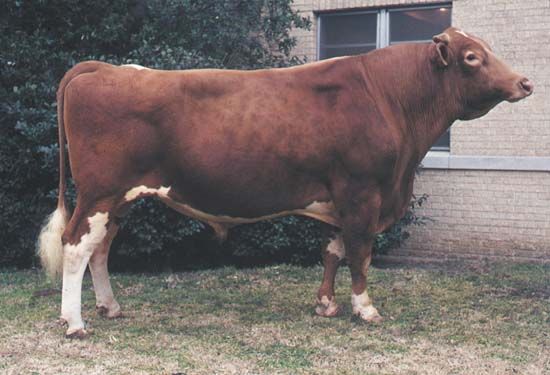
Where did the Guernsey cattle breed originate, and how did it spread to other parts of the world?
The Guernsey breed of dairy cattle originated on the island of Guernsey, located in the Channel Islands in the English Channel. The breed is believed to have descended from cattle stock brought from the nearby regions of Normandy and Brittany.14
The breed became distinct after local laws were enacted that prohibited the importation of cattle to the islands, except for the purpose of slaughter. This isolation allowed the Guernsey breed to develop its unique characteristics, including its fawn-and-white coloring and its ability to produce milk with a distinct yellow hue.14
The spread of the breed to other parts of the world began in the 19th century. The first Guernsey cattle were exported to the United States in 1830, though the export trade did not become extensive until 1880. Today, populations of Guernsey cattle are also found in countries such as England, Australia, and Canada.1
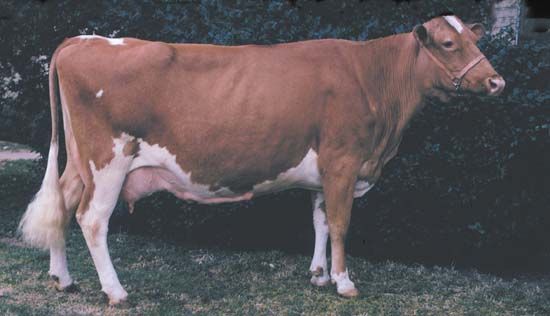
What are the physical characteristics that distinguish the Guernsey breed of cattle?
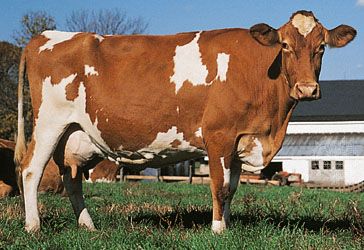
The Guernsey breed of dairy cattle is characterized by several distinct physical traits that set it apart from other breeds:
- Coloration: The cattle are primarily fawn-colored, featuring white markings across their bodies.14
- Size: They are physically larger than the Jersey breed, which shares a similar ancestral origin from the regions of Normandy and Brittany.1
- Milk Characteristics: While not a physical trait of the animal’s body, the breed is uniquely identified by its ability to produce milk with a pronounced yellow color.14
Because they were developed in isolation on the Channel Islands following strict importation laws, these physical characteristics have remained relatively consistent within the breed.14
How does the milk produced by Guernsey cows differ from that of other dairy breeds?
The Guernsey breed of dairy cattle is primarily distinguished by the unique quality of its milk, which is noted for having a pronounced yellow color.41
While the provided search results highlight this specific visual characteristic, they do not offer a detailed comparative analysis of the chemical composition or nutritional profile of Guernsey milk versus that of other major dairy breeds like the Holstein-Friesian or Jersey. Generally, dairy cattle breeds are selected for varying levels of butterfat and protein production, but the Britannica knowledge base does not contain specific data comparing these metrics across breeds beyond identifying the Guernsey as an excellent milk producer.25
Sources
- Guernsey — Encyclopædia Britannica
- Dairy cattle breeds — Encyclopædia Britannica
- Dairying — Encyclopædia Britannica
- Guernsey: Top Questions — Encyclopædia Britannica
- Cow - Dairy cattle breeds — Encyclopædia Britannica
Published on · 3 min read